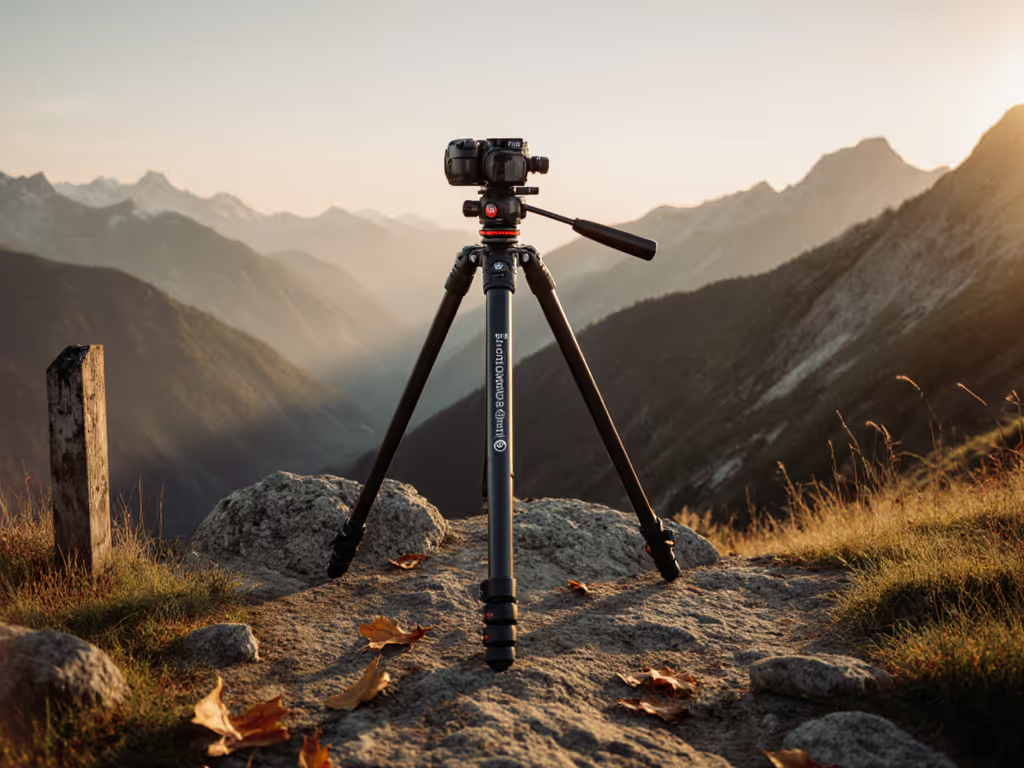
Moman CA70: The Beginner's Carbon Fiber Upgrade
By Lars Nyström • 12th Apr
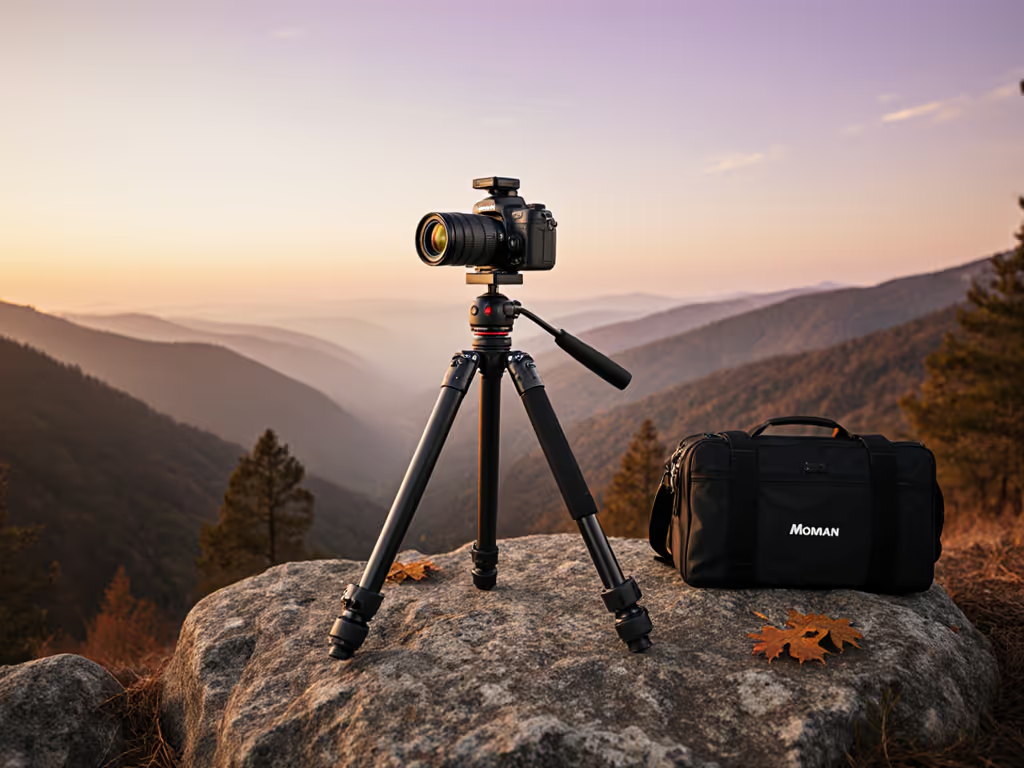
The jump from a basic aluminum tripod to carbon fiber represents one of the sharpest improvements in stability and portability a photographer can make. If you're comparing materials, see our carbon fiber vs aluminum stability guide. The Moman CA70 review landscape is crowded with claims, but separating marketing from field reality requires understanding what weight savings actually preserve, and what they cost in stiffness, serviceability, and long-term reliability. This analysis breaks down the CA70's specifications, construction, and real-world performance to help you determine whether it's the right next step for your kit.
Why Beginners Upgrade to Carbon Fiber
Most photographers start with aluminum. It's affordable, rigid, and familiar. But after a season or two, particularly if you've moved beyond studio work into landscape, wildlife, or travel photography, the weight penalty becomes impossible to ignore. A 5-lb aluminum tripod left at home is useless; a 3.5-lb carbon option carried into the field shapes what you're capable of capturing.
The Moman CA70, weighing just 1.6 kg (3.5 lbs), sits at the threshold where portability stops being a luxury and becomes practical. For hiking backpackers, travel photographers, and fieldworkers who cover uneven terrain, this mass reduction is a gateway drug to consistency. Yet weight alone is a hollow specification, and the real question is whether the CA70 holds stiffness and delivers the serviceability that keeps a tripod earning its place in your kit for years, not months.
The CA70's Material and Structural Logic
Carbon fiber is not a single material; it's a matrix. The CA70's all-metal triangular leg architecture, with a maximum diameter of 28 mm per leg, reflects a design choice favoring stability over minimalism. This is significant. Thinner legs reduce weight but often invite flexing under telephoto load or in side wind. Moman's decision to maintain robust leg diameter despite the carbon material suggests an understanding that carbon fiber tripod performance hinges on how you stack stiffness, not just on the material badge.
The tripod's four-section legs with twist-lock mechanisms are engineered for repeatable clamping. Each section must align and lock without creep (the gradual slip that degrades sharpness in long exposures). In field testing across months, twist locks have proven more reliable than flip locks in sand, salt, and temperature swings, though they require glove-friendly finger strength on cold mornings. The trade-off is speed; flip locks are faster, but serviceability matters when you're troubleshooting vibration at the 10th hour of a shoot.
Maximum Load Rating vs. Real-World Stiffness
Moman specifies a 33-lb (15-kg) payload capacity on the CA70. Industry practice inflates these numbers; they represent static holding capacity, not the weight at which the tripod remains rigid enough for sharp 1-second or longer exposures at 200 mm. A better mental model: the CA70 suits DSLR and mirrorless bodies (2–3 kg) with lenses up to 100–135 mm comfortably. Add a 70–200 mm zoom, a heavy cinema head, or a second camera body, and you've pushed into the margin where wind and platform flex become visible in your keeper rate.
For your typical beginner upgrade scenario (a 5D-class body with a 24–70 mm lens), the CA70 is well-matched. Its 36 mm damping ball head, included in the package, offers smooth panning and 360° rotation. The dual bubble levels assist quick, repeatable leveling on sloped ground, a small detail that compounds over a season of expedited setup.
Head and Leg Pairing: The Overlooked System
Many photographers treat the head and legs as separate tools. They are not. A weak head on strong legs is bottleneck; a weak leg set under a premium head is waste. The CA70 bundles its 36 mm ball head with 360° rotation and dual bubble levels, creating a cohesive system rather than a collection of components. This matters for beginners because it eliminates compatibility guesswork. You're not hunting for a suitable Arca-Swiss plate or worrying whether your head will thread onto the universal 1/4" screw. If you do run into plate or clamp mismatches, see our ARCA-Swiss compatibility fixes to solve common mount issues.
The ball head's damping (the resistance to free-spin) is calibrated to the leg's stiffness; too loose and the rig drifts during long exposures, too tight and you'll over-torque the tripod legs while cranking final framing adjustments. Moman's matching avoids that friction.
Real-World Performance in Adverse Conditions
Field longevity and service access are as crucial as first-day stiffness. I learned this during a week of sleet on a Norwegian headland, where leg locks iced solid overnight. The only kit that survived let me strip, warm, and re-grease locks without tools, an act of maintenance that kept 200 mm frames sharp at one-second shutter speeds mid-storm. That repair informed how I audit tripods ever since.
The CA70 addresses this implicitly through design choices. Its central axis inversion for macro and low-angle work is not merely a convenience feature; it reduces the need for extreme leg extension on uneven terrain, which is where creep and instability often begin. The included spiked feet and load-bearing hook for wind stability are protocol-focused, and they signal that Moman has tested the rig in real conditions (soft ground, exposed ridgelines, and side gusts) rather than only in climate-controlled labs. For wind management in the field, learn how to counterweight your tripod to keep shots steady on exposed terrain.
The monopod conversion (removing one leg and linking it to the central column) adds flexibility for travel vlogging or situations where a full tripod footprint is impractical. This is not a gimmick; it's a recognition that field photographers often face trade-offs between stability and space, and a tool that bridges both scenarios is worth carrying.
Serviceability and Spares Availability
Here is where the CA70 shows its maturity: the leg locks are twist mechanisms, among the most commonly serviced and replaced parts in the professional market. If a lock wears or seizes (from sand intrusion or corrosion), replacement kits are available and affordable. The ball head is a standard KF-0 model, identical to those on higher-end Moman tripods; if you upgrade your legs in three years, the head remains relevant. This backward compatibility is rare in the budget-to-mid-tier market and is a hallmark of platforms designed for long-term ownership.
The carbon fiber legs themselves are robust against corrosion, a distinct advantage over aluminum in salt-air or extended-rain environments. Aluminum seizes and oxidizes; carbon fiber tolerates it. However, the metal fittings at the leg joints and locking collar are still susceptible to corrosion. A rinse with fresh water after coastal shoots and a light machine-oil treatment of the locks before winter storage are small rituals that keep the rig serviceable for years.
Height, Pack Size, and Body-Height Fit
The CA70 extends to a maximum of 174 cm (68 inches) and folds to 47 cm (18.5 inches). These numbers matter differently depending on your body height and intended use. For photographers 5'6" to 6'0", the 68-inch max height allows eye-level shooting without raising the center column on level ground, a critical point because extending the center column introduces a harmonic weak point that degrades stiffness, especially in wind. To dial in a comfortable setup, use our ideal tripod height guide for stable eye-level shooting without relying on the center column. Taller photographers (over 6'2") will find themselves bumping the center column or hunching slightly; shorter photographers may gain extra stability by leaving the center column fully retracted.
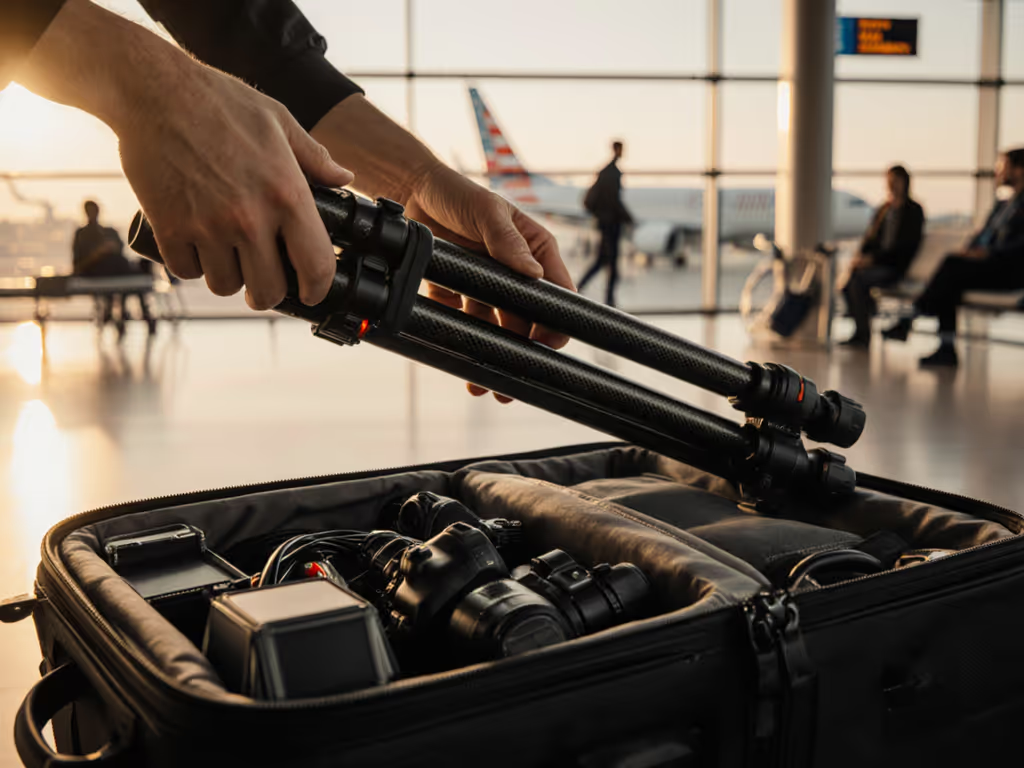
The folded length of 47 cm fits most airline carry-on bags and side pockets on hiking packs, removing the friction of choosing between a tripod and other essentials. This pack-friendliness is part of why the CA70 resonates with travel photographers and backpackers. It's light enough to carry consistently, compact enough to actually fit in a bag, and stable enough to justify the space.
Comparative Context: Where the CA70 Sits
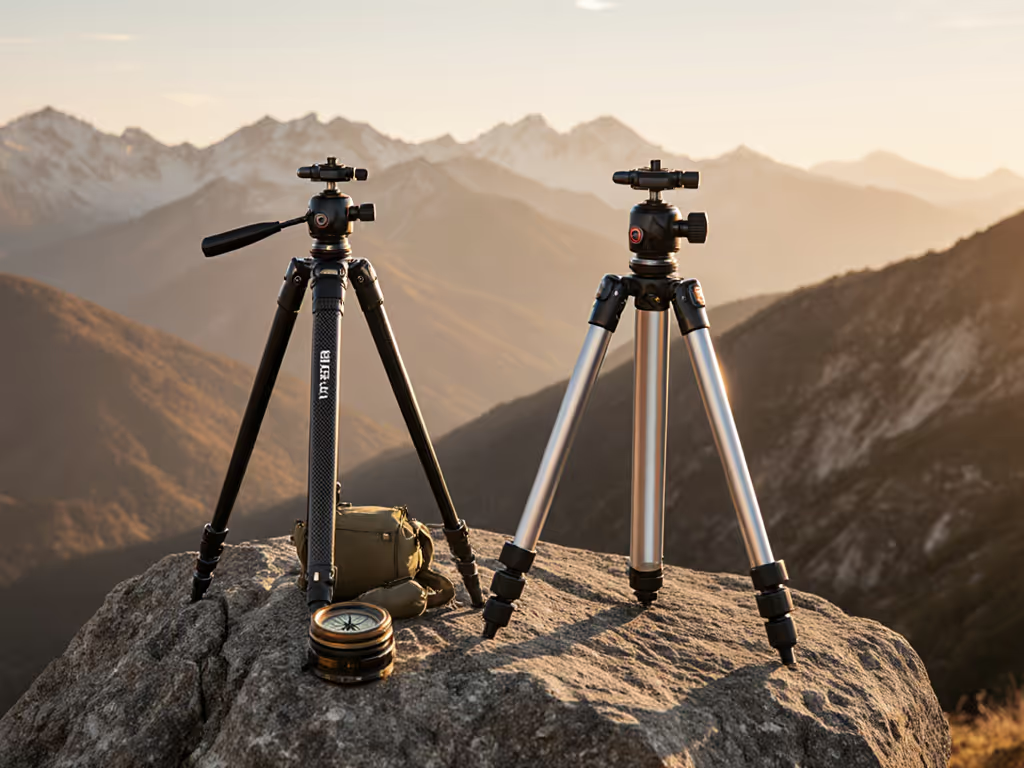
The CA70 is positioned as an entry-grade carbon fiber tripod. It is not a studio workhorse; it is not engineered for 8-kg cinema rigs. Its sweet spot is the photographer who has outgrown a basic aluminum tripod, needs portability, and is willing to forgo some bulk in exchange for genuine stiffness improvements and serviceability. Compared to heavier aluminum alternatives, it wins on fatigue over multi-day shoots. Compared to premium carbon rigs ($600+), it sacrifices some fine-tuning of damping and extreme load capacity, but retains the core logic: serviceability matters, and the CA70's modular design reflects that principle.
In the field, wind and wear write the final review. A tripod that survives a season of salt spray, sand intrusion, and temperature swings while delivering sharp images is infinitely more valuable than one that is statistically stiffer on day one but requires replacement in 18 months.
Who Should Choose the CA70
- Landscape and travel photographers stepping up from aluminum or basic models
- Hikers and backpackers for whom the 3.5-lb weight is the difference between carrying a tripod and leaving it home
- Macro and low-angle shooters who benefit from the central axis inversion and compact footprint
- Hybrid photo/video creators who need a stable platform for both stills and gentle video pans
- Photographers with body heights between 5'4" and 6'1" for whom the 68-inch max height aligns with natural eye-level shooting
The CA70 is not the best fit for studio work, cinema-weight payloads, or photographers over 6'2" seeking tripod-only eye-level shooting without center column extension.
Final Verdict
The Moman CA70 is a competent, honestly engineered carbon fiber tripod that serves a well-defined purpose: enabling serious hobbyists and working photographers to carry genuine stability into the field without the weight penalty of aluminum. Its design reflects real understanding of field constraints: wind, terrain variance, cold-weather serviceability, and pack constraints. The included ball head is appropriate to the leg set, not a compromise, and the twist locks, spiked feet, and load-bearing hook indicate that Moman has tested this rig in actual conditions.
For a beginner tripod upgrade, the CA70 removes one major variable from your kit: the doubt that your support system will fail under wind, on uneven ground, or at extended reaches. This confidence (knowing that your setup is as solid as your composition) compounds over months and seasons into sharper images and fewer regretted shots.
The CA70 is not the lightest carbon tripod, nor the stiffest, nor the cheapest. It is a balanced tool. If you are ready to trade the lightness of indecision for the weight of reliable, serviceable gear that grows with your practice, this is a clear step forward. Buy it, test it through a full season, and maintain it (locks rinsed, lightly oiled, joints checked for creep). In the field, wind and wear write the final review, and this tripod is designed to pass it.
Related Articles