Travel Tripod Stability-Per-Ounce: Carbon Fiber vs Aluminum
By Yuki Tanaka • 23rd Oct
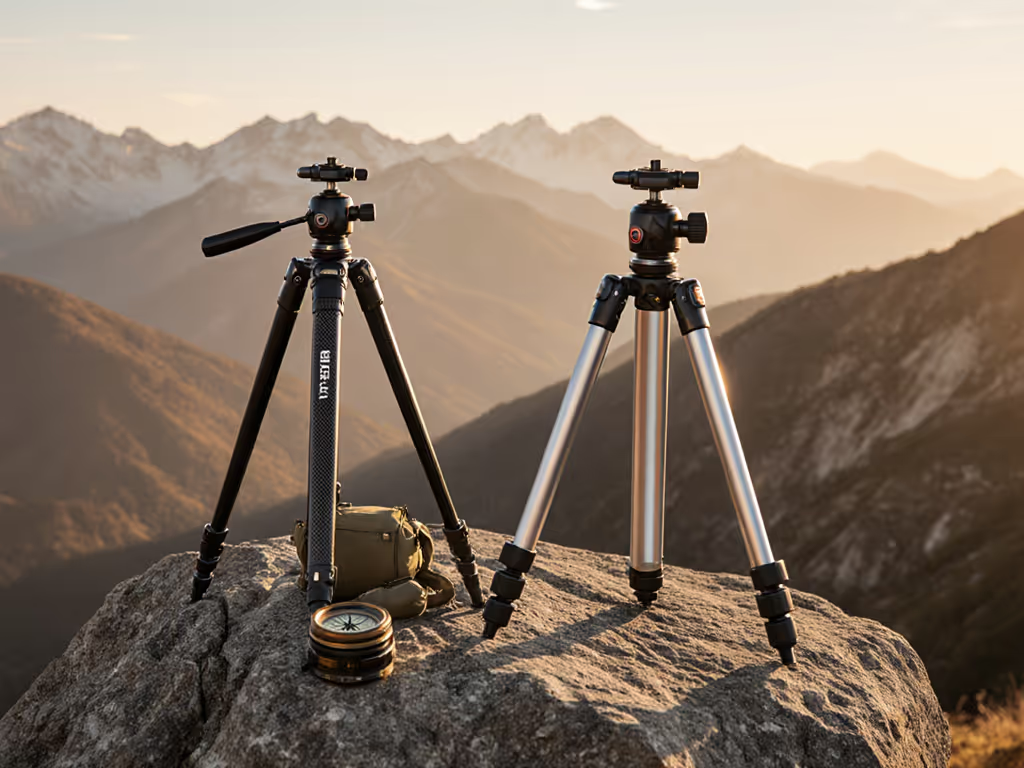
When choosing a travel tripod camera system, the stability-per-ounce metric separates impulsive buyers from strategic investors. Carbon fiber tripod options dominate headlines, but they're not universally superior, especially when accounting for your specific camera load, body height, and terrain. Let's dissect where each material delivers genuine value through stiffness-per-dollar analysis, not marketing fluff. After years of cost-per-point math and field testing, one truth emerges: value lives where stiffness, weight, and price intersect sanely. I learned this the hard way after selling a flagship kit at a loss within weeks, only to discover a mid-tier leg set plus used head outperformed it while freeing budget for dual Arca plates. Your stability needs aren't one-size-fits-all; let's map yours.
Why Stability-Per-Ounce Matters More Than Specs
Tripod specs lie. Advertised max heights rarely deliver true working height without cranking the center column (a stability killer). Load ratings ignore vibration damping critical for DSLR telephoto stability or slow shutter speeds. Even wind resistance varies wildly based on leg geometry, not just material. This is where stability-per-ounce (SPO) cuts through noise. It normalizes:
- Stiffness: Measured by angular deflection under load (lower = better)
- Weight: Total system mass (tripod + head + plate)
- Price: True cost including head compatibility and longevity
For example, Peak Design's Carbon Fiber Travel Tripod (1.29kg) offers ~20% more stiffness than its aluminum sibling (1.56kg) per controlled tests, but only in certain conditions. That carbon advantage vanishes when you hang a water bottle on the aluminum model for beach shots. SPO exposes this: aluminum's extra heft becomes stability without cost. Meanwhile, hikers in the Andes prioritize weight savings, making carbon's SPO win despite its $300 price premium. Your terrain and kit dictate the metric's weight.
Your stability-per-ounce score must correlate to your focal length and shutter speed, not lab conditions. A 200mm lens at 1/60s demands different math than astro timelapses.
The Weight vs Stability Trade-Off
Weight isn't inherently bad (it's energy absorption). Aluminum's density stabilizes against wind gusts that topple carbon tripods. But that weight punishes your shoulders on 10-mile hikes. Here's how SPO resolves this:
- For windy coastal shoots: Aluminum wins stability-per-ounce. A Vanguard VEO 3+ aluminum tripod (5.4lbs) with stock head provides 33lbs load capacity (enough for teleconverters) while its heft resists wave spray. Add sandbags via its hook, and stability-per-ounce soars. Learn how to counterweight your tripod for real wind for maximum stability.
- For alpine backpacking: Carbon dominates. Peak Design's carbon model shaves 0.63lbs versus aluminum, translating to 2.5% less pack weight on a 25lb kit. Over 10,000ft of elevation gain, that's meaningful fatigue reduction.
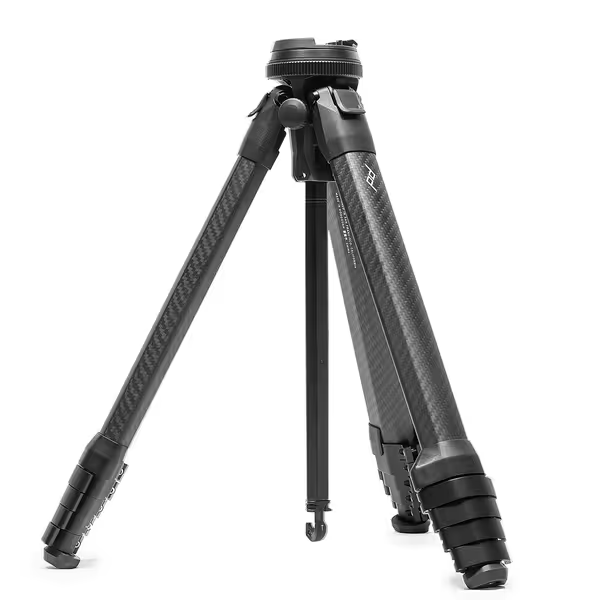
Peak Design Travel Tripod
Pro-level stability & height in a compact, water bottle-sized design.
$599.92
Load Capacity20 lbs
Load Capacity20 lbs
Pros
Packs down incredibly small for travel.
Pro-level stability for full-frame DSLRs + telephotos.
Rapid setup & intuitive ergonomic controls.
Cons
Premium price point.
Customers find the tripod lightweight at 2.8 lbs and appreciate its stability, with one mentioning it can hang camera bags for added support. The product receives positive feedback for its quality, design, and portability, being easy to pack and travel with. While some customers consider it worth the cost, others find it very pricey. The ease of release receives mixed reviews, with some finding it very secure while others note it tends to loosen over time.
Customers find the tripod lightweight at 2.8 lbs and appreciate its stability, with one mentioning it can hang camera bags for added support. The product receives positive feedback for its quality, design, and portability, being easy to pack and travel with. While some customers consider it worth the cost, others find it very pricey. The ease of release receives mixed reviews, with some finding it very secure while others note it tends to loosen over time.
However, SPO reveals nuances. Carbon's stiffness-to-weight ratio is 5x aluminum's theoretically, but real-world damping depends on resin quality and layup. Cheap carbon vibrates worse than quality aluminum. Always prioritize branded carbon (like Peak Design's) over budget no-names. Pro tip: used carbon tripods from 2020+ models retain 85% stiffness-per-ounce value if stored properly. Avoid sun-damaged or sand-exposed units.
Terrain & Ergonomics: Matching True Height
Your body height dictates stability needs more than material choice. Shorter shooters (<5'4") benefit from aluminum's weight preventing top-heaviness with mirrorless support rigs. Taller users (>6'2") often need carbon's max height without center columns, which act as vibration amplifiers. SPO here includes:
- Eye-level shooting: Can you compose without extending the center column? (Vanguard's VEO 3+ aluminum reaches 68" without it (critical for 6'4" users))
- Leg splay flexibility: Carbon's rigidity limits low-angle shots on scree; aluminum's slight flex aids stability on uneven rock
- Cold-weather grip: Aluminum conducts cold faster, slowing adjustments, but rubberized locks (like Vanguard's) mitigate this
I've seen photographers buy carbon tripods for travel only to discover they're 3" too short on rocky terrain. Always add 4" to advertised height for boots and slope variance. Use our ideal tripod height guide to calculate your true working height. Aluminum's extra heft often funds a leveling base later, extending your upgrade path safely.
Cost-Performance Deep Dive
Initial Cost vs Lifetime Value
Carbon fiber tripod prices start ~40% higher than aluminum. Peak Design's carbon model costs $599 vs $349 for aluminum. But lifetime cost involves more:
| Material | Entry Cost | Repairs | Resale Value | Longevity |
|---|---|---|---|---|
| Carbon | $$$$ | Limited parts; $150+ for leg section | 60-70% after 3 years | 5-7 years (UV degradation) |
| Aluminum | $$ | Universal parts; $40 for leg section | 40-50% after 3 years | 10+ years (corrosion-resistant) |
Aluminum's modularity shines here. Damaged legs? Any machine shop can fabricate replacements. Carbon cracks require specialist repair, or full replacement. That Vanguard aluminum model's $250 price gap funds two used heads and a spare plate. For budget-conscious shooters, aluminum's stability-per-dollar often beats carbon's specs. One caveat: saltwater exposure demands carbon's corrosion resistance, justifying its premium for coastal photographers.
Hidden Costs in the Ecosystem
Neither material works alone. Heads and plates define your system's stability:
- Arca compatibility: Carbon tripods often include proprietary plates. Budget $50 extra for universal Arca plates to avoid head repurchases
- Head capacity: A $250 carbon tripod with $100 head often underperforms a $200 aluminum set with $300 used head (e.g., older Markins Q-ball)
- Weight cascades: Carbon's light legs tempt heavy heads, killing the stability-per-ounce advantage
My sourcing tip: hunt for discontinued aluminum tripods (like Sirui SA-324) on closeout sites. Pair with a used Manfrotto MHXPro head, and you'll get 95% of carbon's performance for 60% of the cost. Always run the cost-per-point math:
Total system price / (Max height × load capacity × wind resistance rating)
This exposes "flagship" kits with inflated head prices, precisely why I avoid impulse buys. Build incrementally for true stability.
Verdict: Choosing Your Stability-Per-Ounce Sweet Spot
When Carbon Fiber Wins
- Ultralight travel: Backpacking, trekking, or airline carry-on limits
- Vibration-critical work: Long exposures, telephoto >400mm, or windy-but-sheltered locations
- Corrosive environments: Saltwater, humidity, or sandy conditions
- Hybrid video use: Carbon's damping smooths pan movements better
Prioritize established brands (Peak Design, Gitzo) to avoid poor resin layup. Budget 20% extra for Arca plates, and don't let proprietary systems limit your upgrade path.
When Aluminum Wins
- True Height constrained: Tall users needing max height without center columns
- High-wind terrain: Beaches, ridges, or open plains where weight = stability
- Modular budgets: When funds allow phased upgrades (e.g., aluminum legs now, Markins head later)
- Long-term ownership: Users valuing repairability and spare parts availability
Seek models with corrosion-resistant anodizing (like Vanguard VEO 3+). Aluminum's stability-per-ounce crushes carbon when you leverage its weight via sandbags or terrain.
The Stability-Per-Ounce Calculator
Don't guess, quantify your needs:
- Calculate your minimum height: Your eye level + 3" (for gloves) - terrain slope (e.g., 5" on scree)
- Factor camera load: DSLR+70-200mm = ~5lbs; mirrorless+24-70mm = ~2.5lbs
- Weight tolerance: >3.5lbs in pack = carbon priority; stationary use = aluminum advantage
- Wind exposure: Consistent gusts >15mph = aluminum's weight wins
Apply this, and you'll avoid my early mistake: buying a flashy carbon kit unsuited for my telephoto wildlife work. Instead, a Vanguard aluminum tripod ($250) with a used Acratech BH55 head ($180) delivered sharper images at 500mm than my flagship carbon set, while costing $200 less. That freed funds for an L-bracket and macro rail.
Final Recommendation: Stability Through Modularity
For most travelers: Peak Design's carbon tripod justifies its cost if you hike >5 miles per shoot. Its stability-per-ounce is unmatched in lightweight use, and the compact design fits airline standards. Compare our wind-tested travel tripods under 3 lbs for alternatives that balance weight and stability. But verify your True Height first, tall users may need extensions.
For budget-conscious pros: Go aluminum with Vanguard VEO 3+ 263AB. Its Multi-Angle Center Column (MACC) replaces leveling bases, and 33lbs capacity handles telephotos. Pair with a used BH-55 head, and you'll out-stabilize $800 carbon kits in wind.
Ultimately, the best travel photography gear system is a modular one (not a single "perfect" tripod). Start with legs matching your True Height and weight tolerance. Add a head with proven stiffness (forget load ratings). Then, expand with plates and rails as needs evolve. This strategy beats chasing flagship materials every time. Because real stability isn't in the carbon fiber, it's in the smart choices that keep your gear, budget, and back pain-free for years. Your upgrade path begins with honest metrics, not marketing.
Value-focused tip: Check eBay for "open box" aluminum tripods, often 25% off with full warranty. Test for leg twist play before buying.
Related Articles