Ball Head or Pan Tilt: Match Heads to Your Real-World Shots
By Nia Okafor • 3rd Oct
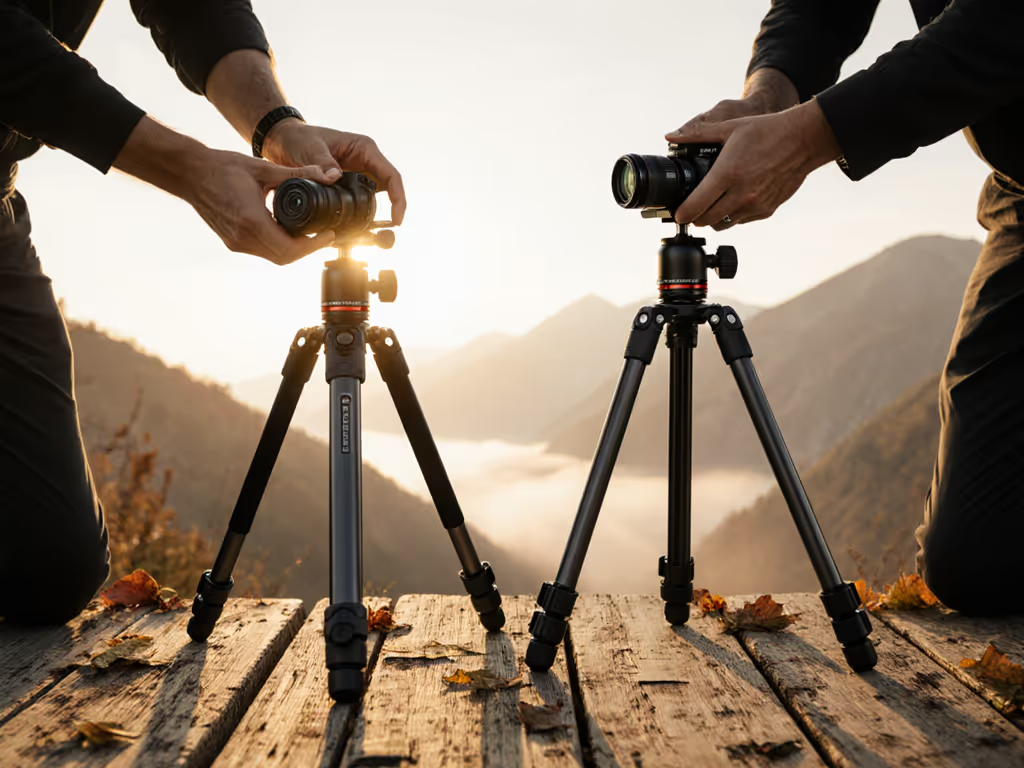
When your tripod ball head slips in a coastal breeze or your pan tilt head fights you on uneven terrain, you're not just fighting gear, you're battling unpredictability. The ball head vs pan tilt debate isn't about specs on paper. It's about which system becomes reliable when your hands are cold, your gloves are thick, and the wind is rising. Let's cut through the marketing noise and match head types to your actual shooting conditions.
Slow is smooth; smooth is sharp when the wind rises.
Why Your Head Choice Matters More Than Leg Brand
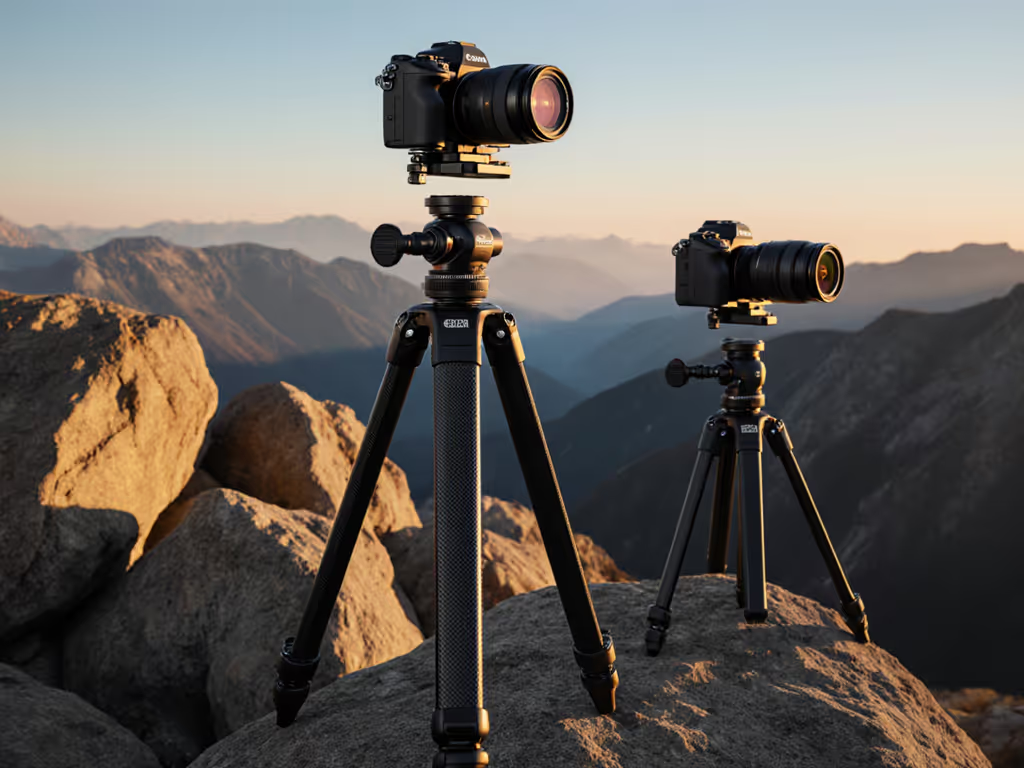
Many photographers obsess over leg carbon fiber versus aluminum, but they neglect the critical coupling point: the head. A high-quality tripod ball head or pan tilt head must translate your body's movements into precise camera control, not create resistance that demands constant correction. In field testing, I've seen identical legs deliver drastically different results based solely on head choice.
Field Reality Check: On that wind-scoured dune workshop I mentioned, we paused the frustration and reset. Students stopped wrestling twist locks by returning to fundamentals: find stable footing, establish reliable height, then adjust the camera. The flailing stopped when they adopted repeatable habits, not fancier gear.
FAQ: Field-Tested Head Selection
I shoot landscapes in windy conditions. Which head gives me the most control?
Ball head users often struggle here if they haven't mastered tension control. A properly set ball head with adjustable friction lets you "dial in" just enough resistance to resist breeze without fighting gravity. But here is the critical point: you must establish stable leg positioning first. I've seen photographers waste time adjusting tension only to realize their legs were splayed unevenly on slope.
Verdict: For landscapes on uneven ground, a pan tilt head often provides more predictable results. Its independent axes prevent wind-induced shifts in other planes. When the wind picks up, you're not constantly readjusting level after panning. Legs first, then head, which is why pan tilt shines when you're anchoring on shifting sand or rock.
I need speed for wildlife shots. Will a pan tilt head slow me down?
Absolutely. If your subject moves unpredictably, a quality tripod ball head becomes your advantage. With one smooth motion, you can track moving subjects without sequential adjustments. But speed requires practice with your specific head:
- Field Checklist:
- Set base tension to hold your heaviest lens without creep
- Mark your preferred tension setting with nail polish
- Practice one-handed adjustment with gloves on
The Sirui K-40X demonstrates this balance. Its friction control dial lets you preset resistance for specific lenses. When a bear suddenly appears, you're not fumbling with multiple knobs, you're adjusting one motion and maintaining composition.
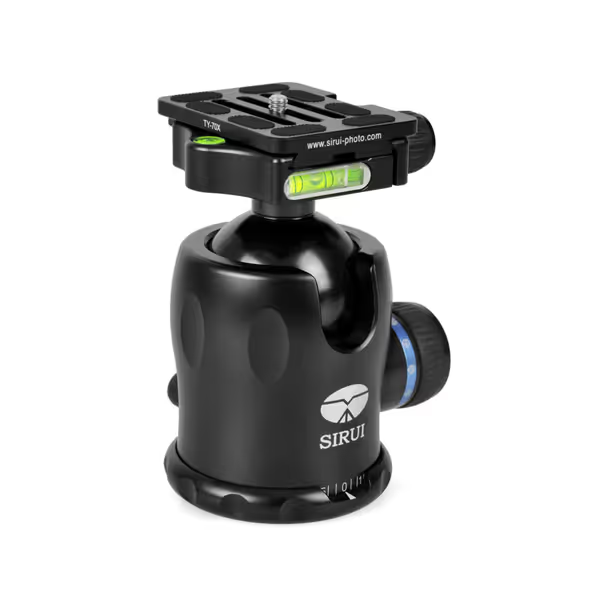
Sirui KX-Series Aluminium Tripod Head (K-40X)
Stable, high-capacity ball head for sharp images with heavy lenses.
$139
Max Load Capacity35kg / 77.2lb
Max Load Capacity35kg / 77.2lb
Pros
Rock-solid stability for heavy gear.
Smooth 360° panoramic movement.
Quick, secure camera attachment with anti-slip features.
Cons
Adjustment ease can be inconsistent for some users.
Customers find the tripod head to be rock steady and well-constructed, with excellent value for money and smooth, buttery operation.
Customers find the tripod head to be rock steady and well-constructed, with excellent value for money and smooth, buttery operation.
What about hybrid photo/video work?
Hazard Note: This is where generic advice fails. Many assume a ball head suffices for video, but panning requires consistent fluid resistance. True fluid head mechanisms (common in video tripods) provide that buttery motion. Still photographers venturing into video often discover their ball head creates jerky motion.
For occasional video clips with stills gear, consider:
- A pan tilt head with adjustable drag
- A ball head with independent pan base (check head compatibility with your legs)
How does my height affect head choice?
Critical Insight: Tall shooters (6'2"+) often unknowingly favor pan tilt heads. Why? Because they can set legs lower without center column extension while maintaining eye-level composition. Shorter shooters (under 5'4") benefit from ball heads' ability to quickly tilt downward without repositioning legs, which is essential when you're already at minimum height. For choosing the right working height, see our tripod height guide.
Plain Example: On a recent alpine shoot, two photographers used identical gear. The 5'10" shooter used a ball head to quickly drop to macro height on scree. The 6'4" shooter used a pan tilt head at its lowest stable position for low-angle architecture shots. Different heads, same terrain, each solved for their body's needs.
The Real Compatibility Factor: Your Habits
Head selection isn't about which type "wins" universally. It's about which one integrates into your workflow when conditions go hostile. Your muscle memory must work with the gear, not against it. Consider:
| Shooting Scenario | Ball Head Advantage | Pan Tilt Advantage |
|---|---|---|
| Windy coastal work | Single adjustment motion | No axis cross-talk when gusts hit |
| Macro on uneven ground | Quick tilt downward | Precise vertical adjustments |
| Astrophotography | Speed during alignment | Perfect horizon leveling |
| Travel/hiking | Compactness | Stability without center column |
Key Insight: The photographers who succeed in tough conditions haven't just chosen equipment, they've built repeatable routines. On that dune workshop, the magic happened when students stopped fighting the wind and returned to their three-step sequence. Same with head selection. Establish reliable leg positioning before adjusting your ball head. Check your pan tilt axes one at a time before mounting your camera.
Your Actionable Next Step
Next time you're in the field, run this 60-second field test before your shoot:
- Set legs on actual terrain (not flat ground)
- Mount just the head, no camera
- Simulate your typical composition shifts
- Note which system requires fewer adjustments to maintain position
- Repeat three times to build muscle memory
This isn't about specs: it's about your specific movements in your specific conditions. The right choice clicks when you stop fighting the gear and start working with it. When wind rises, you'll reach for habits, not manuals. And that's when you'll know you've got the right match.
Remember: your most reliable tripod setup isn't the one with the highest load rating. It's the one that lets you work safely, comfortably, and predictably when conditions turn hostile. Because repeatable habits beat improvisation every time (especially when the wind rises).
Related Articles