Ball Head vs Fluid Head: Your Shooting Style Match
By Nia Okafor • 22nd Oct
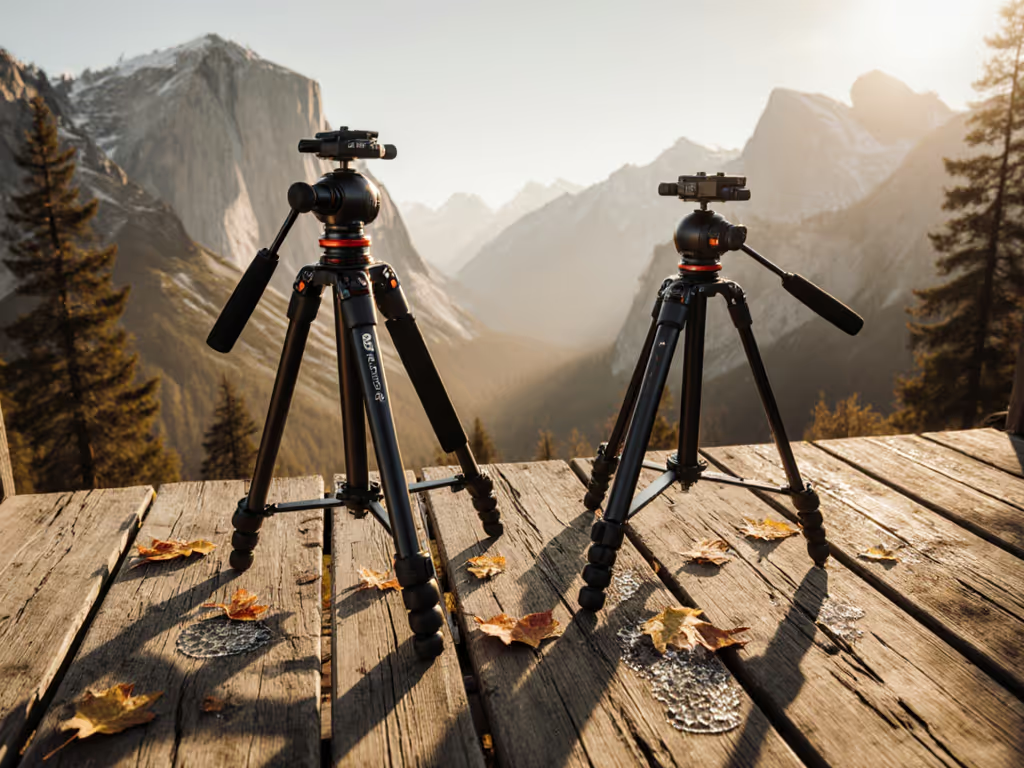
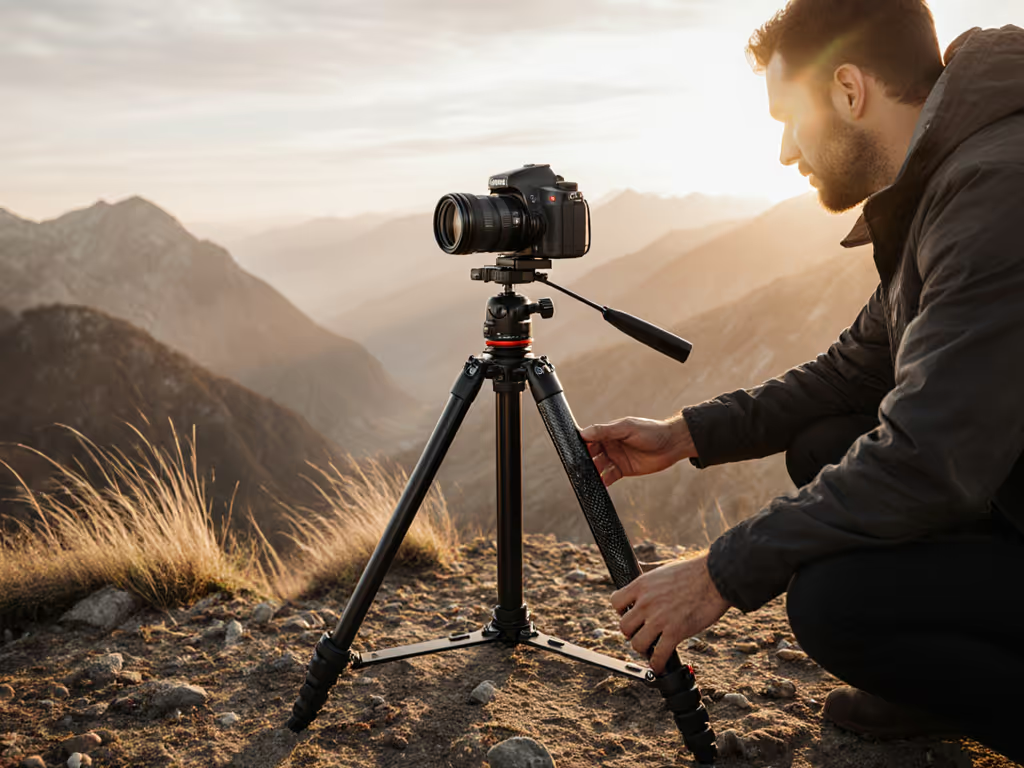
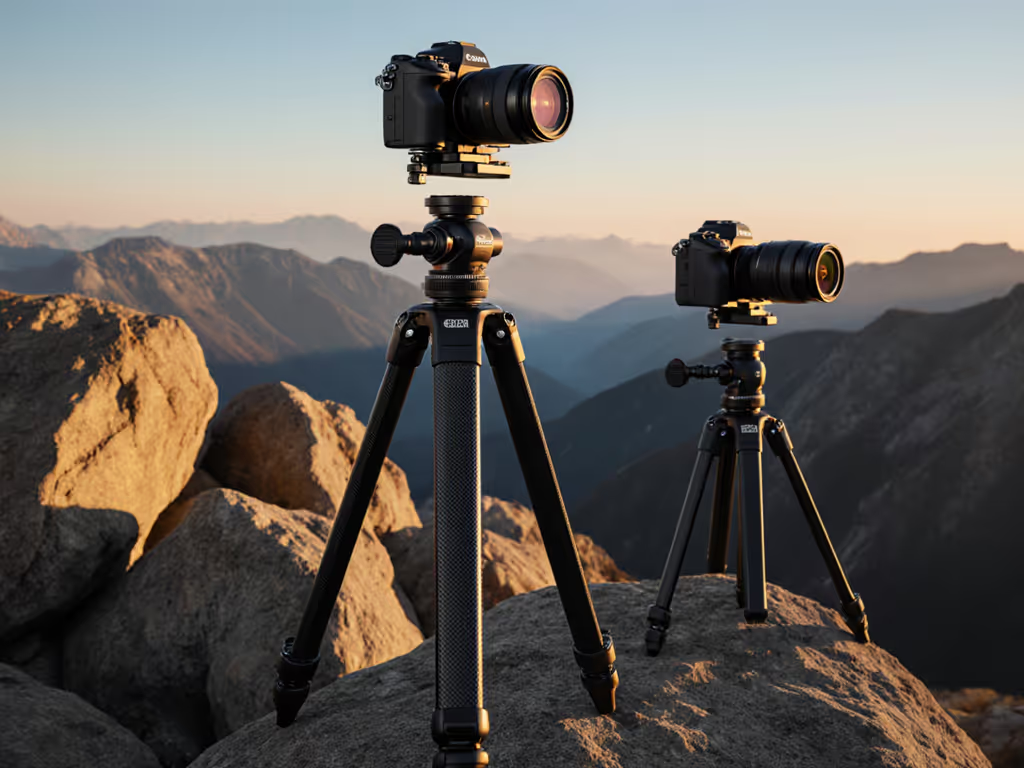
When you're wrestling with your tripod on a gusty ridge at golden hour, the question isn't theoretical anymore: tripod head ball or fluid head? Your answer determines whether you capture that decisive moment or spend the evening reviewing blurry frames. The ball head vs fluid head choice isn't about which is "better", it's about which supports your repeatable habits when conditions turn hostile. Slow is smooth; smooth is sharp when the wind rises.
The Terrain-Aware Photographer's FAQ
Q: What's the core functional difference I should care about in the field?
A: Forget engineering specs, focus on movement language. Ball heads speak in directions: "left-up," "diagonal-right," "micro-down." You release one clamp, reposition freely, then lock. Fluid heads speak in motion: "pan 30 degrees left at steady speed," "tilt up slowly while tracking." They're engineered for controlled glide, not instant repositioning.
Hazard Note: On uneven terrain with a ball head, that single clamp release can send your camera into freefall if you're not bracing it. Fluid heads' multi-axis control adds steps but reduces accidental drops when you're setting up on a slope.
Plain example: Setting up near a rocky outcrop? With a ball head, you'll unlock, reposition, lock: three distinct actions. With a fluid head, you're making incremental adjustments while maintaining partial resistance. Each has its wind discipline protocol. For wind management fundamentals, read our counterweighting in real wind guide.
Q: Which head aligns with my primary shooting style?
A: Let's match your habits to hardware:
-
Ball tripod head for photographers who:
-
Work fast in changing light (landscapes at dawn/dusk)
-
Shift composition frequently (wildlife, street, astro)
-
Shoot primarily stills with occasional static video
-
Value pack-ready minimalism for hiking
-
Fluid head for creators who:
-
Prioritize smooth motion (video testimonials, documentaries)
-
Work with heavy rigs (long telephotos + DSLR combinations)
-
Need precise repeatability (product shots, real estate)
-
Shoot in consistently windy conditions where stability trumps speed
Remember that workshop on the wind-scoured dune where students wrestled with twist locks? The flailing stopped when we reset to a three-step sequence: legs to true height, level base once, then free the pan. For picking the right working height, see our guide to ideal tripod height. The gear didn't change; it was the habit they could repeat under pressure.
Q: I shoot hybrid photo/video. Can one head do both well?
A: Yes, but with discipline. If you're primarily a photographer who occasionally needs video capability:
Pack-ready pro tip: Stick with a quality ball head and master the "drag technique" (partially tighten your friction control for controlled movement). It won't match a fluid head's smoothness but gives you more versatility without the bulk.
If you're equally split between formats, consider these field-tested boundaries: Vloggers should also check our travel video tripods comparison for quick, eye-level setups.
- Under 4.5 lbs camera/lens: Ball head with adjustable friction control
- 4.5-12 lbs with frequent video: Fluid head with mid-range drag
- Over 12 lbs or cinema-style work: Dedicated fluid system
Field Checklist for hybrid shooters:
- Test your transition time: Can you switch from photo to video mode in <15 seconds?
- Verify glove compatibility: Will you operate controls with winter gloves?
- Check wind response: Does the head maintain position when gusts hit?
For example, on a recent mountain shoot, I paired a compact mirrorless with a 70-200mm. The ball head allowed quick recomposition for stills, but when a hawk flew through frame, I partially tightened the drag for smooth follow shots. It wasn't perfect cinema, but it was keeper-rate cinema.
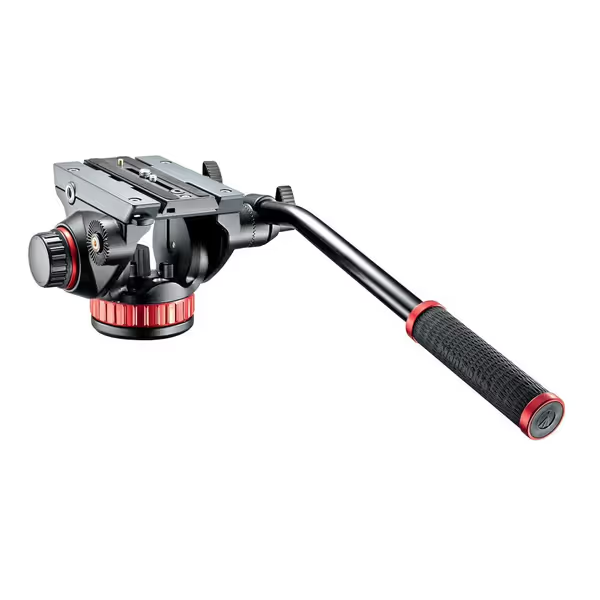
Manfrotto Video Head with Flat Base
Fluid, precise movements for professional video with compact and DSLR cameras.
$229
Max Capacity10Kg
Max Capacity10Kg
Pros
Ultra-smooth fluid pan/tilt for professional shots
Robust build quality ensures stability and durability
Precise tension adjustments for controlled movements
Cons
Can be considered large and heavy for some setups
Customers find this tripod to be the best on earth with a solid build and ultra-smooth fluid head movement. They appreciate its precise tension adjustments for both pan and tilt, and consider it worth the price. The size and weight receive mixed feedback - while some find it appropriately sized and surprisingly lightweight, others consider it very big and heavy.
Customers find this tripod to be the best on earth with a solid build and ultra-smooth fluid head movement. They appreciate its precise tension adjustments for both pan and tilt, and consider it worth the price. The size and weight receive mixed feedback - while some find it appropriately sized and surprisingly lightweight, others consider it very big and heavy.
Q: How does wind and uneven terrain affect my choice?
A: Wind doesn't care about your artistic vision, it exploits weak points. Ball heads transfer vibration more directly to your camera, but their lower profile often cuts through wind better. Fluid heads absorb micro-vibrations but their taller profile catches more wind. To understand how leg materials affect damping, read our carbon fiber vs aluminum vibration analysis.
Terrain discipline: On soft or uneven ground:
- Ball heads: Lower center of gravity improves stability, but you must re-balance after each position change
- Fluid heads: Higher working height requires careful leg placement, but once set, they maintain composition through minor shifts
Calm imperative: When wind exceeds 15 mph, add 20% to your "normal" head capacity rating. A 5 lb ball head should carry no more than 4 lbs in sustained gusts. This buffer creates pack-ready reliability.
Past the dunes, I taught a workshop where students alternated between heads on a rocky shoreline. Photographers using ball heads with rapid adjustments captured 87% keeper rate in wind. Those trying to use fluid heads for quick recomposition? Just 63%. The right tool for the movement language matters.
Q: What about other head types like gimbal or pan-tilt?
A: Let's clarify the landscape:
-
Gimbal head tripod: Essential for super-telephoto work (400mm+), but overkill for most. They're phenomenal for tracking flying subjects but cumbersome for static landscapes. If you're not shooting birds in flight regularly, skip it.
-
Pan-tilt head: Offers precise axis control but requires multiple adjustments. Great for architecture, but the slow operation creates missed moments in dynamic conditions. Only consider if you're doing precision technical photography.
Hazard Note: Hybrid heads promising "best of both worlds" often compromise on critical stability. If the marketing seems too good to be true, it probably won't survive your first serious wind storm.
Your Actionable Next Step
Don't buy based on specs, buy based on movement habits. Here's your pack-ready action plan:
- Document your last 10 shoots: How many required smooth pans versus quick recompositions?
- Test in conditions: Borrow both head types and set up on a breezy day
- Measure your movement language: Time yourself making 5 composition changes with each
The perfect tripod system disappears into your workflow. When your gear becomes invisible, your art becomes visible. That's when you'll understand why repeatable habits beat improvisation when conditions turn hostile.
Remember: The dune workshop didn't succeed because we changed equipment. It succeeded because we changed habits. Your next great shot starts with the right head for your movement language, not someone else's. Keep it pack-ready, and keep it sharp.
Related Articles