Slik Pro 400 DX Review: Studio Stability Without Studio Price
By Nia Okafor • 20th Jan
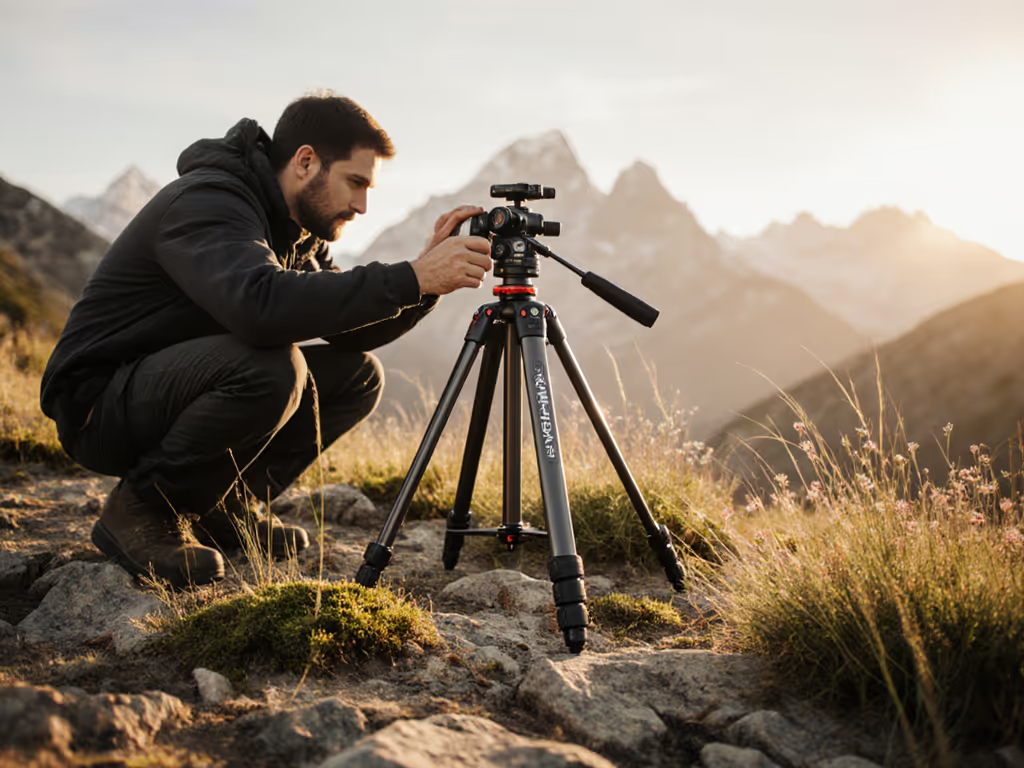
Let's address the elephant in the room: finding a budget camera tripod that doesn't compromise your keeper rate feels like chasing mirages in the desert. After reviewing countless tripods for photographers working in real-world conditions, I've found the Slik Pro 400 DX review question boils down to one practical assessment (does it deliver repeatable stability without breaking the bank?). For serious hobbyists and working photographers who need reliable support across uneven terrain and capricious winds, this all-metal workhorse offers something rare at its price point: predictable performance that translates to sharper images, less strain, and fewer frustrations when conditions turn hostile.
Why Stability Matters More Than Specs
Most photographers have been burned by spec-sheet promises. That advertised "61-inch maximum height"? It's meaningless unless you can actually shoot at eye level without extending the center column, something few manufacturers acknowledge in their marketing. When you're on location with changing terrain, the only height that matters is your true working height: where your eyes naturally sit when framing your shot, without awkward postures or extended columns that amplify vibration.
legs first, then head (this mantra guides every setup I teach because it transforms an unstable support system into a deliberate foundation). When you prioritize leg positioning before attaching your camera, you're not just setting up gear; you're establishing a repeatable habit that prevents back strain and ensures stability from the ground up.
If you're building this habit, start with our beginner tripod setup guide for eye-level height without center column. The Slik Pro 400 DX navigates this reality with thoughtful design choices. Its true working height (without center column) for most photographers between 5'6" and 5'10" hits that sweet spot where you're standing comfortably without stooping or stretching. At 50 inches without the center column, it delivers what matters most, usable height for sharp framing during those fleeting golden hour moments when every second counts.
First Impressions: Beyond the Box
Unpacking the Pro 400 DX, you immediately notice what sets it apart from typical budget tripods: the heft of all-metal construction meets intentional ergonomics. At 5.6 pounds, it's not ultralight, but what you gain is meaningful stability without the punishing weight of professional studio tripods that often exceed 8-10 pounds.
The soft-grip foam leg pads provide immediate comfort during extended sessions, something I appreciate after years of numb hands from metal legs in cold conditions. These aren't just decorative; they're functional for photographers wearing gloves during winter shoots or working in dewy morning conditions. The rubber feet offer genuine traction on varied surfaces, from wet grass to smooth concrete, without the need for additional accessories.
What surprised me most was the tactile feedback of the flip-style leg locks. Unlike twist locks that can seize up with sand or become stiff with cold, these speed-release levers operate smoothly with gloved fingers (a field-tested detail that matters when wind whips across your location and fingers grow clumsy). See our flip vs twist lock comparison for data on weather resistance and vibration.
Real-World Performance: Where Theory Meets Terrain
Terrain Adaptability: Your Foundation in Chaos
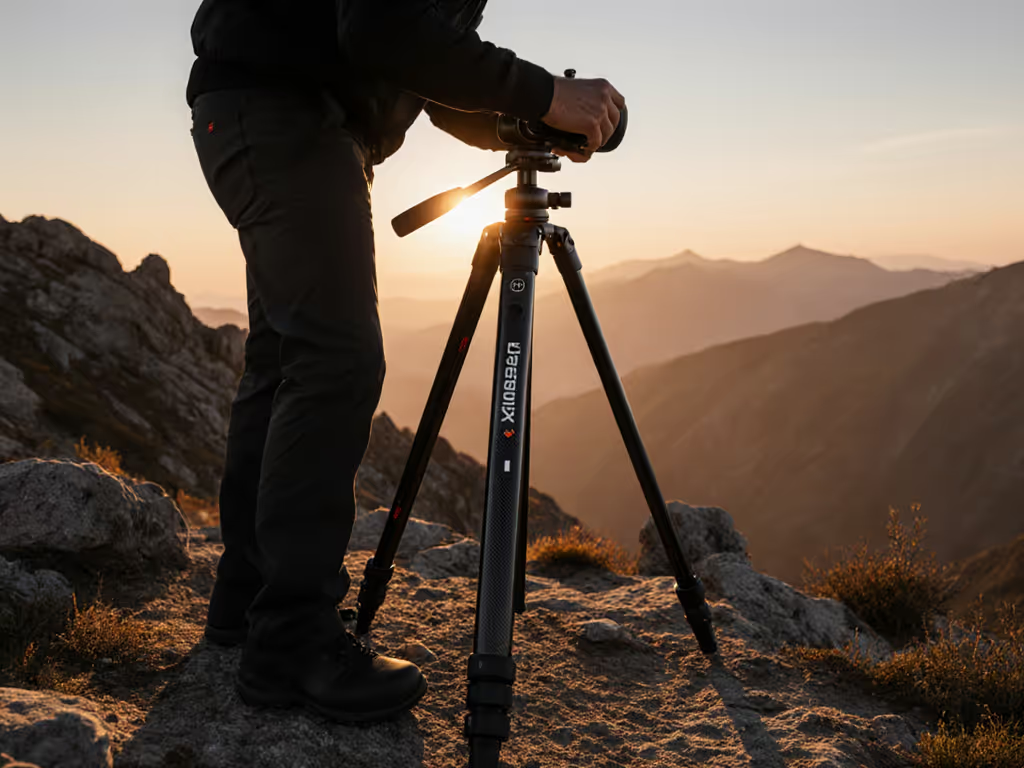
Photographers working on slopes, uneven ground, or rocky outcrops face the same challenge: how to establish a level base when the earth refuses to cooperate. This is where the Pro 400 DX's three-position leg angle system shines as more than just a feature (it becomes a problem-solving tool).
The leg angle adjustment locks allow precise positioning at 15°, 40°, or 69° angles, giving you meaningful flexibility without compromising stability. On a recent lakeside shoot with uneven terrain, I set two legs at the 40° position for stability on the slope while extending the third leg to the 15° position for proper height. Total setup time? Less than 45 seconds, crucial when working with changing light.
Field Checklist for Uneven Ground:
- Assess terrain before unfolding legs
- Identify which leg needs most elevation
- Set longest leg at narrowest angle (15°)
- Position shorter legs at wider angles (40°-69°)
- Recheck leg locks before attaching camera
- Level base before raising center column
Wind Discipline: How It Handles the Inevitable
"Slow is smooth; smooth is sharp when the wind rises" (this isn't just a catchy phrase; it's survival wisdom for outdoor photographers). I recall a workshop on wind-scoured dunes where students struggled with equipment that couldn't handle sudden gusts. We reset to a simple three-step routine: legs to true height, level base once, then free the pan. Frames sharpened immediately, not because the gear changed, but because the habits became repeatable under pressure.
The Pro 400 DX handles wind through thoughtful engineering:
- Aluminum construction provides meaningful mass without becoming unwieldy
- Rubber feet grip surfaces without slipping during wind gusts
- The center column's dual-section design allows you to shorten it instantly when wind increases
- Independent leg positioning creates a stable triangle base that resists rocking
During a coastal shoot with 20+ mph gusts, I deployed the tripod with legs maximally splayed at 69°, used the minimum necessary center column extension, and hung my camera bag from the center column hook. The result? Sharp 1/15s exposures at 200mm, performance that belies its budget price tag. For a deeper dive on stabilizing in gusts, see our counterweighting for real wind guide.
Low-Light & Long Lens Performance
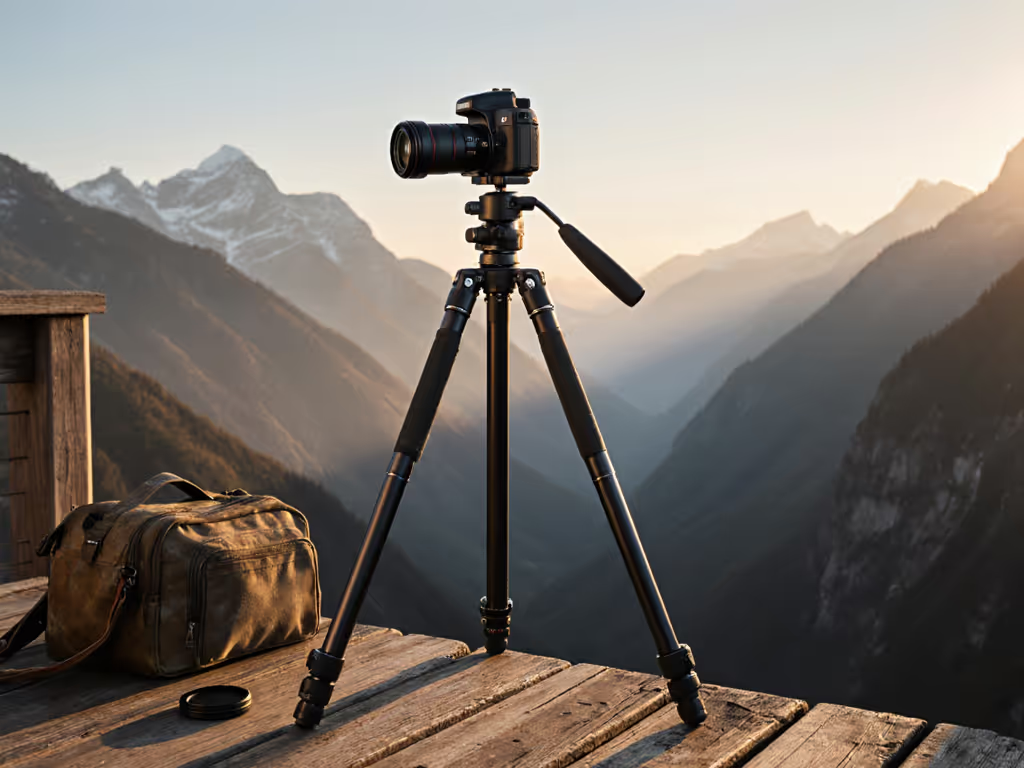
This is where most budget tripods fail: vibration damping with telephoto lenses or during long exposures. If you regularly shoot with heavy glass, learn how lens weight distribution affects tripod stability. The Pro 400 DX surprised me with its ability to handle serious kit, a Canon EOS R5 with 70-200mm f/2.8 at full extension, yielding tack-sharp images at 1/30s shutter speeds in low light.
The key lies in its center column design. Unlike monopod-style columns on many budget tripods, the Pro 400 DX features a genuinely rigid column that can be shortened by unscrewing it into two pieces. This transforms the tripod into a "low rider" configuration, dropping the minimum height to 12.5 inches, ideal for macro work or shooting close to the ground without compromising stability.
The All-Weather Workflow System
Repeatable Setup Habits for Maximum Reliability
When conditions turn hostile, your equipment is only as good as your habits. The Pro 400 DX lends itself to the repeatable routines I teach in my workshops because every control is intuitive and tactile.
- Speed release leg locks operate with one hand, even with gloves
- Three-position leg angles provide immediate visual feedback
- Center column locking collar has clear tactile engagement
- Pan-tilt head controls offer smooth resistance without stickiness
Hazard Note: Never rely solely on the center column for height in windy conditions. At 61 inches maximum height (with full column extension), stability noticeably decreases. For critical shots in wind, keep the center column at or below 20 inches and use leg height for primary elevation.
Field Checklist for Hostile Conditions
- Assess Terrain First: Scan for uneven ground, loose debris, or potential hazards before deploying legs
- Establish Base Height: Set legs to true working height without center column
- Level Base: Use bubble level on head (if equipped) or your eye to verify level
- Secure Column: Only extend center column after base is stable and secured
- Attach Camera: Mount camera plate, but keep tension loose until final position
- Final Adjustments: Make micro-adjustments to head tension before shooting
Making the Center Column Your Ally
Many photographers treat the center column as a necessary evil, something that introduces instability. With the Pro 400 DX, it becomes a strategic tool when used correctly.
- Low-Rider Mode: Unscrew the center column into two pieces for minimum height of 12.5 inches
- Reversible Column: Flip the column for ground-level macro work without leg interference
- Wind Mitigation: Shorten the column when wind increases for immediate stability boost
This versatility transforms the tripod from a single-purpose tool into a comprehensive support system that adapts to your creative needs rather than limiting them.
Value Assessment: Affordable Studio Gear That Doesn't Compromise
When evaluating the Pro 400 DX's value proposition, consider what matters in field conditions rather than just specs on paper.
True Working Height: At $199, it delivers 50 inches of usable height (without center column) for photographers between 5'4" and 6'0" (addressing the "height mismatch" pain point that plagues shorter and taller shooters alike).
Pan-Tilt Head Performance: The included SH-705E head delivers buttery-smooth movement with precise control, surprisingly refined for a budget package. Unlike cheap ball heads that either stick or slip, this pan-tilt mechanism offers independent control for each movement axis, crucial for precision work in product or architectural photography.
System Longevity: Aluminum construction withstands years of field use without the corrosion concerns of carbon fiber (though it's heavier). Replacement parts are readily available through SLIK's customer service, a detail that matters for photographers treating their tripod as a long-term investment.
Who This Is For (And Who Should Look Elsewhere)
The Slik Pro 400 DX makes perfect sense for:
- Serious hobbyists stepping up from travel tripods
- Working photographers needing backup stability
- Real estate and architectural shooters requiring precise composition
- Landscape photographers working on varied terrain
- Budget-conscious studios needing reliable secondary support
It's not ideal for:
- Ultralight backpackers where every ounce counts
- Extreme heights (over 6'2") without regular center column use
- Heavy cinema rigs exceeding 11 pounds
- Photographers needing sub-10-inch minimum height
Final Verdict: Stability You Can Trust, Not Just Hope For
In my decade teaching field tripod techniques, few budget tripods have earned my consistent recommendation like the Slik Pro 400 DX. It delivers what budget-conscious photographers actually need, not maximum height numbers, but confidence that your setup won't wobble during critical shots.
This isn't just another cheap tripod that forces compromises between stability and portability. It's a thoughtful system designed for repeatable results across varying conditions. When the wind rises or terrain turns challenging, you'll appreciate the tactile controls and solid construction that turn potential frustrations into smooth workflows.
Your Actionable Next Step: Before your next shoot, practice the three-step routine we use in my workshops: legs to true height, level base once, then free the pan. Do this ten times in your living room until it becomes muscle memory. When you hit the field, you won't just own a reliable tripod, you'll have the habits that make it perform when it matters most.
The difference between blurred shots and keepers isn't always about the camera, it's about the foundation. With the Pro 400 DX and deliberate habits, you'll spend less time wrestling gear and more time creating images that make you proud. Because when it comes to tripods, repeatable habits beat improvisation every time, especially when conditions turn hostile.
Related Articles