Best Tripod by Photography Style: Stability-First
By Asha Menon • 19th Feb
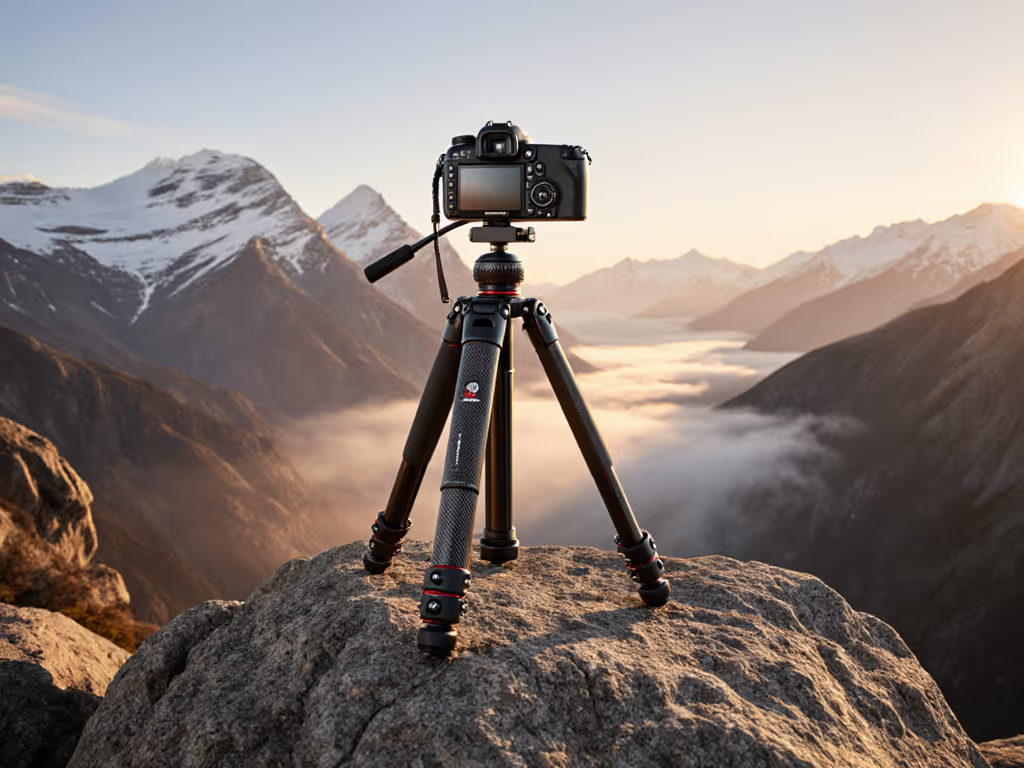
The best travel tripod for photography isn't the one with the highest load rating, it's the one that stays still when wind hits and your shutter opens. Manufacturers list weight capacities, extended heights, and collapse dimensions, yet these specs predict almost nothing about real-world vibration damping, angular stiffness, or how quickly a tripod stops oscillating after you touch the camera. Choose wrong, and you'll carry dead weight or leave it home entirely, defeating the purpose.
Why Spec Sheets Mislead
Max height is where most confusion lives. A tripod rated for 60 inches may require raising the center column 6 to 8 inches to reach your eye level, losing rigidity where you need it most. For photographers above 6'2" or below 5'4", this mismatch compounds. True tripod height matters more than advertised reach. A 5-foot-10-inch user working on flat ground should achieve a comfortable working position with the center column nearly retracted; extending it unnecessarily introduces flex and resonance.[1][3]
Load ratings describe weight the legs can theoretically support, not the stiffness you feel when a 200mm lens catches wind or when you compose with slow shutter speeds at f/2.8. A tripod rated for 13 kg may hold your setup vertically indoors yet dance visibly outdoors. Two tripods of identical weight capacity can exhibit radically different decay times (the interval between when you stop touching the tripod and when vibration settles below the sensor detection threshold). That decay time predicts sharpness; the load rating does not.
Damping behavior depends on material (carbon fiber or aluminum), joint design, and how well the head locks to the legs. Carbon fiber typically damps vibration faster than aluminum at equal mass, reducing the tail end of oscillation that blurs long exposures.[2][4] Aluminum tripods can be stiff if well-braced, but they ring longer.
Stability-per-Ounce: The Real Metric
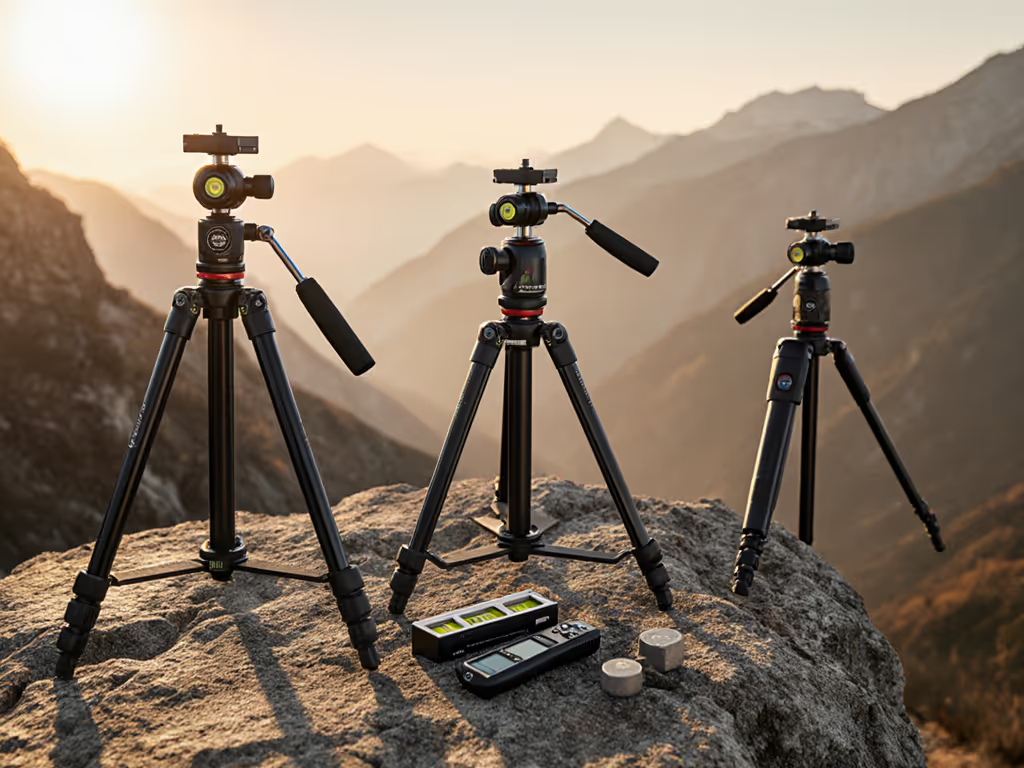
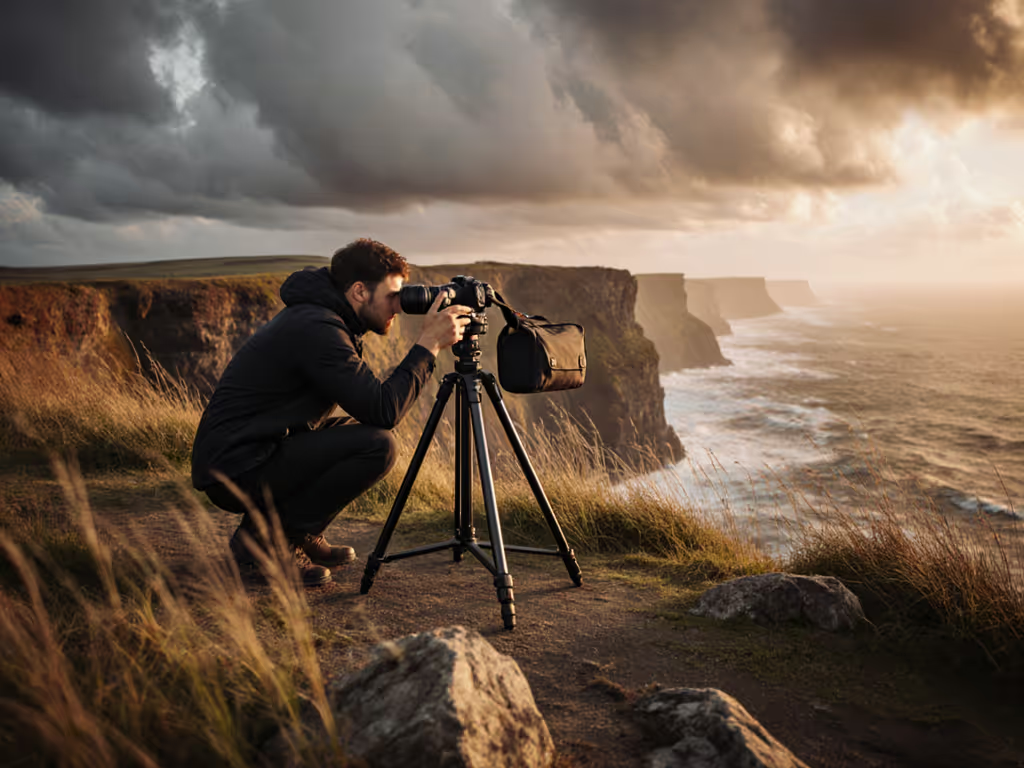
A lighter tripod abandoned in your studio is useless. A heavier one left behind to reduce pack weight is equally useless. The break-even point is stability-per-ounce: how much actual rigidity you gain per pound of mass carried. Early in my testing routine, I'd set up on a coastal ridge in pre-dawn gusts, timing oscillation decay with a timer app while watching a laser pointer trace the wobble on a distant rock. Carbon rigs at 1.3 kg recovered in half the time of aluminum competitors at 1.8 kg. That morning proved the principle: invest in damping efficiency, not bulk.
Measure what matters: decay time, not fantasy load ratings. Use these thresholds in the field:
- Decay under 1.5 seconds (touching tripod to still): suitable for telephotos, slow shutter, or wind-prone terrain.
- Decay 1.5 to 3 seconds: adequate for wide glass and moderate focal lengths in calm or sheltered settings.
- Decay above 3 seconds: reserve for tabletop or monopod work; unsuitable for demanding shooting.
You won't measure this in a store. But you can infer it from material choice, joint tightness, and independent field reviews that prioritize vibration testing over marketing claims.[2][3]
Photography Styles and Their Tripod Demands
Landscape & Wide-Angle Work
Landscape photographers often use wide lenses (14–35mm) at small apertures (f/8–f/16), minimizing vibration sensitivity. Wind effects flatten at wide focal lengths because the angle of view forgives slight angular flex. Yet uneven terrain, dirt, grass, and loose scree demand a tripod with spreader feet and leg splay range to lock onto soft ground without sinking. Height requirement is modest; true height around 60 inches (152 cm) suffices for most users without forcing center column extension.[1][3]
Weight budget: 1.2 to 1.8 kg (2.6 to 3.9 lbs). A carbon tripod with good leg-lock friction will outperform a heavier aluminum sibling. Seek a ball head rated for 4 to 6 kg; a landscape rig rarely exceeds 2–3 kg on the head.
Wildlife & Telephoto Shooting
Telephoto lenses (100 to 400mm+) amplify vibration by ~10x at 400mm compared to 35mm. A tiny angular deflection becomes image blur. Decay time becomes critical. Your true height must allow full composition without raising the center column; once raised, stiffness plummets and ringing increases.[3]
Pack length vs stability tradeoff surfaces here. A compact tripod that folds to 15 inches may extend too short without the center column. Better to choose one rated 60 to 65 inches at true working height. Pair it with a 3-way geared head (not a ball head) to lock each axis independently and resist wind-twist without micro-adjustments. For long-lens field work, see our wildlife tripod picks optimized for stability with heavy glass.
Weight budget: 1.4 to 2.0 kg (3 to 4.4 lbs) with carbon fiber strongly preferred. The decay time penalty for aluminum becomes visible on long lenses in any wind.
Macro & Product Photography
Macro work demands ultra-low height and close-focus capability. Many travel tripods lower to 6 to 10 inches; macro requires 2 to 4 inches. Few compact tripods achieve this without removing the center column or converting to a boom arm. If your tripod's design doesn't allow near-ground work, you've bought inflexibility.
An alternative: pair a tall travel tripod with a reversible center column that inverts for close work. For low-angle setups and focus stacking, follow our macro tripod guide. Some models (Peak Design, Gitzo Traveler series) support this; others do not.[3][4] Read the spec fine print.
Weight matters less for macro (you're stationary, indoors often); stability at micro-movements matters most. A heavier aluminum tripod with excellent damping can excel here, as wind and vibration are controlled variables.
Architecture & Real-Estate Photography
Architecture shoots demand true vertical alignment and horizontal leveling. A ball head alone won't lock vertical reliably on slopes. Seek a tripod compatible with a leveling base or adjustable column bowl. Learn when to choose a leveling base for architectural precision and faster on-site alignment. This adds cost and complexity but eliminates horizon tilt corrections in post-production.
Height is often a liability (ceilings, doorways); true height of 55 to 60 inches is practical indoors. The ability to lower the head to 10 to 20 inches for low-angle interior shots improves versatility.
Carbon fiber is less critical here; a mid-weight aluminum tripod with geared head suffices. Budget tripod: $150 to $400. Professional carbon setup: $600 to $1,100.[2][4]
Travel Video & Hybrid Stills/Video
Video demands smooth, deliberate panning and resistance to micro-vibration during smooth operator moves. A ball head lacks smoothness; a fluid head or geared 3-way head is necessary but adds weight and cost. Decay time matters, but so does lateral play: any tiny slack in leg joints transmits as pan jitter in footage.
Carbon fiber tripods with metal foot locks are preferred for video work; plastic clamps introduce creep. Choose a model with truly rigid leg bracing (corner brace engineering and joint tolerances matter more than material alone).
Weight budget: 1.5 to 2.5 kg (3.3 to 5.5 lbs), assuming a lightweight video head (typically 200 to 400 g). Video heads reduce pack benefit but improve results on playback.
Actionable Selection Framework
Before buying, answer these five questions:
- True height at eye level with center column lowered: Measure this need. If you're 6 feet tall and require 62 inches of true height, prioritize tripods that meet this without column extension. Test in-store if possible.
- Primary focal length: Telephotos demand decay time under 2 seconds; wide lenses forgive 2 to 3 seconds. Know your typical range.
- Typical load: Weigh your camera body, lens, and head together. Add 15% margin. Seek a tripod rated 5× your typical load as a rule of thumb, spec ratings are optimistic.
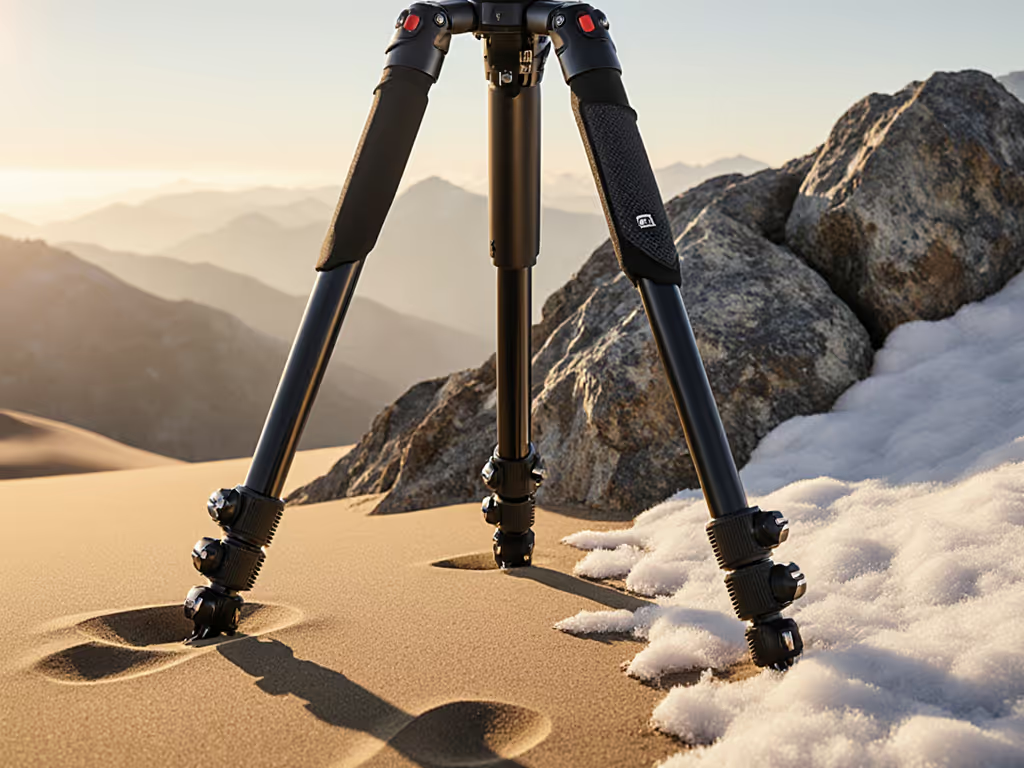
- Terrain: Soft ground (grass, sand, snow) needs spreader feet and splay. Rock and hardpack need compact footprint and stable traction.
- Pack constraints: Measure your carry capacity, airline overhead, backpack hip belt, camera bag side pocket. Collapse length matters as much as weight if you can't fit it.
Rigid testing labs publish side-by-side comparisons with decay time measurements; consumer reviews often mention wind performance on long exposures. Favor those accounts over spec sheets. Look for mentions of stiffness feel, not just load ratings, in field reports from credible sources.[2][3][5]
The Path Forward
A tripod is a long-term system. You'll pair it with multiple heads, plates, and leveling tools over years. Invest in a design proven for decay time, true-height fit, and leg-lock reliability. Carbon fiber earns its cost premium by combining light weight with fast vibration damping, essential for telephoto and long-exposure work. Aluminum is economical for landscape and macro if ergonomics and geometry suit your body and terrain.
The best choice is the one you'll carry and use consistently, anchored by real-world stability metrics rather than marketing claims. Test the legs with your body, time the decay with your camera, and trust the result more than any printed number. Your sharpest frames will confirm the decision.
Related Articles