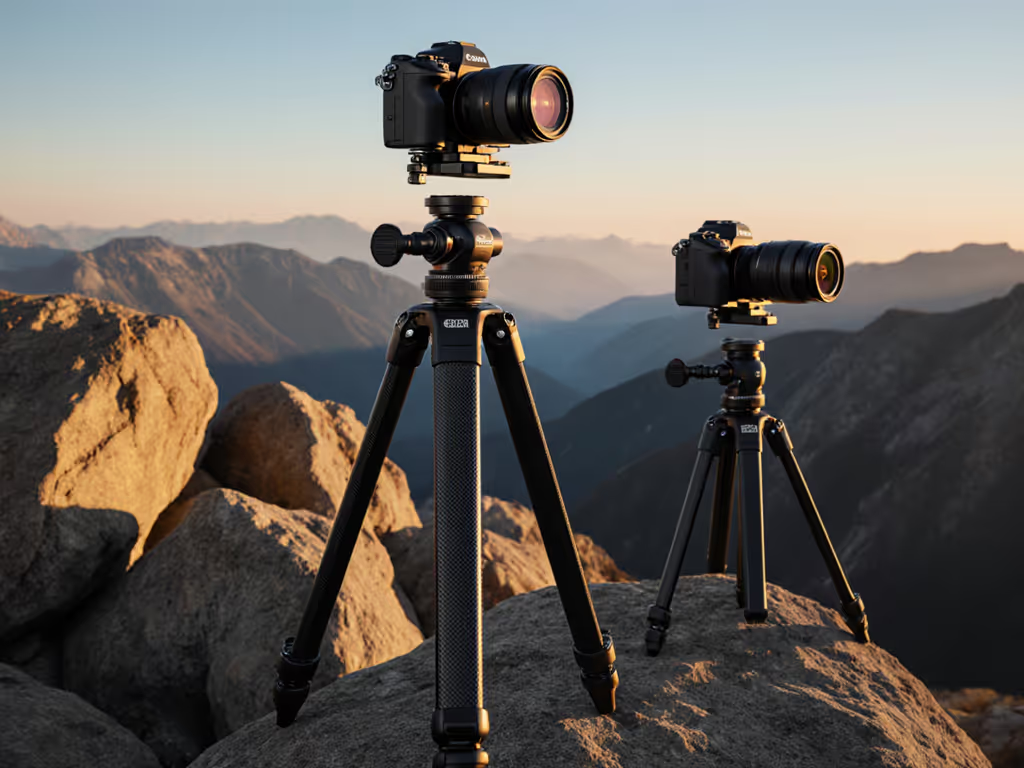
2 vs 3 Tripod Sections: What Beginners Actually Need
By Nia Okafor • 27th Mar
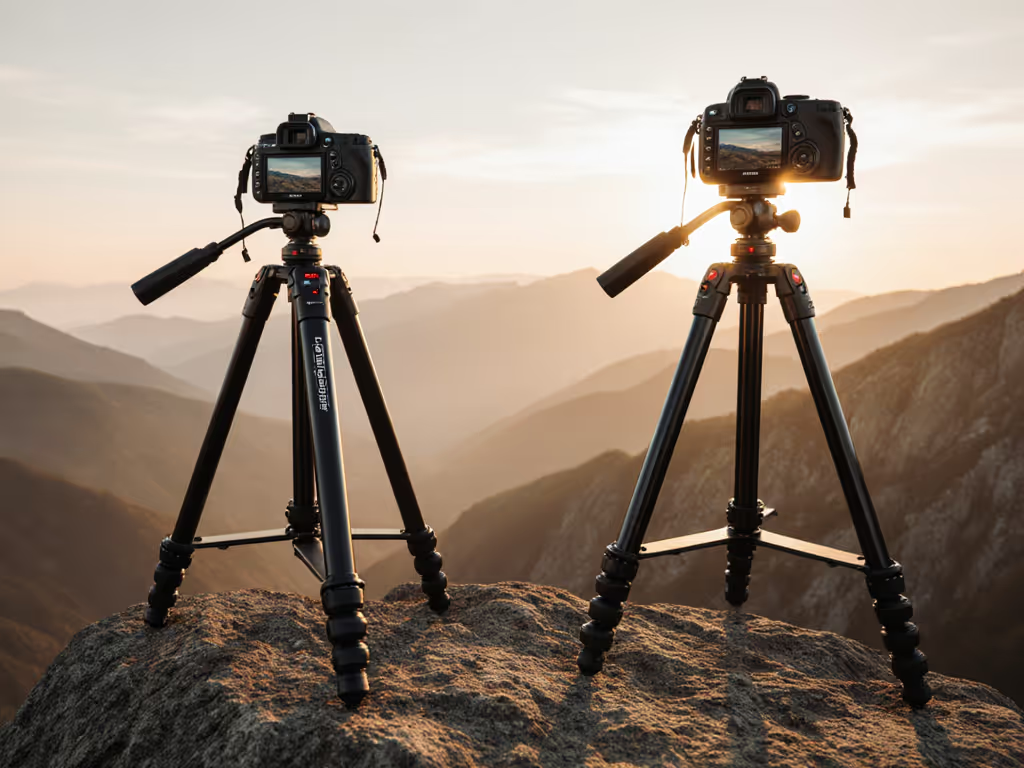
You're standing in a camera shop, or scrolling through spec sheets, and the question stops you: 2-section tripod or 3-section tripod? It sounds like a small choice. It isn't. The decision shapes how tall you'll comfortably shoot, how stable your frame becomes in wind, and whether you'll actually carry the thing into the field or leave it home because it frustrates you. For beginners especially, this choice is one of the highest-leverage decisions you can make early, yet it's often buried in marketing noise and contradictory forum posts.
The good news: the answer depends less on guesswork than it does on understanding what each design actually does, and what you actually need.
Why Section Count Matters More Than You Think
At first glance, a tripod is a tripod. Legs, head, plate. Close the legs shorter or longer, and you adjust height. But tripod leg sections comparison reveals something deeper: how many times each leg folds directly affects stability, compactness, weight distribution, and real-world usability in harsh conditions.
When you collapse a tripod, each section nests into the one above it. A 2-section tripod has two folds per leg. A 3-section tripod has three. On paper, that sounds like a trivial difference. In the field (on scree, in crosswind, when you're trying to shoot sharp at 1.6 seconds with a 200mm lens), it becomes everything.
Repeatable habits beat improvisation when conditions turn hostile.
Understanding the structural difference helps you build one habit: choosing the tripod that makes good technique automatic, not optional.
The Stability Question: Three Sections Wins
What does the research show? Generally speaking, a three-leg-section tripod is more stable than a four-leg-section one, and by extension, a 3-section tripod holds an advantage over 2-section designs. For tested data and methods, see our 3-section vs 4-section stability test. The reason is geometry and diameter. When a tripod is fully extended, each successive section becomes slightly thinner. In a 2-section leg, the final section is thinner and more prone to flex. In a 3-section leg, each section is longer and thicker, so the thinnest final section is still structurally robust enough to resist vibration.
Why does this matter to a beginner? Because you'll inherit the wind.
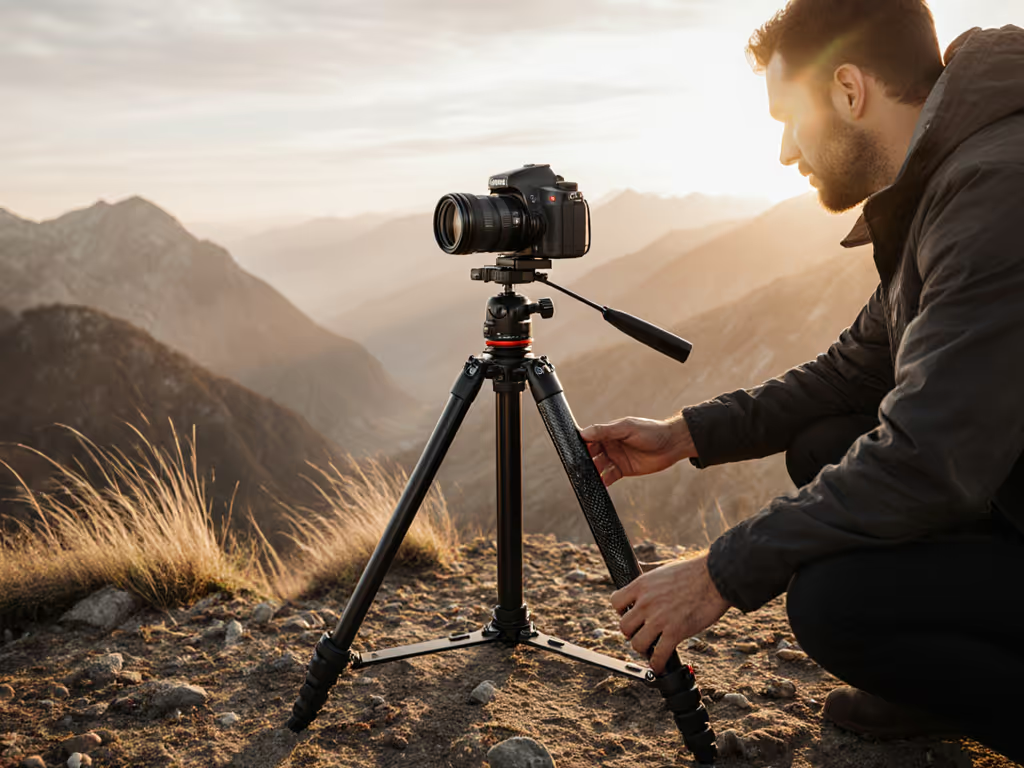
On a remote ridge, in afternoon thermals, or when you're trying to nail focus on a butterfly's eye at f/4, a tripod that holds stiff without wiggle is the difference between a keeper and digital noise. A 2-section tripod, especially a lighter one, can act like a tuning fork in gusts, as each vibration travels up the leg, through the head, and blurs your sensor. A 3-section design dampens that vibration more effectively by spreading the load across more anchor points.
Height: The Beginner's Trap
Here's where many beginners stumble: they assume a taller maximum height means a better tripod. Wrong.
Yes, a 2-section tripod can reach similar maximum heights to a 3-section one. But how it reaches that height, and at what cost, matters. To hit the same max height, a 2-section leg must extend much further in its final section, often requiring you to raise the center column significantly. Center column extension is your enemy in wind and on uneven ground. A raised center column becomes a lever arm; any micro-movement in the legs gets amplified at the camera.
A 3-section tripod, by contrast, reaches similar heights with the center column lowered or at its base height. That means lower center of gravity, stiffer resistance to twist, and easier balance on sloped or broken terrain.
For practical eye-level shooting without center column extension, most 3-section tripods are the smarter bet, especially if you're between 5'4" and 6'2".
What About Compact Shooting and Sitting Use?
One legitimate advantage of a 2-section tripod: pack length. If you're stuffing a tripod into an airline carry-on, a tight backpack side pocket, or a hiking pack where centimeters count, a 2-section design closes smaller.
But, and this is important, that compactness comes with tradeoffs. For sitting use (macro, product, overhead shots), a 2-section tripod is often too tall, even when fully collapsed. You'd need to invert the legs or lower the center column to uncomfortable positions. Awkward positions mean shaky hands, longer setup time, and mistakes.
A 3-section tripod, when you spread the legs wider or work with an inverted design, gives you genuine low-angle flexibility without contortion. Many professionals choose inverted legs precisely because they solve the sitting-use problem cleanly, and inverted designs pair naturally with 3-section legs.
If compact pack-ready dimensions are your priority, weigh that against how often you'll actually use the tripod at low angles or from a sitting position. One day of bent-knee shooting with a too-tall 2-section frame will teach you the price of that saved inch in your pack.
The Weight and Stability Paradox
Common sense says lighter is always better. The field teaches a different lesson.
Weight helps with stabilization, especially in windy conditions and on precarious ground. For how leg material affects vibration absorption and weight, see our carbon fiber vs aluminum stability guide. For example, when a tripod is planted on rocks or uneven scree, extra mass means the frame resists tipping or sliding as the wind gusts. A 38 to 48 oz tripod provides good support for most purposes. For those minimizing weight in backcountry work, under 40 oz is a guideline. But there's a floor: go below 32 oz, and you're fighting wind and terrain on nearly every shoot.
Here's the nuance beginners miss: a 3-section tripod, being structurally stiffer, can maintain stiffness at a similar or even lower weight compared to a 2-section design. The extra sections provide redundancy. You don't need extra mass to compensate for flex, you get rigidity from the design.
In other words, a well-chosen 3-section tripod can be lighter and more stable than a heavier 2-section alternative.
Deployment Habit: Why Fewer Folds Matters
Here's the lesson I return to from years of teaching: Slow is smooth; smooth is sharp when the wind rises.
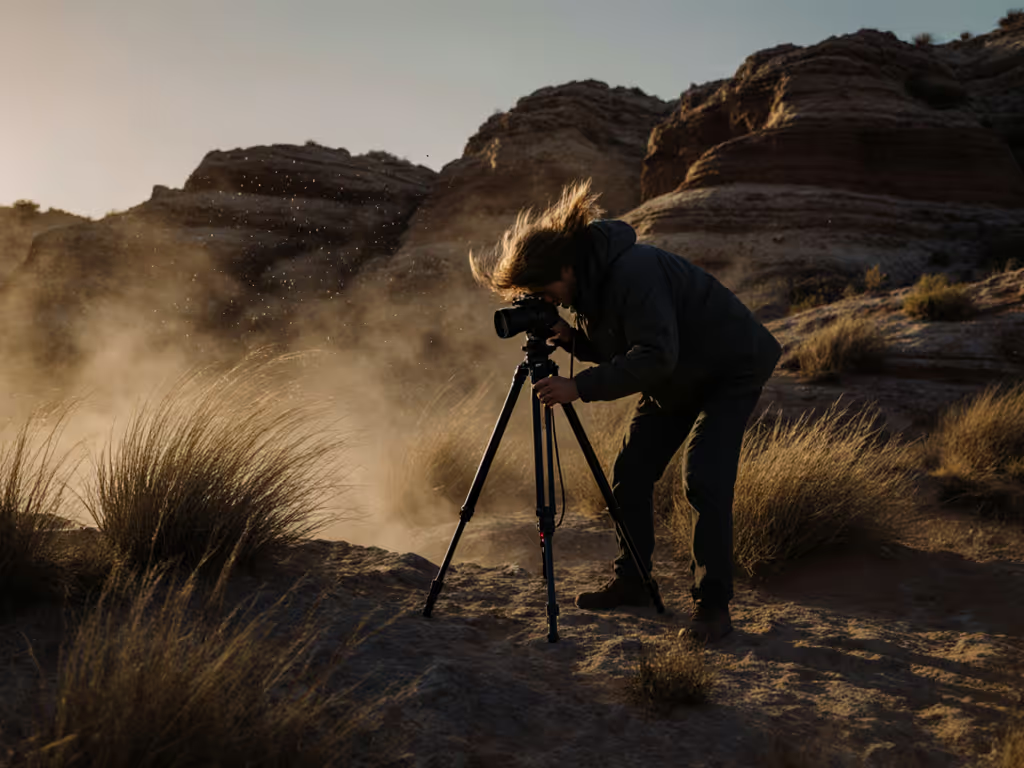
On a wind-scoured dune, I once watched a group of students wrestle with twist locks and slumping columns. Their tripods wobbled, frames went soft, frustration mounted. We paused and reset them all to the same sequence: legs to true height, level base once, then free the pan. The chaos stopped. Frames sharpened. The gear hadn't changed, the habit had.
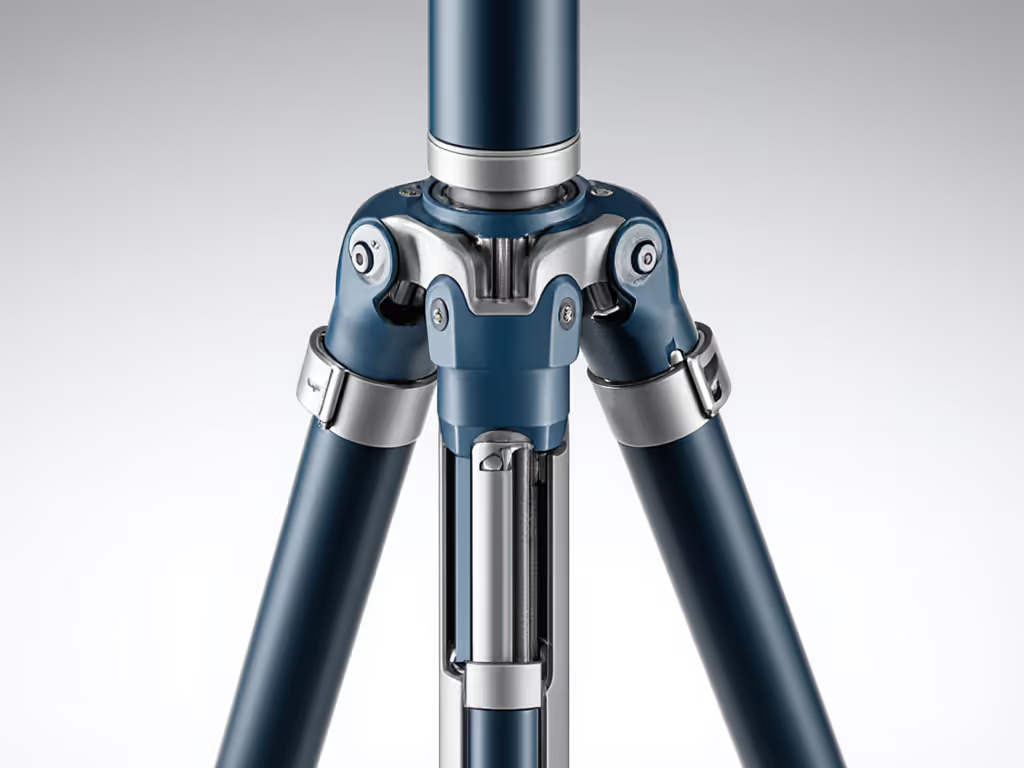
A 3-section tripod's three sections mean three lock points to verify. A 2-section has two. But here's what that translates to: more muscle memory, more chances to catch a mis-set lock before you mount the camera, and a slower, more deliberate process that prevents errors when you're tired or in cold gloves.
Fewer sections can seem simpler. But in practice, fewer sections mean each section extends further, making it easier to over-extend or under-lock. The extra section on a 3-leg design is a built-in checkpoint. It forces you to slow down and do the thing right.
Glove-Friendly Setup: A Non-Negotiable for Beginners
I favor controls and clamps that are glove-friendly and hard to mis-set. This bias isn't casual, it's earned on cold mornings and windy afternoons.
With a 2-section tripod, the fewer lock points might seem easier to manage with thick gloves. In reality, larger sections mean larger twist locks, and larger locks are easier to grip and turn with insulated hands. But if those locks are poorly designed (thin, shallow knurling, tight tension), you'll fumble and waste golden-hour minutes. To choose between mechanisms, compare our flip vs twist lock test.
The advantage of a 3-section tripod is that competition has driven better lock design. More models exist in the market, and the best ones have evolved ergonomic, glove-ready locks. A well-chosen 3-section frame often comes with more thoughtful hardware than a budget 2-section alternative.
Your setup ritual should feel natural even in cold, wet conditions. If you're forced to remove gloves to lock the legs, your tripod isn't pack-ready for the work.
Terrain and Uneven Ground
Most beginners underestimate how often they'll shoot on slopes, rocks, and soft ground. Swapping in terrain-specific tripod feet improves bite and stability on sand, snow, and rough rock. A 3-section tripod, with longer individual sections, gives you more flexibility to splay legs at different angles, one foot planted higher, one lower, to level the base without a separate leveling bowl. That adaptability is critical on scree, talus, or soft sand where digging in one leg more than another is your only leveling option.
A 2-section tripod's shorter leg sections make it harder to achieve this asymmetrical splay. You'll end up raising the center column or tilting the head, both of which introduce instability.
FAQ: Quick Answers for Beginners
Q: If a 2-section tripod and a 3-section tripod both reach the same max height, why choose 3 sections? A: Because the 3-section reaches that height with the center column down, and with stiffer legs. A 2-section needs center column extension, which acts like a lever arm in wind and reduces stability. A raised center column on uneven terrain is also harder to keep level.
Q: I'm worried about pack length. Will a 3-section tripod fit my carry-on? A: Many 3-section tripods close to 24 to 26 inches. Check the specs for collapsed length. If pack size is critical, prioritize that, but test whether sitting use and low-angle shooting matter to you first. You might find you rarely use those angles and regret the 2-section choice.
Q: Is a 3-section tripod always heavier? A: Not necessarily. A well-designed 3-section frame in carbon fiber or optimized aluminum can match or beat a poor 2-section design's weight. Look at actual shipping weight, not just section count.
Q: What if I'm very tall (over 6'2") or very short (under 5'4")? A: Body extremes change the equation. A very tall user might appreciate the 2-section tripod's ability to reach higher without center column extension. A very short user benefits from a 3-section tripod's low-angle flexibility. Measure your working height on known tripods and compare specs directly, rather than trusting advertised max heights.
Q: I do both stills and video. Does section count matter? A: Yes. Video demands smooth pans, which require stiff legs and a quality head. A 3-section tripod's inherent stiffness pairs better with video work. For hybrid workflows, 3 sections is the safer bet.
The Actionable Next Step
Stop trying to decide in the abstract. Borrow or rent a 2-section and a 3-section tripod of similar weight and maximum height for a full day of shooting. Use them on the terrain and in the light you actually work with. Notice:
- Which frame reaches your eye level without center column extension?
- Which one feels more stable in the wind you encounter?
- Which one's legs and locks feel intuitive to manage with gloves on?
- Which one leaves you confident in focus sharpness at 1.6 seconds?
- Which one's setup ritual becomes automatic by the third use, without frustration?
Your real answer lives in that test, not in a spec sheet or forum thread. After that test, the choice becomes clear, and you'll own a tripod that doesn't compromise your comfort, your keeper rate, or your field habits.
The tripod that disappears in use is the one you've learned to set without thinking. Build that habit early. Choose the design that makes the ritual smoother, and the sharp frames will follow.
Related Articles