Rotating Center Column Tripod: Stability Tested
By Yuki Tanaka • 6th May
The Problem: Horizontal Freedom vs. Vertical Rigidity
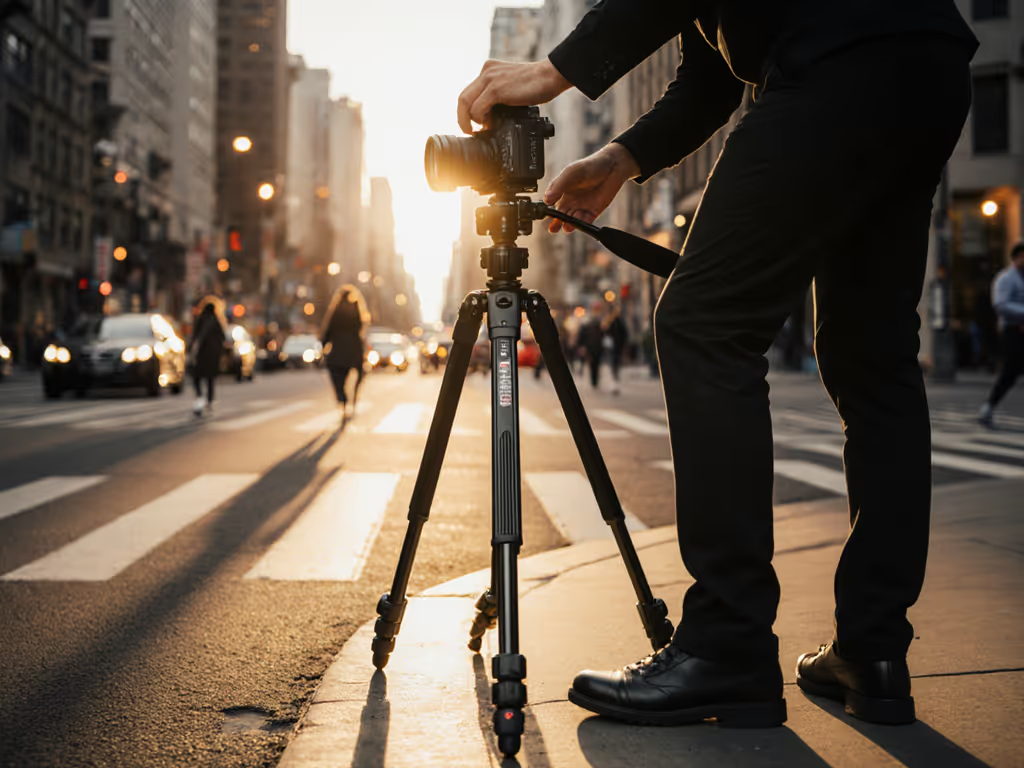
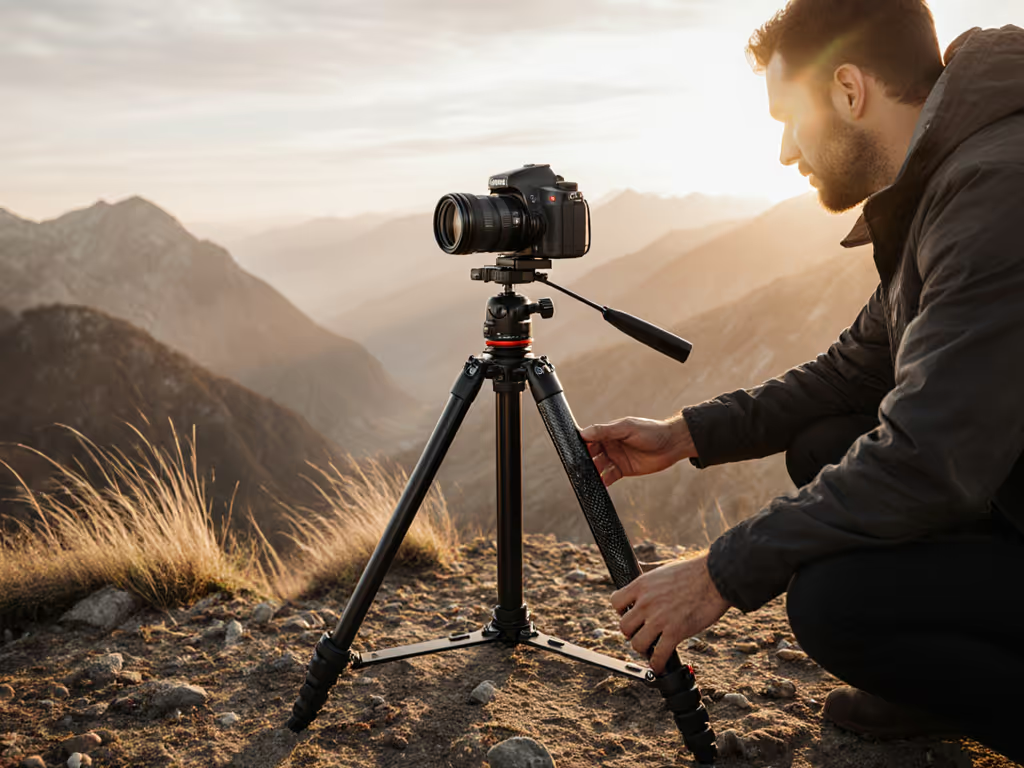
The rotating center column tripod promises liberation from the fixed grid. You can pivot from portrait to landscape without repositioning legs, shoot macro work at ground level with the column horizontal, and frame expansive vistas without that contorted neck twist. The appeal is real, until you test stiffness in wind or examine load ratings on long glass.
Yet the market conflates "rotating capability" with "rotating competence." A pivot column tripod comparison across price bands reveals a harder truth: many rotating designs trade rigidity for convenience. The column becomes a lever arm. Wind torque multiplies. Wobble creeps back into your 200mm framings. And most buyers discover this after the return window closes.
The challenge isn't the concept (it is separating designs that hold stiffness from those that merely fold).
The Agitation: Why Your Last Choice Probably Disappointed
I learned this the hard way. Years ago, I bought a flashy mid-range tripod with dual-ring rotating gears and marketing language about "pro-grade horizontal capability." The legs looked purposeful. The head was smooth. I convinced myself it would cover landscape, product, and architectural work in one rig. Within weeks, I was watching tele images soften when the center column went horizontal even slightly. The mechanism crept under a 400mm equivalent load. I sold it at a loss and started building a spreadsheet.
That spreadsheet became habit. For every tripod, I mapped three variables: effective stiffness (measured via vibration damping and deflection under load), weight, and street price. I divided stiffness by weight, then by cost. It was methodical, unglamorous work, but it flipped my buying instinct from flashy to honest.
Here's what emerged: the tripods that performed best horizontally weren't the most expensive. They were modular. A well-chosen leg set (often used, mid-tier) paired with a proven ballhead from a different maker often outperformed a flagship unified kit. That hybrid approach freed budget for a quality leveling base or backup plates, and I stopped repurchasing.
The bulk of rotating-column friction stems from three gaps:
1. Spec Sheet Silence on Torsional Stiffness
Manufacturers tout max-height and rated load but rarely quantify torsional rigidity (how much the column twists under side-load). A 180-degree center column review focused on horizontal work shows that column diameter and clamp clamping-force matter far more than load rating. Two tripods with identical 30 kg ratings can behave like night and day when the column rotates. You rotate, the head rocks slightly, and in a 2-second exposure, you accumulate blur. The spec sheet never warned you. For the engineering behind this, see our tripod vibration damping physics guide.
2. The Creep Trap
A rotating mechanism is a joint. Joints slip. Even vanguard veo pivot designs (well-regarded in the market) exhibit measurable creep if you're patient: hook a dial indicator to the ballhead collar, add 3 kg of dead weight via telephoto, let it sit for 30 seconds. Most rotating columns drift 2-5 mm. For a model-specific breakdown of a pivoting design, read our Vanguard VEO 3+ review. That's not catastrophic at standard distances, but macro work at 1:1 or product shoots at 100mm can demand sub-millimeter trueness. Standard (non-rotating) columns with friction-lock legs rarely creep beyond 1 mm under the same test.
3. Wind Amplification
A horizontal column acts as a wind-sail and a torque arm. A 15 mph gust hitting a ballhead mounted on a horizontal 2-inch column creates rotational force that a standard vertical column avoids. Rotating center column stability in real wind requires either heavier leg mass (defeating portability) or tighter mechanical tolerances (raising cost). The trade-off is implicit but rarely named in marketing.
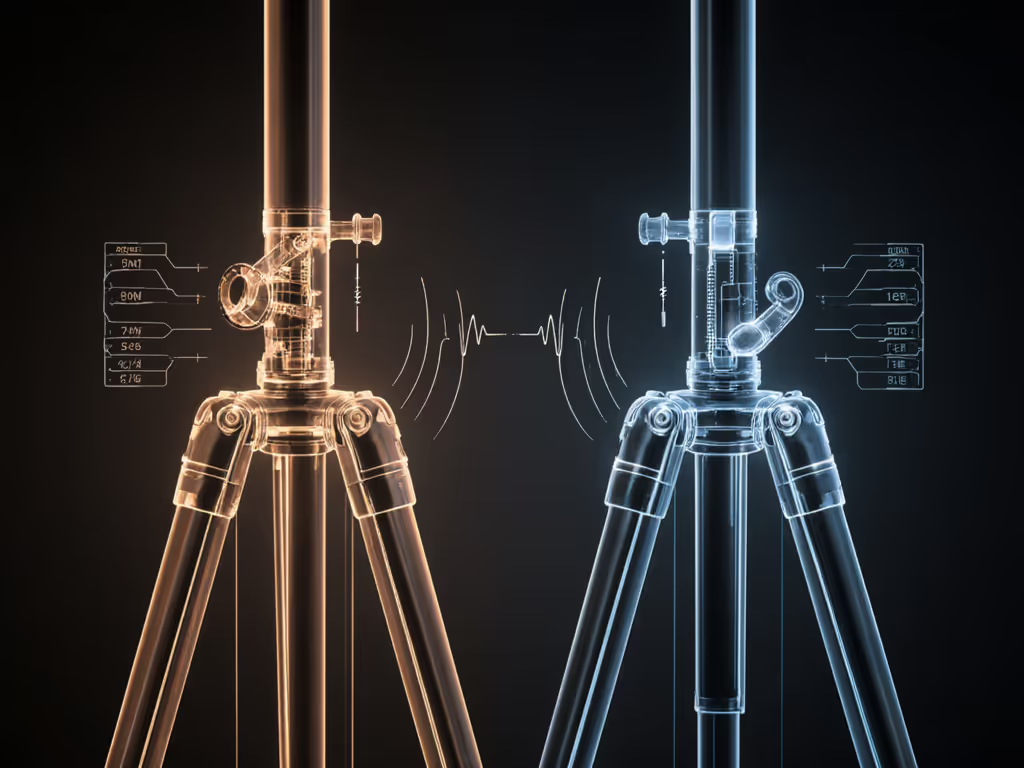
The Solution: Mapping Rotating Choices via Cost-Per-Stiffness
If you need horizontal capability (and for landscape, architectural, and macro work, you do), the path is not to surrender stiffness but to architect it methodically. Value lives where stiffness, weight, and price intersect sanely. Here's how.
Criterion 1: Column Design
Rotating columns come in two flavors:
Single-clamp (friction lock). One collar tightens against the column. Cheaper, simpler, and paradoxically more stable if the clamp is well-engineered. Downsides: occasional slip under sustained load, less ergonomic for gloved hands, slower to re-tighten.
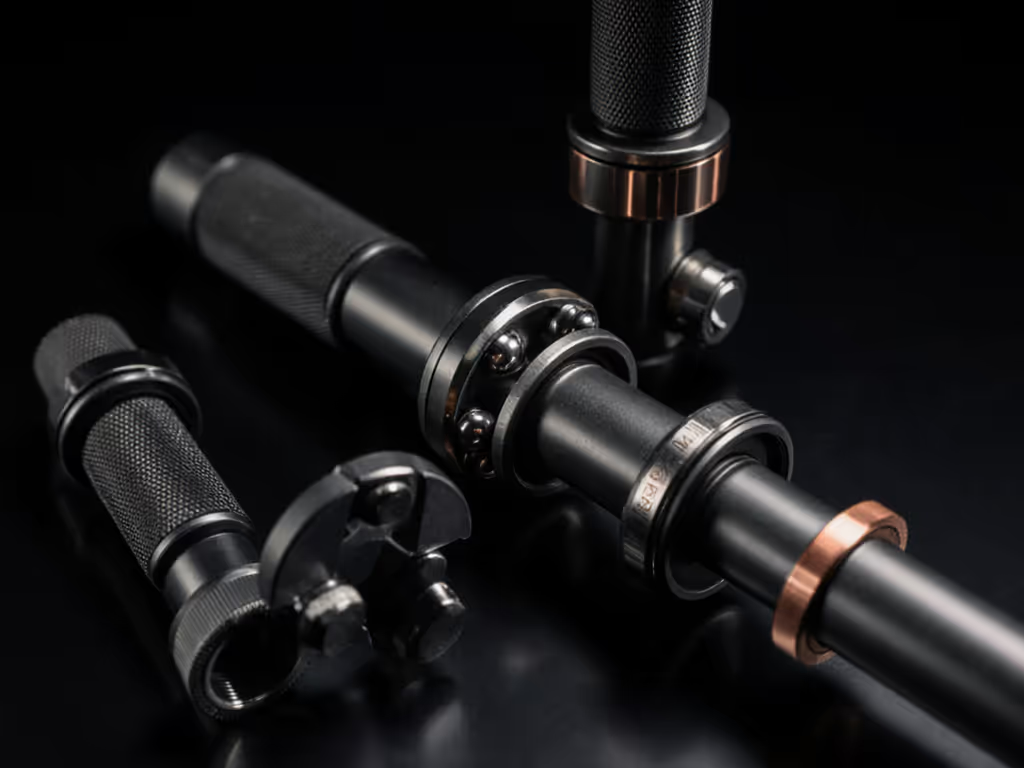
Double-ring or geared lock. Two clamps or a gear mechanism distribute pressure. More intuitive and faster for repeated rotation. But added complexity means added parts, added weight, and added failure points. Cost climbs 20-40%.
For horizontal shooting tripod work, single-clamp designs offer better value. A tight friction lock loses almost no rigidity compared to the fixed column, and you avoid mechanical complexity. Verify: when the column is horizontal and fully locked, twist the ballhead collar by hand. Any detectable flex? If yes, the clamp isn't tight enough for your use. Move to the next model.
Criterion 2: Column Diameter and Material
Thicker columns are stiffer. For material trade-offs on real vibration decay, see carbon fiber vs aluminum. A 1.75-inch carbon column with a friction clamp outperforms a 1.5-inch aluminum column with dual rings. But thickness trades against packability. Most rotating designs split the difference: 1.6-1.75 inches, carbon or aluminum with a verified rigidity spec.
Lexicon trap: manufacturers label "rigid" or "ultra-stiff" loosely. Instead, ask the retailer or spec sheet for deflection under load (how many millimeters the column tip moves when you hang 5 kg from the ballhead and the column is horizontal). Under 2 mm is good. Under 1 mm is excellent. Over 3 mm, stiffness is borderline for anything longer than 85mm focal length.
Criterion 3: Modularity and Lock Durability
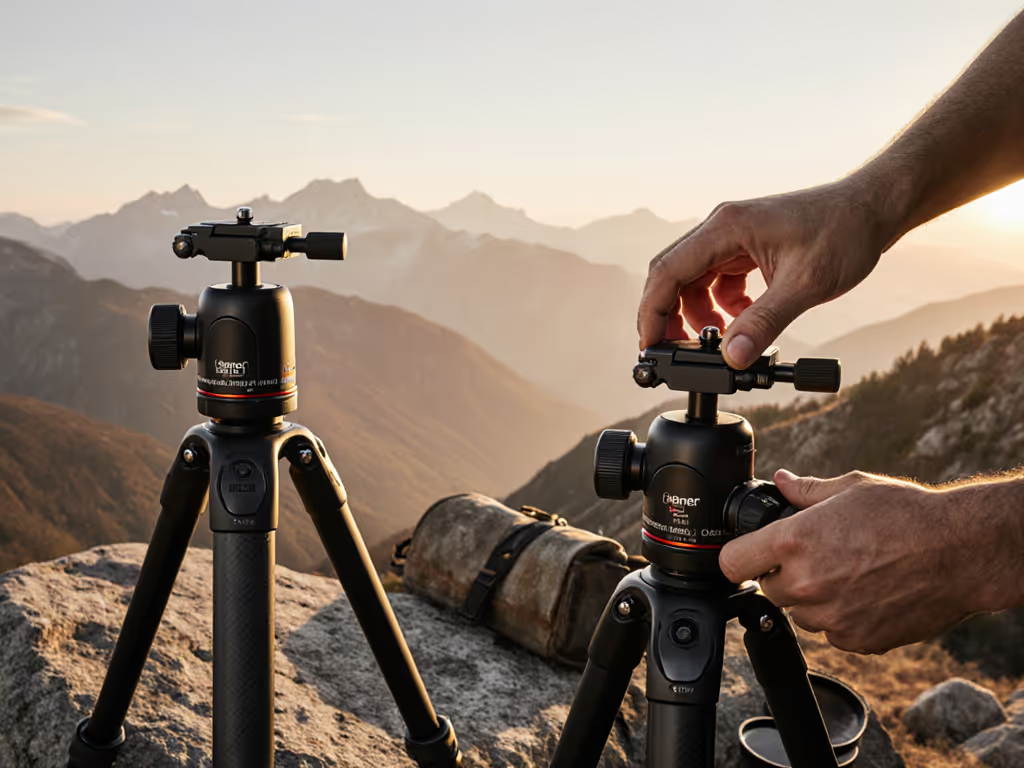
Here's where buy once, cry once thinking saves money. A top-tier rotating column with a second-rate ballhead is wasted engineering. A mid-tier rotating leg set paired with a proven ballhead from a previous kit often outperforms.
Why? Balls fail. Heads seize. A modular setup lets you retire the culprit head and pair the rotating column with a fresh unit (or swap in a geared head for hybrid still/video work). A monolithic kit locks you into replacing the entire tripod.
Seek designs with:
- Arca-Swiss or RRS-compatible plates (opens your head options)
- Tool-free leg locks (fast, durable, forgiving with cold hands)
- Corrosion-resistant internals (aluminum internals seize; stainless clamp screws don't)
- Available spare parts (top brands ship lock replacements; budget brands sell "buy new")
Criterion 4: Sourcing Strategy
Rotating tripods are not impulse-buys, so the used market is thin but honest. A 3-year-old mid-tier rotating setup rarely shows wear if the shooter was careful. Prices drop 25-40% on platforms like eBay, Fred Miranda, or local groups. Your cost-per-stiffness math improves immediately.
When sourcing used:
- Inspect the friction clamp for cracks or corrosion (replacement can be expensive).
- Rotate the column by hand. Listen for grinding or roughness (sand/salt intrusion).
- Test the ballhead for play in the pivot ball (more than 1-2 mm of wiggle suggests wear).
- Verify that leg locks engage and release smoothly (seized locks cost time in the field).
Criterion 5: Your Shooting Profile
Not every shooter needs a rotating column. If your primary work is:
Landscape (15+ mm wide-angle). Rotating columns add weight and complexity for marginal benefit. Standard column with a ball or geared head handles composition shifts efficiently. Skip rotating.
Architecture or real estate (24-70 mm). Rotating columns shine. Low-angle frames are common, and repositioning entire tripod legs on stairs or cramped interiors is friction-heavy. A rotating column cuts setup time and preserves leg positioning. Invest in stiffness.
Macro or product (50-100 mm macro, 1:1). Rotating columns enable true horizontal framing without compromise. But stiffness must be non-negotiable. A soft column kills sharpness faster than wind. Choose rigidity over convenience.
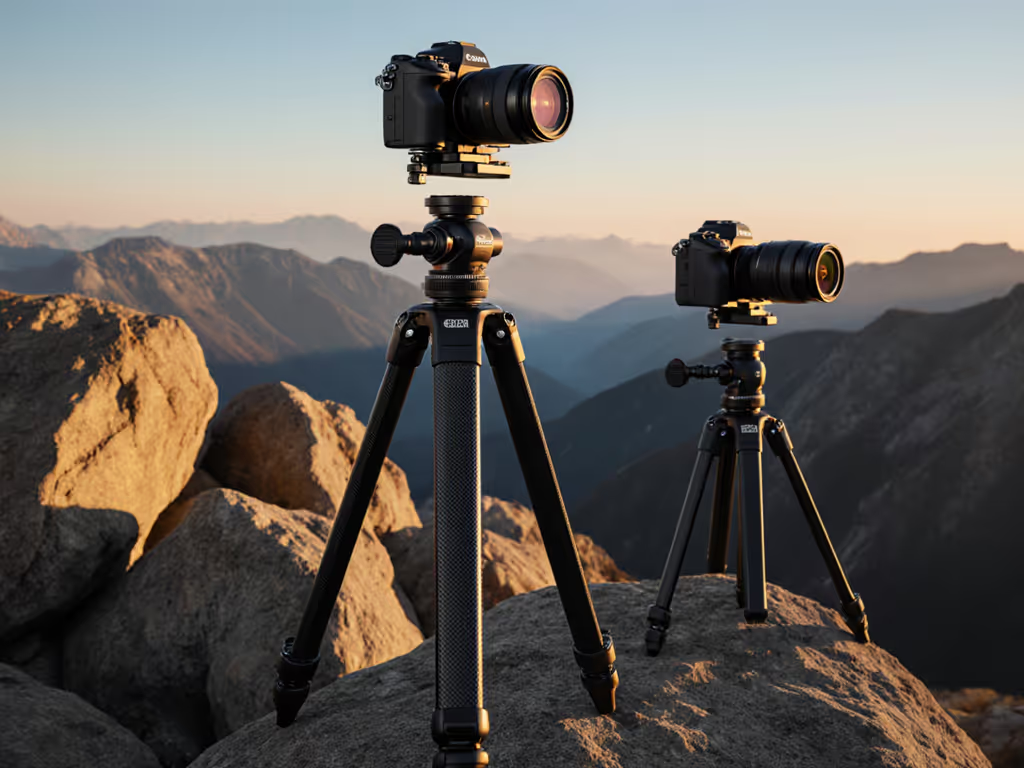
Telephoto or astro (200 mm+, long exposures). Rotating capability is secondary; stiffness is paramount. If you do use a rotating column at 200 mm, the column must be pinned to vertical with zero creep tolerance. For ultra-long exposures, our astrophotography tripod picks detail stability baselines that avoid micro-drift. Verify deflection specs ruthlessly.
The Decision Matrix
When rotating columns are worth the cost premium: Architectural, real estate, macro, or product work where framing flexibility and ergonomics (low or twisted angles) drive efficiency. Load is moderate (under 3 kg), and wind is not a primary concern.
When standard columns are the smarter buy: Telephoto work, high-wind shooting, or astro where creep and rigidity are uncompromising. The rotating mechanism is overhead you don't need.
When modularity salvages the choice: You own a mid-tier ballhead already. Pair it with a rotating leg set, test creep and deflection, and ditch the monolithic kit. You'll likely save $200-400 and maintain adaptability.
Actionable Next Steps
- Quantify your load and focal length. Weigh your camera body, heaviest lens, and any gimbal or rig. Note the longest focal length you routinely shoot. This defines your stiffness floor.
- Define your primary terrain. Wind-prone? Uneven ground? Low work? Each shapes whether rotating capability is comfort (nice to have) or necessity (workflow enabler).
- Test deflection before buying. If a retailer permits, hang a 5 kg weight from the ballhead with the column horizontal, measure the tip deflection via dial indicator or ruler, and compare models side-by-side. Reject anything over 3 mm for telephoto work.
- Cost-per-stiffness math. Map three models within your budget onto a simple sheet: effective stiffness (via specs or your deflection test), weight, and street price. Divide stiffness by price. The highest ratio is your value anchor.
- Check modularity and parts availability. Confirm that ballhead interfaces are standard (Arca, RRS, or Manfrotto 322). Verify that spare clamp screws, locks, or plates are orderable. A locked-in ecosystem is expensive insurance.
- Source used if possible. A two-year-old rotating column from a careful owner costs 30% less and carries the same stiffness. Inspect clamps and joints, test lock engagement, and negotiate based on wear. Your cost-per-stiffness improves.
- Commit to one tripod metric. In your next field session, measure sharpness (via 100% crop critique) in three conditions: vertical column in calm air, vertical column in 10+ mph wind, and horizontal column in calm air. Log your keeper rate. This empirical feedback beats any spec sheet and anchors your next purchase with confidence.
Rotating center columns are not inherently inferior; they simply demand more scrutiny. The tripod that creeps, sways, or forces you into awkward postures is the expensive one, no matter its price. The tripod that holds stiffness, integrates into your modular ecosystem, and frees you to focus on light and composition is the one worth buying. That's where real value lives.
Related Articles