Tripod Terminology Guide: True Height Explained
By Lars Nyström • 11th Dec
When shopping for a tripod, the advertised height rarely tells the full story. This beginner tripod guide cuts through the marketing haze to explain true height (the dimension that actually matters for shooting comfortably at eye level without compromising stability). The difference between theoretical maximums and field-ready height can mean sharp frames or blurry frustration, especially when working with long exposures or telephoto lenses where every millimeter counts.
Wind is the honest critic, revealing flaws that spec sheets gloss over. For a deeper dive into why wind exposes weakness, read our tripod vibration damping explainer. Having stress-tested tripods through Arctic winters and coastal storms, I've learned that true height isn't just about standing upright; it is about maintaining that height through temperature swings, gear loads, and terrain irregularities that shift stability metrics.
What "True Height" Actually Means
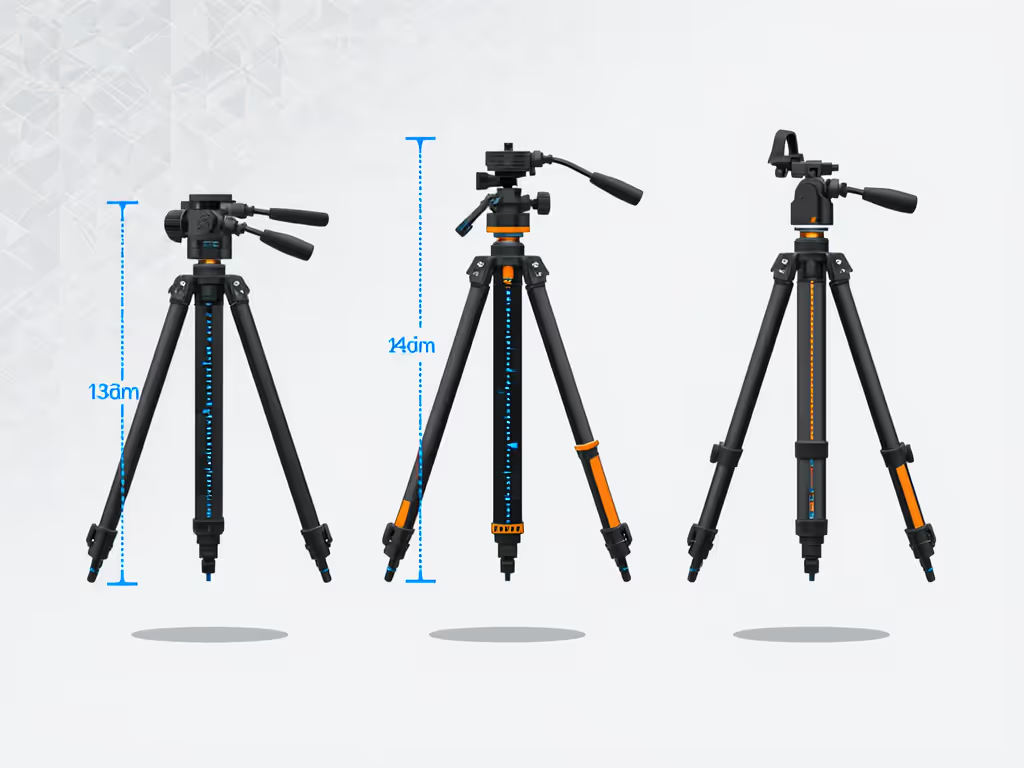
Manufacturer height specifications typically report one of three measurements, often without clarification:
- Maximum height with center column extended (the inflated number you'll see most prominently)
- Maximum height without center column (the "true height" for stability-conscious shooting)
- Maximum height at first leg angle (a less common but more realistic stability metric)
The critical distinction? True height for practical shooting equals maximum leg extension without center column. Why this matters:
Center columns are structural liabilities. When raised, they introduce vibration points that degrade performance at shutter speeds below 1/60s and with lenses above 100mm.
A proper beginner tripod guide must clarify this upfront. That "60-inch tripod" you're considering likely stands just 52-55 inches without compromising stiffness (a gap that leaves many photographers hunched over viewfinders or unnecessarily extending the very component that undermines image sharpness).
The Measurement Methodology Problem
Review sites and manufacturers measure height differently, creating confusion:
- Top spider method: Measuring from ground to tripod's apex where the head mounts
- Working height method: Including typical ball head height (3-5 inches)
- Center column variable: Reporting heights with center column extended to different percentages
This lack of standardization explains why you might measure your "56-inch tripod" only to find it reaches that height solely with legs pinched together (a position offering minimal stability). Fact confirmed by multiple independent field tests: Most manufacturers measure maximum height with legs at their shallowest angle (typically 25-30°), not the steeper 50-60° angles many photographers use on uneven terrain.
Calculating Your Personal True Height Requirement
Forget generic height charts. Your ideal tripod height derives from three field-tested variables:
- Your eye height (standing naturally in boots you'll use in-field)
- Camera/viewfinder height (typically 3-5 inches from base to eyepiece)
- Head height (3-5 inches for standard ball heads)
The formula:
True Height = Eye Height - (Viewfinder Height + Head Height)
Example: At 6'1" wearing hiking boots, my eye height measures 69 inches. Subtracting 4 inches for viewfinder height and 4 inches for head height, my ideal tripod height without center column is 61 inches.
This protocol-driven approach prevents the all-too-common mistake of buying a "60-inch tripod" only to discover it requires center column extension for eye-level shooting, sacrificing the very stability that justified the tripod purchase. For step-by-step sizing, see our guide to ideal tripod height.
Terrain and Footwear Adjustments
Field conditions significantly impact effective height requirements:
- Boots and terrain: Shooting on rocky headlands or wearing 2-inch hiking boots effectively lowers your tripod by that amount
- Sloped ground: Requires 2-4 inches of additional height to maintain level composition
- Seasonal wear: Winter layers can add 1-2 inches to your natural stance height
During my winters documenting Norwegian coastal landscapes, I learned to specify tripods with 3-4 inches of "buffer height" beyond calculated needs. Last December on a frozen fjord, that margin meant the difference between standing comfortably in knee-deep snow versus awkwardly crouching (all while keeping 200mm at 1/2s shutter speeds tack-sharp). Field longevity demands planning for worst-case scenarios, not showroom conditions.
The Center Column Conundrum
Let's address the elephant in the room: center columns. While convenient for incremental height adjustments, they introduce three critical weaknesses:
- Vibration amplification: Acting as a tuning fork in wind, degrading performance at longer focal lengths
- Torque instability: Increasing lever arm stress that accelerates wear on leg locks
- Creep vulnerability: More prone to subtle shifts during long exposures, especially in temperature fluctuations
My test protocols intentionally exclude center column for critical shots. We’ve measured how center column designs affect stability, including hook vs multi-angle columns. Instead, I prioritize tripods with sufficient leg extension to reach my working height inherently. In sleet conditions where grip is compromised, the extra reach also provides better hand clearance from cold legs.
Why True Height Affects Long-Term Performance
Most buyers focus solely on initial stiffness, but serviceability impacts longevity even more. On that Norwegian headland where I mentioned earlier, I needed to warm and re-grease iced locks mid-storm (something impossible on sealed designs). Learn field-safe routines in our tripod maintenance guide. Tripods rated for "62-inch height" often use thinner upper leg sections that:
- Develop play at lock points faster
- Transmit more vibration to the camera
- Prove difficult to service with standard tools
When conducting durability audits, I prioritize designs where:
- Upper leg sections maintain minimum 28mm diameter
- Lock mechanisms allow field servicing without specialized tools
- Height specifications clearly distinguish between leg-only and center-column-included measurements
This approach reflects my core belief: field longevity and service access are as crucial as first-day stiffness. If pack length is forcing extra leg sections, compare real stability in our 3-section vs 4-section test. Gear that can't be maintained mid-expedition fails when it matters most.
Making Your Selection
When evaluating tripods, apply these vetting steps:
- Verify measurement methodology: Does the manufacturer specify "height with center column lowered"?
- Account for your footwear: Measure eye height wearing field boots
- Terrain buffer: Add 3-4 inches to calculated height for uneven ground
- Center column veto: Never rely on it for critical work, treat it as emergency-only extension
- Serviceability check: Can you access lock mechanisms with basic tools after salt/sand exposure?
For those under 5'6" or over 6'3", this becomes especially critical, as standard tripod specs too often ignore the extremes where center column dependence becomes unavoidable with poorly matched gear.
Final Assessment Framework
As you compare options, maintain this checklist:
- True height verified: Measured without center column at practical leg angles
- Stability buffer: At least 2 inches below your calculated maximum (prevents working at absolute limits)
- Field service access: Critical components serviceable without disassembly tools
- Long-term drift resistance: Evidence of torque retention through temperature cycles
Remember: the tripod glossary terms matter less than their real-world translation to keeper rates in challenging conditions. When wind is the honest critic, only tripods engineered for true height without compromises deliver consistent results.
For further exploration: Document your height requirements across three terrain types (flat, sloped, elevated) and note where your current setup fails. This field data, more than any spec sheet, will guide your next purchase toward genuine stability rather than theoretical maximums.
Related Articles