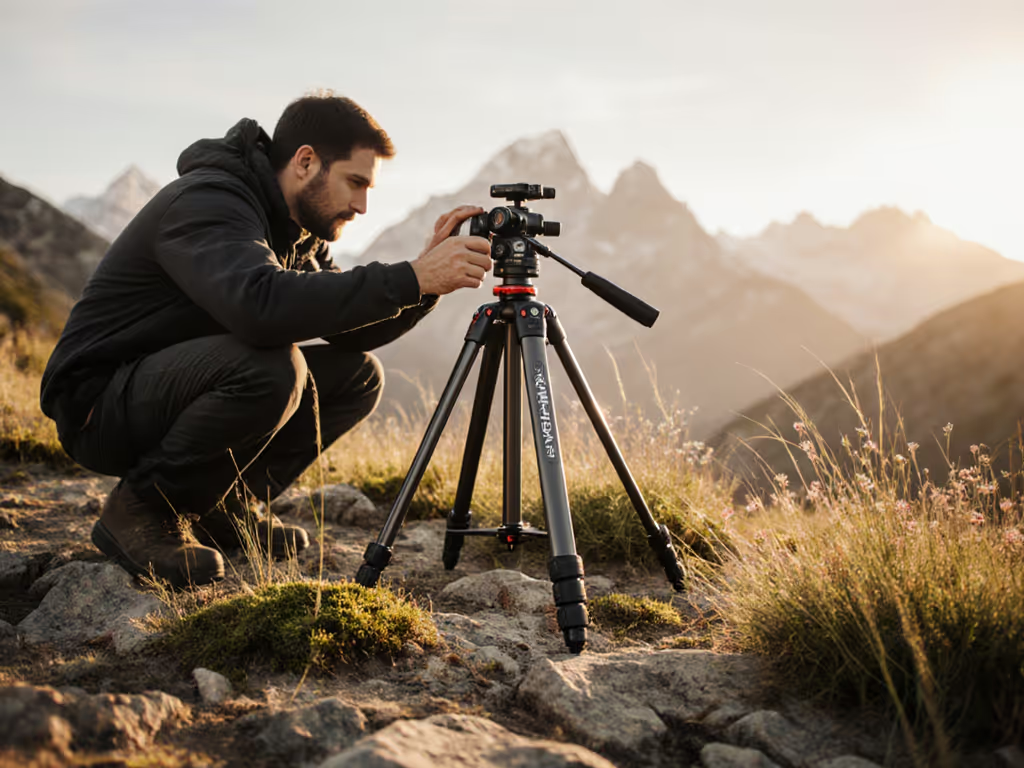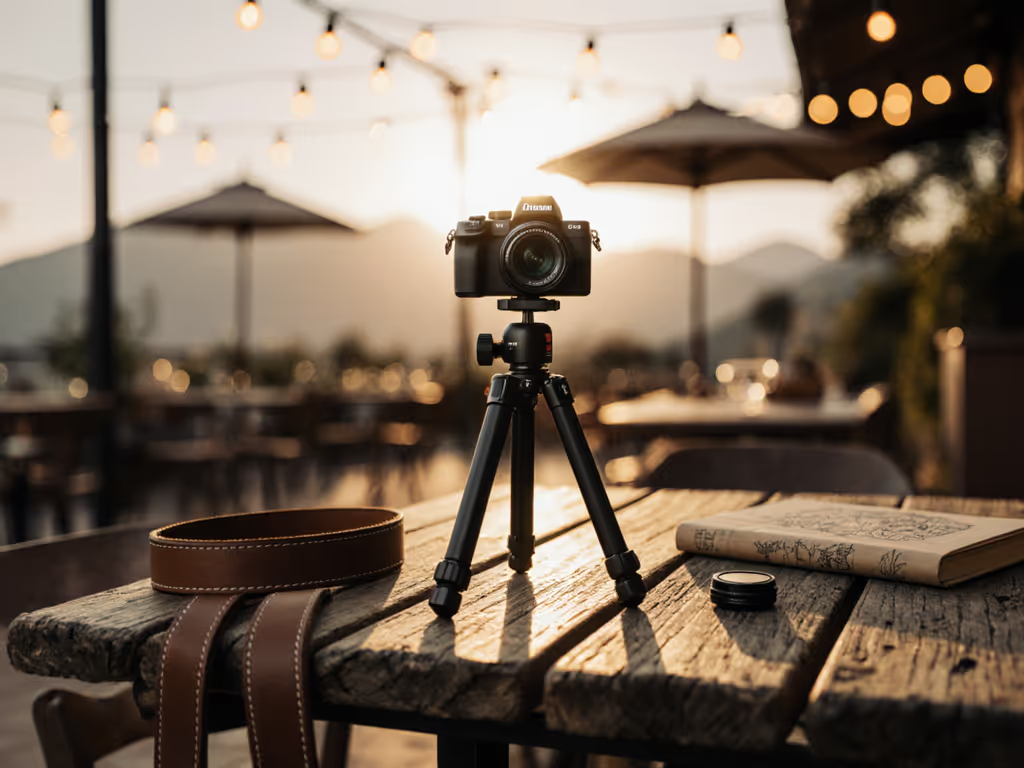
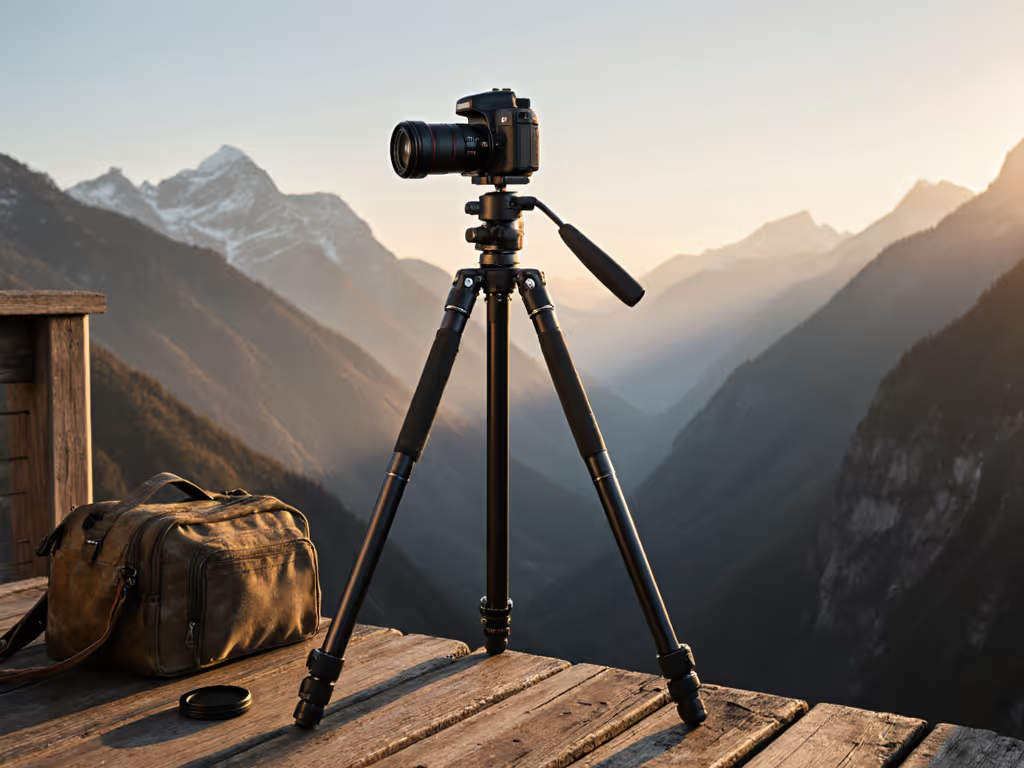
Moman TR01 Review: Tested Stability for Tabletop Work
By Asha Menon • 3rd Mar
What Is the Moman TR01, and Why Should You Care?
The Moman TR01 review landscape often fixates on headline specs: 176 pounds (80 kilograms) payload capacity, aluminum construction, compact footprint. Those numbers matter less than they sound. What matters is how this stand tripod actually behaves under load at your true height, on uneven terrain, and in wind. That's the distinction between a spec sheet and a tool that keeps your frame sharp when it counts.
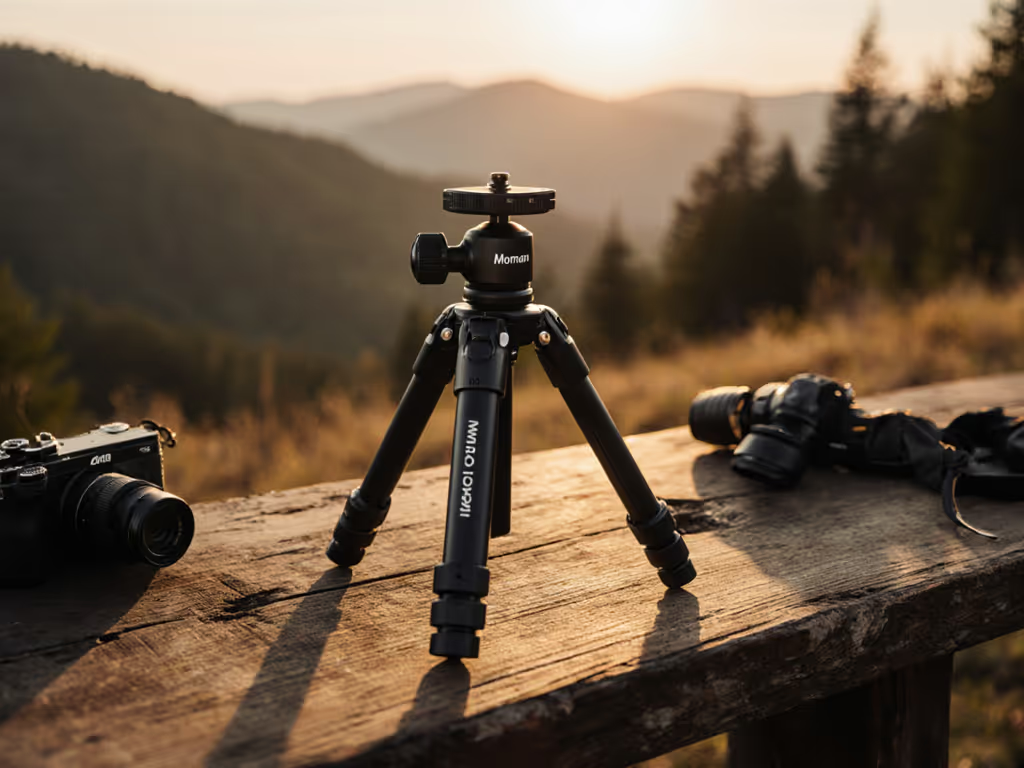
The TR01 is a mini tripod for camera work (a palm-sized aluminum rig weighing 261 grams, 9.2 ounces) that folds to 16.5 centimeters and extends to 11 centimeters tall. It's designed for tabletop, monopod base, and travel scenarios where you need stable support without the bulk of a full-size tripod. But stable how? And for whom? Those questions demand fieldwork, not marketing copy.
Does the 176-Pound Load Rating Mean Anything in Practice?
No. Not in the way it's advertised.
That 80-kilogram ceiling assumes perfect conditions: a rigid ball head, zero wind, perfectly level ground, and a camera mounted directly on-axis. Real field use is none of those things. A lightweight camera on a loose ballhead, wobbling in a breeze at true height, will hit vibration decay issues long before you approach the stated max. The Moman TR01's payload spec is a theoretical maximum, not a comfort zone.
What you actually need to know: oscillation decay time. How fast does the tripod settle after you tap it or after a wind gust hits? I've spent mornings timing that decay with a laser pointer and a stopwatch (once on a sea cliff in pre-dawn gusts, I watched a lighter carbon set with better damping beat a heavier aluminum rival by seconds). That morning taught me a hard lesson: stability per ounce matters more than any printed load rating. For the physics behind this, see tripod vibration damping: stability explained. It's the difference between a 2-second exposure that's sharp and one that's smeared.
The TR01's aluminum legs are rigid but light. You won't see dramatic oscillation with a compact mirrorless camera and a 50-millimeter lens. Add a 200-millimeter telephoto, and you'll feel the difference (a softness in the base that translates to longer settle times). Measure what matters: decay time, not fantasy load ratings.
How Stable Is the TR01 on Real Ground, Gravel, Grass, Uneven Surfaces?
Reviewers who tested the TR01 on variable terrain reported solid performance indoors and on hard, level surfaces. Gravel and grass showed usability but with caveats. A 360-degree camera reviewer noted that on uneven ground, the narrow base and light weight (261 grams) meant the tripod felt less planted than on flat surfaces. This is expected for any tabletop tripod (leg splay is limited, and base area is small).
The fix: add ballast. Hanging weight from a hook below the center of gravity (if your design permits) is the fastest way to improve stability on soft or tilted ground. The TR01 lacks an integrated weight hook, unlike some competitors, but you can improvise with a carabiner and a small sandbag. Learn safe ballast and bracing techniques in our counterweighting guide.
Where the TR01 excels is on tables, desks, and smooth floors. The rubber feet are genuine; they grip and don't slide. If you're anchored to furniture or a pole using the strap slots, you gain mechanical stability that load rating alone doesn't capture. The included three straps and 1/4-inch thread holes on each leg let you brace the tripod to a chair, tree branch, or lamp stand. That practical stability (using the environment as a load-bearing partner) is where tabletop tripods shine and why the TR01's accessory ecosystem matters.
Build Quality: Is the Aluminum Real or Marketing?
The construction is CNC aluminum, and it's well-executed. One experienced reviewer unboxed the TR01 and noted immediately that parts fit smoothly, with zero wiggle when a camera mounted. That's not hyperbole (it's a sign that the machining tolerances are tight and the assembly is consistent).
The legs fold and lock via a quick-snap mechanism on the mounting head (the red or blue collar). That mechanism feels positive, with no slop and fast adjustments. Rubber wrapping on the feet prevents table damage. The double-thread mount accepts both 1/4-inch and 3/8-inch camera screws without an adapter, which is a practical touch for hybrid workflows.
Where aluminum shows limits: thermal expansion in direct sun, corrosion near salt spray, and zero flex tolerance compared to carbon fiber. For travel in humid or coastal climates, rinsing after use is non-negotiable. Extend longevity with our tripod maintenance checklist. The TR01 doesn't have sealed components, so salt or sand can grit the leg locks over time.
What About the Smaller TR01S? When Would You Choose That Over the Full TR01?
The Moman TR01 features include versatility. The TR01S is the minimalist option: 190 grams (0.4 pounds), 2.9 to 14.2 centimeters height range, 5-kilogram payload capacity. Same aluminum body, same accessory philosophy, smaller footprint.
Choose the TR01S if:
- Your camera and lens combo weigh under 5 kilograms (most compact mirrorless systems qualify).
- You prioritize pocket-size portability and every gram matters (airplane carry-on, long hiking days).
- Your work is macro or close-focus (lower working height helps frame small subjects).
- Your primary use is a monopod base for video or as a phone tripod for travel vlogging. If close-up work is your focus, our macro tripod guide covers low-angle stability and focus stacking tips.
Choose the full TR01 if:
- You shoot with telephoto lenses or heavier camera bodies and need the 80-kilogram headroom for peace of mind.
- You want more low-work flexibility; the TR01's base allows lower positioning when folded, even though the S is taller at max height.
- You need the broader leg splay and larger footprint for uneven terrain; the TR01's wider stance is measurably more stable on soft ground.
- You want dual-purpose use: tabletop work and temporary monopod base under heavier rigs.
Both share the strap slots, the 1/4-inch thread holes per leg, and the rubber feet. For budget tripod hunters, the TR01S cuts cost and weight. For practitioners who want one tool to handle 90% of compact scenarios, the TR01 is the safer choice.
How Fast Can You Set Up and Adjust the TR01 in the Field?
One of the smartest design details: the quick-snap leg lock on the mounting head. Twist the red or blue collar, and the legs splay or fold instantly. No tool needed, no fidgeting with multi-position screws. In gloved conditions or in dim light, that tactile feedback is worth the aluminum cost alone.
Height adjustment is stepless within the collar's range (3.5 to 11 centimeters). You tighten or loosen by feel. Coarse adjustments are fast, while fine-tuning takes a few seconds. This is slower than a true ballhead with infinite micro-adjust, but for tabletop work, the TR01 is faster than most competing mini tripods because the leg mechanism is intuitive.
The strap slots and 1/4-inch threads mean you can rig custom bracing or accessory mounts without modification. Reviewers noted this modularity is a game-changer for travel setups where you're adapting on the fly.
True height: The TR01's maximum height is 11 centimeters, measured from ground to the mounting screw. Your eye level depends on where you position the camera head. For a tabletop frame with your camera 2 inches above the surface, your true working height is around 13-14 centimeters, below eye level for most sitting positions, comfortable for overhead or low-angle macro work. If you need eye-level work on a table, you'll extend the center column of your ball head or reposition to a lower chair. This is the reality of a stand tripod: design around it, don't pretend it isn't there.
Vibration and Wind: What Actually Happens at Extension?
The TR01's short, rigid structure naturally resists vibration compared to tall, thin tripods. Reviewers tested it on gravel and indoors, reporting stable results for stills. The narrow base (small footprint) is both a feature and a constraint: lighter to carry, lower profile for discrete work, but less inherent stability on uneven ground compared to a wide-legged stance.
Wind behavior: At the TR01's compact height (11 centimeters), wind force is minimal because the sail area is small and the center of gravity is low. If you mount a large softbox or reflector on the accessory threads, wind drag increases instantly. The fixed leg angles mean you can't splay further to compensate. This is where the strap system earns its value: bracing to the environment cancels wind altogether.
Vibration from camera mirror slap or autofocus hunting is damped reasonably well by the aluminum legs and the rubber feet, which grip surfaces and reduce ringing. For mirrorless cameras (electronic shutter), vibration from the camera itself is nearly zero, leaving only environmental disturbance.
Is the TR01 Truly Travel-Friendly, or Is It Hype?
Folded length: 16.5 centimeters (6.5 inches). Weight: 261 grams. Packed with a small ball head (another 200-250 grams), your complete setup weighs around 500 grams, less than a full 24-70 millimeter lens. Fits easily in a camera bag side pocket, jacket cargo pocket, or hiking pack. No question: it's portable.
Hype check: The size is real. The weight is real. The limitation is working height (you're always low). If your travel intent is eye-level shots (portraits, architecture, landscape composition), the TR01 isn't the answer. It's a macro, overhead, monopod-base, and creative low-angle tool. Reviewers who accepted that constraint found the TR01 became a permanent kit item. Reviewers expecting a travel substitute for a mid-size tripod were disappointed.
True height, as promised: You get what the spec says. Measure what matters (your actual working height with the camera head you'll use) before you decide. Use our ideal tripod height guide to plan comfortable eye-level setups when needed.
Moman TR01 Features: What's the Real Practical Value?
Beyond specs, here's what makes the TR01 worth considering:
Dual 1/4 and 3/8 mounting threads. No adapter fumbling. Works with any camera or head with standard tripod mounts.
Three strap slots per leg. Brace to poles, tree limbs, chair backs. This is mechanical stability that no load rating captures.
Multiple 1/4-inch thread holes on each leg. Mount a monitor, microphone, LED light, or accessory arm without a separate extension.
Rubber-wrapped feet. Genuine grip and table protection.
CNC aluminum construction with tight tolerances. Smooth leg locks, zero wobble once locked.
Compact folded size (16.5 centimeters) and light weight (261 grams). Carry it anywhere without regret.
What's missing compared to larger tripods: extended height, splay adjustment for extreme angles, integrated leveling, and sealed bearing surfaces. Those are trade-offs, not flaws. For the intended use case (tabletop, travel, and monopod base), the TR01 delivers without waste.
Who Is the TR01 Right For?
The TR01 fits these workflows:
- Macro and product photographers framing small subjects close to a table or ground level.
- Travel vloggers and mobile content creators who record from angles (overhead, low-angle POV) and need lightweight, fast setup.
- Landscape and architecture photographers using the TR01 as a monopod base or smartphone holder on the road.
- Hobbyists experimenting with creative angles (overhead food shoots, macro stacking, time-lapse tracking).
- Hybrid photo/video practitioners with compact mirrorless bodies (under 2.5 kilograms total rig weight) who value modularity and strap-based bracing.
The TR01 is not for:
- Eye-level work without an elevated platform (chair, table) or ball head extension.
- Heavy rigs (5+ kilograms) without ballast or bracing; oscillation decay becomes an issue.
- Situations where you need splay adjustment for stability on tilted or soft ground without accessories.
- Long-term outdoor use in sandy, salty, or wet environments without regular rinsing and maintenance.
What's the Real-World Verdict?
The Moman TR01 is a solid, well-engineered budget tripod that does one job exceptionally well: providing lightweight, portable, modular stability for tabletop, low-angle, and travel work. It doesn't pretend to be a full-size tripod or a premium portable solution. The build quality is genuinely good, with zero wobble and tight fit and finish. The strap ecosystem adds practical value that elevates it above bare-minimum competitors.
Stability per ounce? Strong. A 261-gram rig that locks solid and decays oscillation quickly enough for sharp frames with compact camera systems. Decay time is the metric that matters, not the 176-pound spec.
The TR01S is the minimalist choice; the full TR01 is the versatile choice. Pick based on your actual camera load, primary shooting angle (overhead vs. eye-level), and terrain (table vs. uneven ground).
Final Verdict:
The Moman TR01 is a keeper. Not perfect (no tripod is), but honest. It does what it claims, feels built to last, and costs less than competing mini tripods with comparable features. If your work centers on low angles, travel-light setups, and creative positioning rather than traditional eye-level frames, it merits a place in your kit. Don't buy it expecting it to replace a full-size tripod on a hike or to steady a 200-millimeter lens at arm's height. Buy it for what it is: portable, stable-per-ounce, and modular enough to adapt to almost any creative tabletop scenario.
Measure what matters: how your actual camera and lens combo performs on this tripod at your true working height, in the light you'll shoot, with wind or environmental factors factored in. Then decide. The specs will deceive; the field test won't.
Related Articles