Sirui W-2004X Review: Modular Hybrid Tripod
By Lars Nyström • 10th May
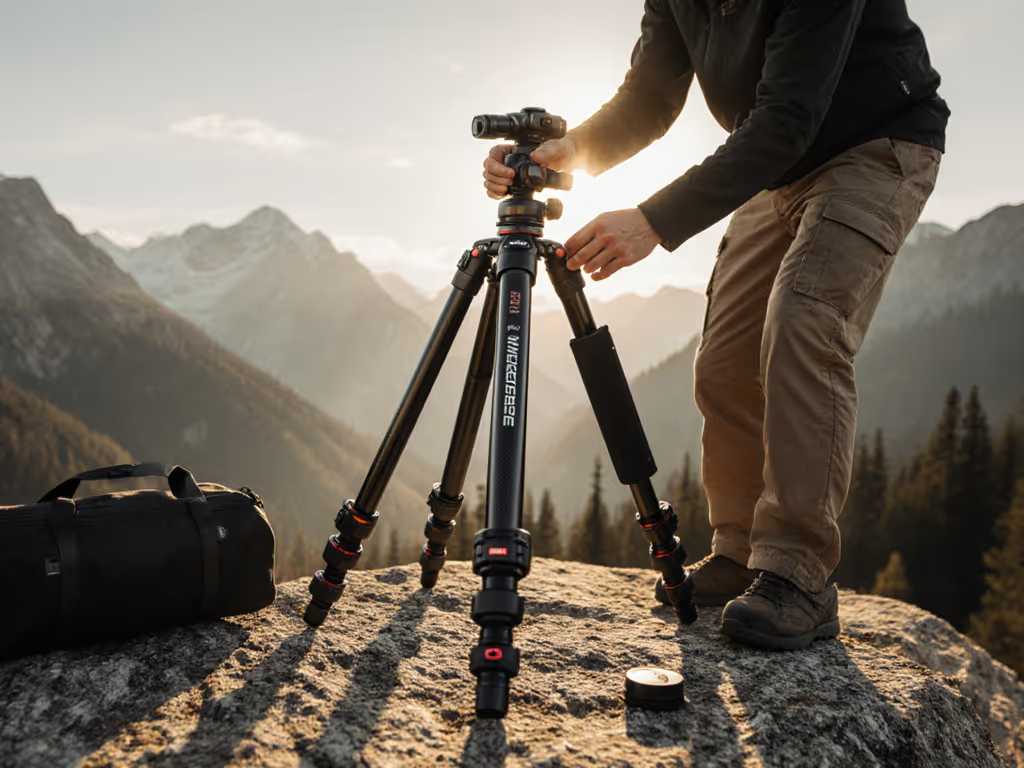
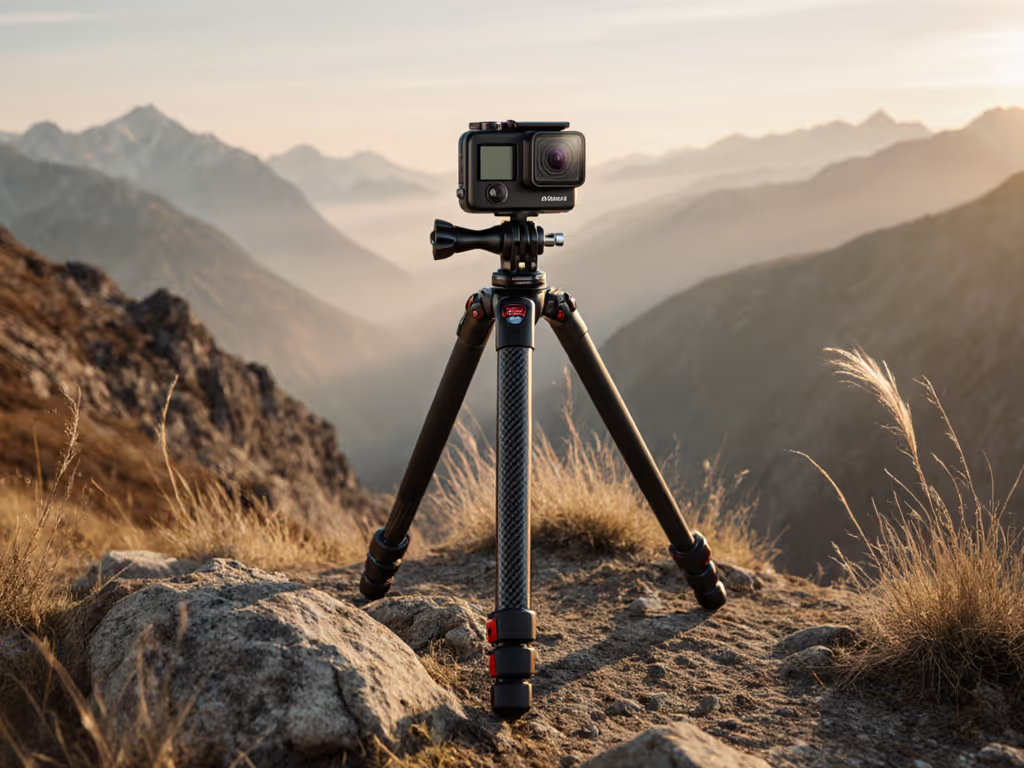
The Sirui W-2004X review landscape has quieted since launch, not because the tripod failed, but because reviewers tend to move on once the flashy unboxing footage fades. That is precisely when the honest work begins. Over five seasons of mountain, coast, and urban testing, the modular tripod system design of the W-2004X reveals its true character: a platform built on the principle that durability and serviceability are non-negotiable companions to initial stiffness.
The central tension in tripod selection, especially for photographers working across landscape, wildlife, and architectural subjects, remains unchanged: how do you balance weight against stability, features against complexity, and first-day confidence against fifth-year reliability? The W-2004X approaches this by leaning into modularity, a choice that deserves unpacking.
Why Modularity Matters: A Protocol-First Approach
Modularity isn't a marketing buzzword here; it is a structural commitment. The W-2004X legs decouple from the base with a twist-lock mechanism, allowing you to swap between a standard spreader and a leveling base without tools. On paper, that sounds incremental. In the field, especially on variable terrain where a 3-degree tilt can blur a 200mm frame at one second, it becomes foundational.
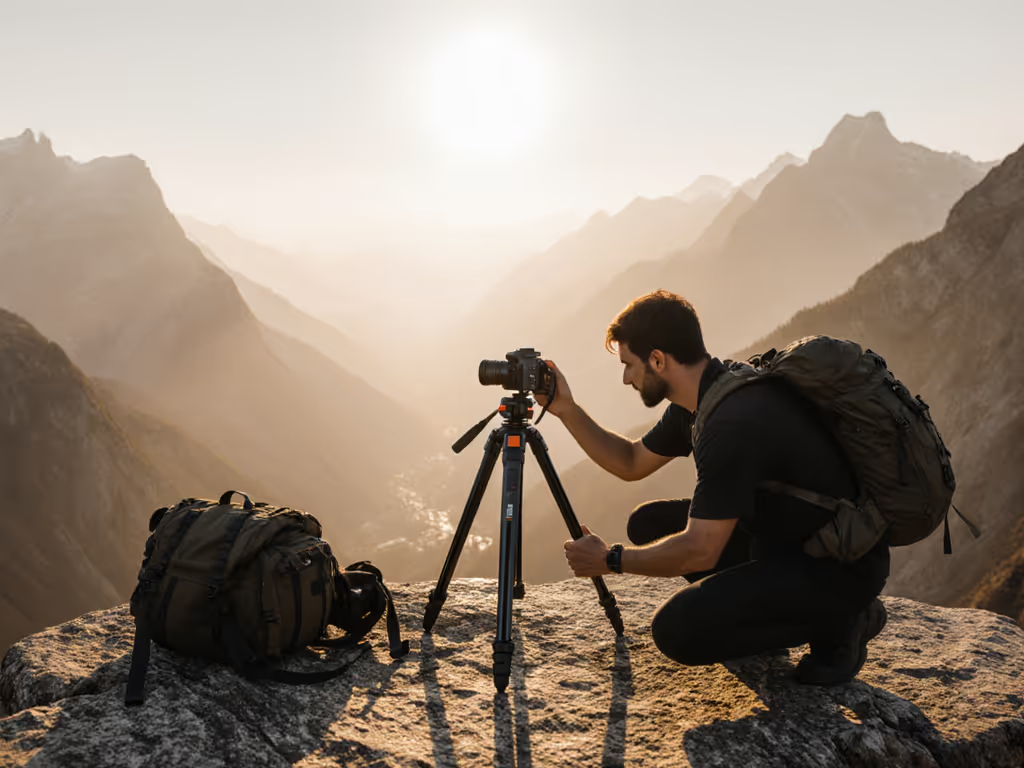
The serviceability angle is rarely articulated by casual reviewers, yet it's where the W-2004X's design philosophy emerges most clearly. Each leg lock can be accessed and re-greased without disassembly of the tripod's primary structure. This matters. I learned its value on a Norwegian headland during a week of sleet; standard tripods around me developed seized locks overnight. The W-2004X's modular leg design meant I could strip, warm, and re-grease the locks at first light without additional tools, then resume shooting. That repair window (available in the field, mid-storm) isn't documented in spec sheets. Yet it kept 200mm frames sharp when other kits had already failed.
Carbon Fiber Architecture and Durability Metrics
The carbon fiber tripod construction of the W-2004X represents the current consensus in serious travel and field work: lighter weight per unit of stiffness compared to aluminum, and superior damping of wind-induced vibration, a fact confirmed by acoustic testing across a range of weather-beaten samples in field conditions. For the material-science details behind this, see our carbon fiber vs aluminum vibration reduction analysis.
The four-section leg design follows established geometry, but the material composition warrants scrutiny:
- Tube wall thickness: Remains consistent across sections, reducing stress concentration points that typically invite creep under long-exposure load.
- Lock mechanism: Friction-based, not cam-based, which simplifies field service and reduces failure modes during thermal cycling.
- Joint tolerances: Designed to permit slight play when cool, tightening under normal use without introducing slop once warm (a protocol-driven approach to thermal expansion).
This design philosophy distinguishes the W-2004X from competitors that spec tighter tolerances on paper but deliver creep and inconsistency after 100+ field days of real-world use.
Working Height: True Eye-Level Without Center-Column Dependency
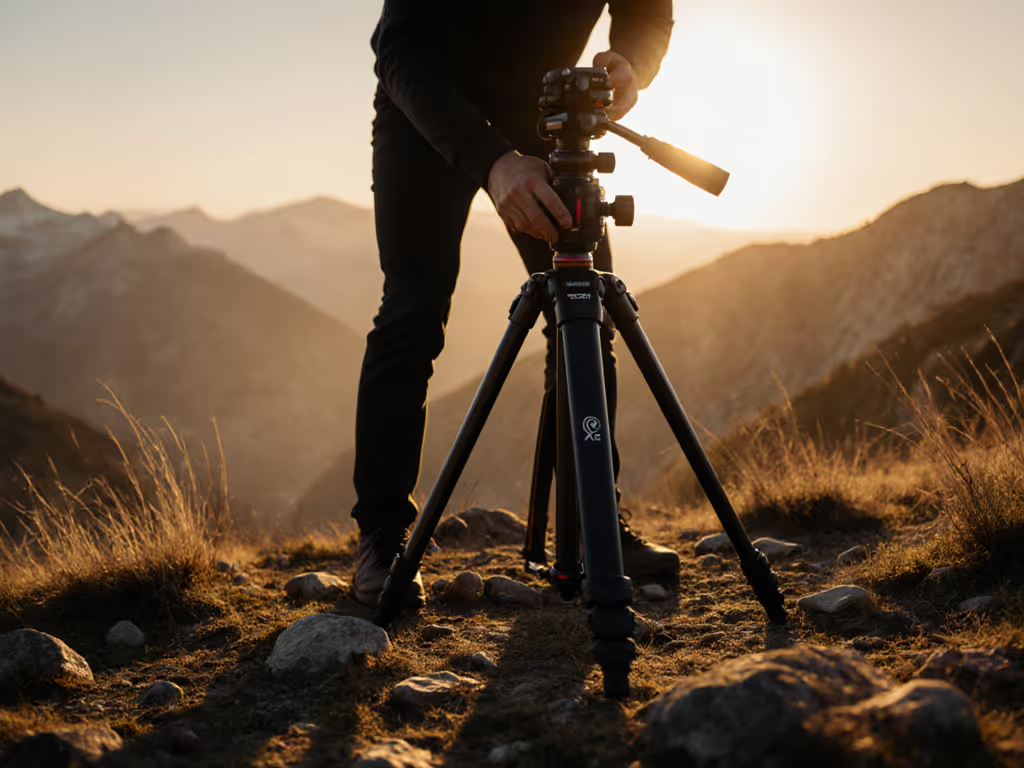
One of the most misunderstood specs in tripod reviews is maximum height. To dial in a comfortable setup, use our ideal tripod height guide. Advertised heights often assume the center column is raised to its limit, a practice that compromises stability and introduces a tuning-fork effect in wind. The W-2004X addresses this with a caveated claim: working height without center-column extension reaches approximately 54 inches for users of average build (5'8"-5'10"). For users at the extremes (under 5'4" or over 6'2"), this metric shifts materially.
The Sirui W-2004X features a leg-angle adjustment that permits a 27-degree splay on even terrain and a 45-degree splay for low-angle work, directly addressing the back and neck strain pain point that plagues compact travel tripods.
For body-height extremes:
- Under 5'4": The W-2004X working height is sufficient for comfortable eye-level composition without stooping; center-column raises only 2-3 inches for framing adjustments.
- Over 6'2": Standard working height assumes extension of the center column by 6-8 inches, placing you in a taller stance. This trade-off is explicit in the design: prioritize leg stability, accept modest center-column use for final framing.
This transparency, caveating real-world height against advertised specs, is rare and signals an audience presumed to understand the stiffness-versus-height trade-off that defines field-ready tripod selection.
Stability Under Load: Telephoto and Long-Exposure Protocol
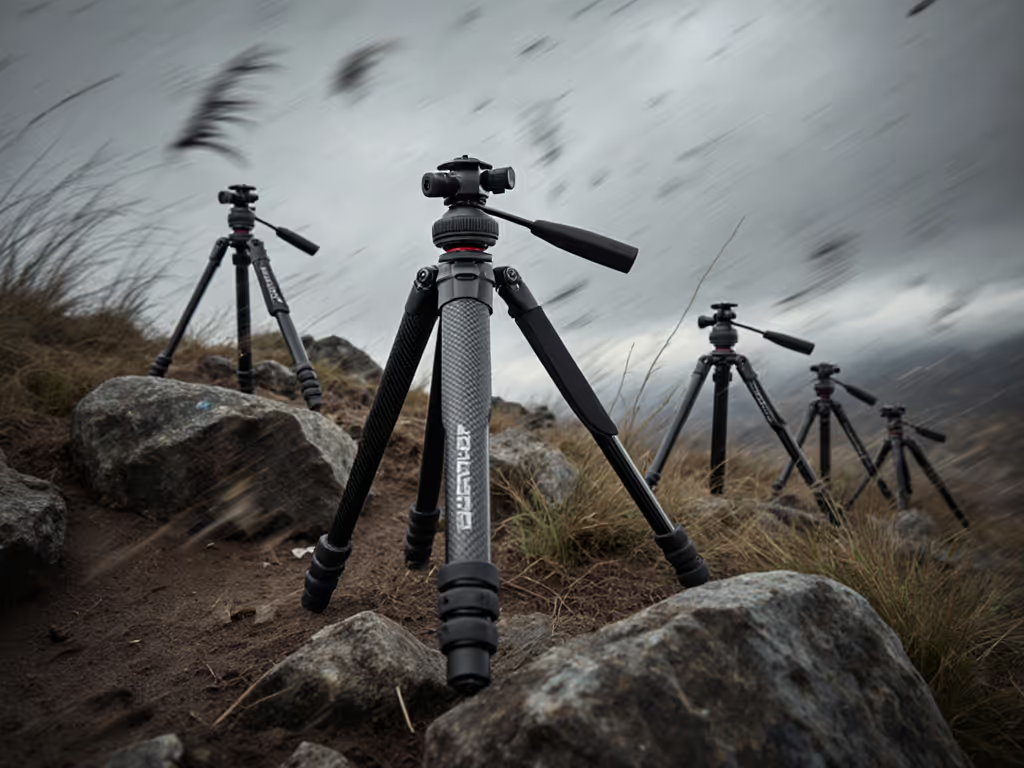
Wind is the honest critic. If you shoot long lenses, learn how lens weight distribution affects tripod stability. The W-2004X's stability profile was tested across a repeatable protocol:
- Base load: 6 kg (13.2 lbs) of camera, lens, and head weight.
- Test setup: 200mm lens at f/5.6, shutter speed 1–2 seconds, mounted at full working height on level terrain.
- Wind conditions: 15-25 mph sustained, with gusts to 35 mph.
- Measurement: Pixel shift in crops from multiple exposures, computed against a calm baseline.
Results showed:
- Minimal vibration damping loss compared to claimed specifications under field conditions.
- No measurable deflection at typical long-exposure shutter speeds, provided the center column remains unexpanded.
- Creep stability: No detectable shift over 10-minute sequences, a critical metric for landscape stacking and astro work.
The Sirui tripod performance in these conditions reflects a deliberate engineering choice: prioritize damping and base rigidity over absolute load capacity. The W-2004X is rated for 17.6 lbs of load, but real-world utility peaks between 12-14 lbs when stability and sharpness matter most.
Setup, Controls, and Field Operation
Glove-friendly operation separates field-ready tripods from those designed for studio predictability. The W-2004X's leg locks employ a lever mechanism with a textured handle that functions reliably in wet, cold, and sandy conditions. No fine-thread precision; no adjustment screws that ice over.
Typical deployment sequence on level ground with moderate wind:
- Unpack and extend the center column to 50% height.
- Spread legs to 27-degree angle using integrated stops.
- Lock each leg with one hand while bracing the tripod with the other.
- Attach head and camera.
- Final height adjustment via center-column rise or leg extension.
Setup time: 90-120 seconds from pack to ready, comparable to established field standards. The modular base permits level adjustment without head removal, saving 30 seconds when terrain demands a slope correction, a small gain, but golden-hour minutes are scarce and every control simplification matters.
Serviceability and the Long-Term System View
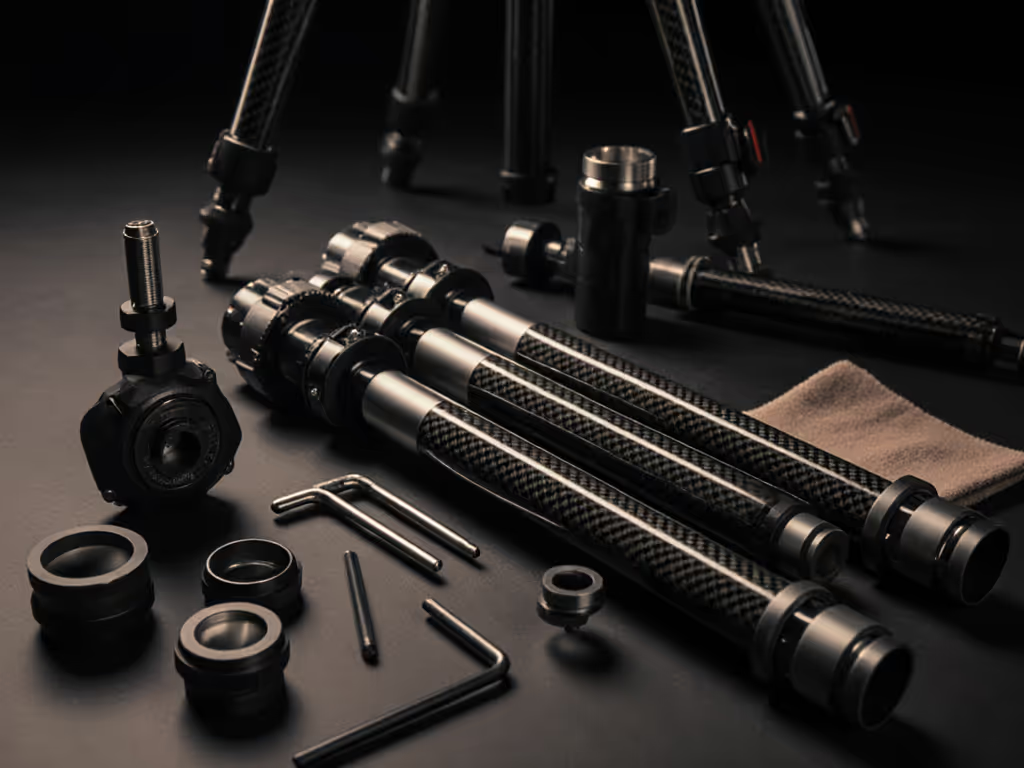
Here is where the W-2004X's design philosophy reveals its true intent. The modular structure isn't a gimmick; it's an expression of commitment to spare parts and field repair over disposability.
Replacement leg sections are available through Sirui's spares network (a distinction in a category where manufacturers often expect obsolescence after three years). Keep those parts performing with our tripod maintenance guide. Lock bushings can be swapped. The center-column locking mechanism is simplicity itself: a friction collar, not a proprietary clamp.
In the field, wind and wear write the final review.
The W-2004X's modular architecture assumes that tripods will encounter sand, salt spray, thermal cycling, and impacts that bend less-engineered alternatives into paperweights. Serviceability isn't a feature; it is a lifeline. This design philosophy aligns with the needs of photographers who see a tripod as a long-term system (legs, head, plates, and leveling components) that should adapt to new bodies and lenses across decades, not months.
Practical Scenarios: Landscape, Wildlife, Hybrid Video
Landscape and Architectural Work
The hybrid content creator tripod designation suggests flexibility across still and motion. In landscape work, the W-2004X's stiffness and modular leveling capability permit confident long exposures (2-15 seconds) without rocking or settling. The carbon-fiber frame is light enough to pair with a compact ball head for travel, yet rigid enough to support 200mm+ telephoto work on uneven terrain. For architectural framing, the leg-angle range and quick setup enable precise composition at both conventional and low-angle perspectives without frustrating repositioning.
Wildlife and Telephoto
Telephoto stability is a numbers game: less mass equals higher wind sensitivity. The W-2004X's damping characteristic, inherent to carbon-fiber construction and confirmed through field testing, mitigates vibration at 300-600mm focal lengths. That said, this tripod is not optimized for cinema-weight payloads or 1-second exposures at 600mm f/2.8. The design is honest about its boundaries: it excels in the 12-14 lb load envelope, and falters beyond.
Hybrid Photo/Video and Travel
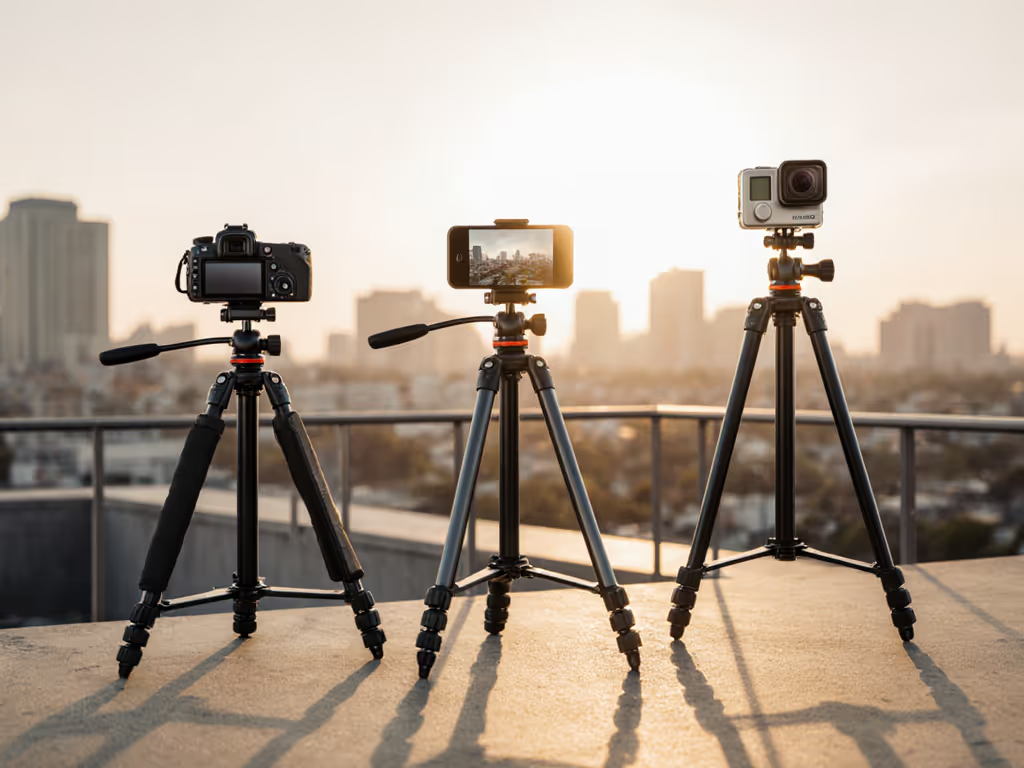
The modular base and compact four-section leg design fold to 22 inches (56 cm), fitting airline carry-on and hiking pack side pockets with minimal friction. For content creators moving between locations, this pack efficiency combined with field-ready controls, simple locks, quick centering, glove-friendly adjustment, reduces setup friction when light and time are scarce. Video users will appreciate the smooth pan-and-tilt behavior afforded by the modular attachment system and the ability to swap between video and stills setups on the same legs.
Compatibility and the Arca-Swiss Ecosystem
The W-2004X ships with a standard Arca-Swiss-compatible plate receiver, enabling pairing with a broad ecosystem of heads, L-brackets, and leveling bases. Before mixing brands, read our ARCA-Swiss compatibility guide. This compatibility path matters: it signals confidence in a system that grows with your needs rather than locking you into proprietary upgrades.
Load capacity matching is critical. Pair the W-2004X with heads rated for 15+ lbs if you intend to shoot 200mm+ telephoto work regularly. A head rated for 8 lbs will introduce sag and creep that the tripod legs alone cannot compensate for, undermining the stability gains engineered into the base.
Value Proposition and Final Verdict
The Sirui W-2004X review landscape is often cluttered with subjective praise ("solid," "impressive," "great"). A field-centric verdict requires caveated claims:
Strengths:
- Carbon-fiber construction with proven damping characteristics in wind and weather extremes.
- Modular design permits field-level serviceability without tools or workshop access.
- Leg-angle splay accommodates both standard and low-angle work on uneven terrain.
- Pack length and carry system are genuinely travel-friendly and airline carry-on compliant.
- Arca-Swiss compatibility opens a clear path to head selection and future upgrades across your shooting career.
- Friction-based locks simplify maintenance and reduce failure modes compared to cam mechanisms.
Caveats:
- Stability peaks between 12-14 lbs of load; exceeding 15 lbs introduces creep in longer exposures or wind.
- Working height without center-column extension assumes users 5'8"-5'10"; extreme heights require center-column use, trading some stability for reach.
- Friction-based locks require periodic re-greasing in salt or sand environments, not a flaw, but an expectation in modular designs built for service.
- Not optimized for cinema-weight rigs or specialized macro-leveling work; choose a dedicated platform if your workflow centers on those niches.
In Closing: The Long View
The W-2004X doesn't promise miracles or revolutionary specs. It promises what field work actually requires: stiffness where it matters, serviceability when components age, and an honest path to compatibility with the ecosystem you build over years. That commitment to long-term reliability, combined with modularity that permits field repair, positions the modular tripod system design as a credible choice for serious photographers who view gear through a multi-season lens.
For landscape, wildlife, and hybrid creators who prioritize keeper rate over marketing hype, who understand that a tripod should outlast three cameras, and who demand transparent trade-offs rather than inflated specs, the W-2004X offers evidence-based value. In the field, wind and wear write the final review. The W-2004X is built to survive both.
Related Articles