Motion Blur Tripod Accessories: Stability Analysis
By Yuki Tanaka • 15th Feb
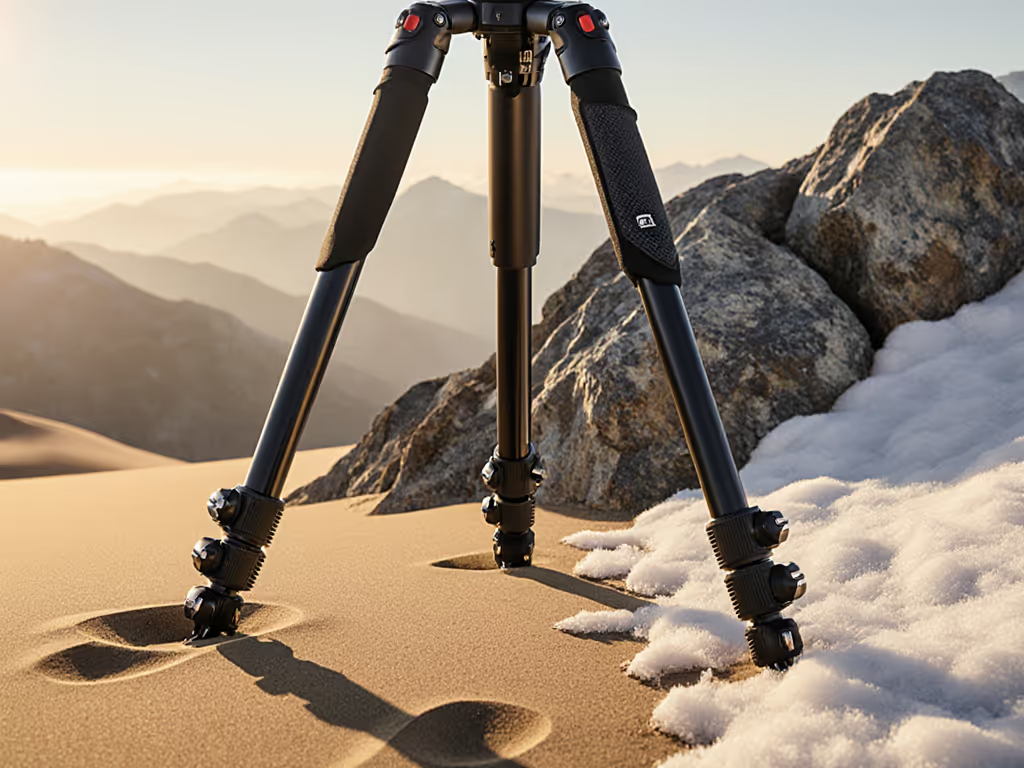
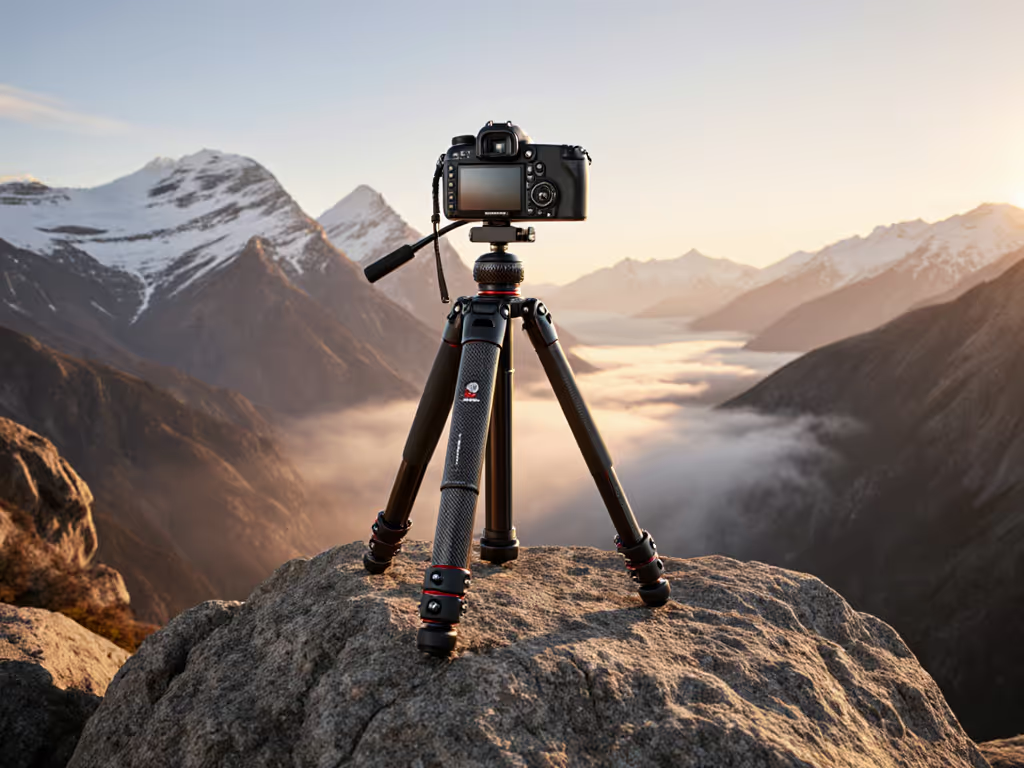
Creative motion blur tripod accessories and creative tripod effects demand something most static-shot gear discussions skip: honest stiffness metrics paired with real cost. Long-exposure waterfalls, light trails, and intentional camera movement all share one non-negotiable requirement: your support system must not betray the effect you're chasing. I've spent years mapping which head types, mounting plates, and damping systems actually deliver, and I've learned that value lives where stiffness, weight, and price intersect sanely.
Understanding Motion Blur and Stability Demands
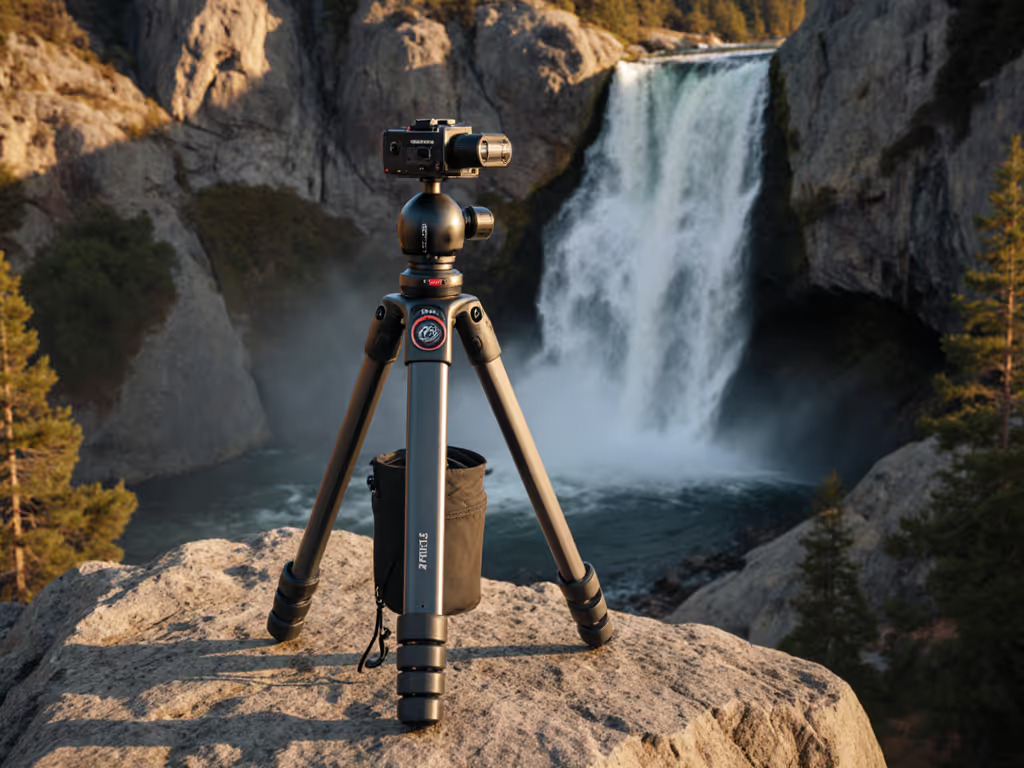
Motion blur is not an accident on your tripod, it's an intent. Whether you're capturing water motion blur techniques, trailing car lights for light trail photography gear, or executing intentional camera movement accessories work, the tripod's job becomes paradoxically more critical. A static shot forgives minor vibration; a 4-second exposure at f/16 amplifies every microscopic wobble into lost sharpness where it matters most.
The stakes are highest when:
- Shutter speeds exceed 1 second (ND filter + long exposure)
- Focal lengths push beyond 200mm (magnifying platform sway)
- You're handholding the camera or touch-focusing mid-exposure
- Wind or uneven terrain is present
- You need to track motion smoothly without jerking
Long exposure photography tools must stabilize these scenarios. If wind is a factor, see our counterweighting for real wind guide. That means analyzing not just the tripod legs, but the complete stack: head type, damping characteristics, quick-release plate compatibility, and friction tuning.
The Head Type Hierarchy for Motion Work
Ball Heads: Speed and Compromise
Ball heads excel at rapid repositioning - loosen one knob, reposition freely, lock down. For a deeper comparison, see our ball vs pan-tilt head guide. This simplicity made them the default for travel and hybrid shooters. However, for extended long exposure photography tools work, they present a fundamental trade-off: the single ball-and-socket joint concentrates all three axes of motion (tilt, pan, roll) into one mechanism, which means lateral stiffness and vertical hold often vary depending on angle.
A ball head sitting at 45 degrees tilt offers different damping resistance than one at 30 degrees. For motion blur sequences where you're deliberately tilting to follow subject motion, this inconsistency can shift micro-vibration across frames.
Stability-per-dollar reality: Entry-level ball heads ($80-$150) work for lighter kits and faster shooting, but they lack friction tuning. Mid-tier models ($200-$400) add adjustable damping and better ball bearings. By the time you reach true stiffness for long lenses, you've climbed to $500+, which is where you might instead buy a proven used three-way head and gain precision locks on each axis independently.
Three-Way (Pan & Tilt) Heads: Precision and Friction Control
The three-way head separates vertical tilt, horizontal pan, and roll into individual knobs, each with independent damping adjustment. This modularity is the architecture that motion blur demands. You can dial friction per axis, tight vertical hold while allowing smooth horizontal panning for subject tracking.
Fluency comes from tuning. A landscape photographer might lock roll and tilt completely, then dial moderate friction on pan for silky-smooth water tracking. A wildlife shooter pushing 400mm might add heavy friction everywhere to eliminate vibration.
Benro and Manfrotto dominate the cost-performance tier here. The budget-friendly Manfrotto 410 3-Way Head lands around $150-$180 used and handles most mid-weight kit reliably. Jump to the Benro GD3WH (mid-tier, ~$300-$400), and you gain superior bearing smoothness and a wider friction range, critical if you're dialing in micro-adjustments for macro blur or extended tracking sequences.
The modular advantage: Once you own a quality three-way head, it outlasts two flagship ball heads. I once bought a flashy new kit that crept under a tele within weeks, sold at a loss, and learned a hard lesson. A mid-tier leg set plus a proven used three-way head outperformed that flagship and freed budget for ND filters and quality plates. That experience flipped my sourcing habits entirely.
Gimbal Heads: Specialized for Heavy Telephoto Motion
Gimbal heads are designed for wildlife and sports photographers tracking fast motion with long lenses. They balance the camera's weight at the lens's tripod socket, reducing platform torque and enabling smooth pans and tilts even with a 400mm lens.
For creative tripod effects, gimbals unlock specific motion, tracking birds or panning vehicles without the cumulative vibration that a standard head introduces over a multi-second exposure. Their counterweight system also provides inherent damping.
The trade-off: gimbals start around $400 (Benro entry-level models) and climb steeply. They're bulkier, slower to adjust, and overkill if your usual kit is a 24-70mm lens. Reserve gimbal choice for photographers who've already built a 400mm+ arsenal and genuinely shoot motion sequences weekly.
Fluid Heads: Video's Edge, Stills' Exception
Fluid heads use hydraulic damping to smooth pans and tilts for video. The extended arms and precise friction control are superb for intentional camera movement accessories work, gentle lens-driven repositioning in creative sequences.
But fluid heads are expensive ($600-$2,000+), heavier, and often overkill for still-frame motion blur where you're locking the camera between exposures. Use them only if you're hybrid photo/video and genuinely need video smoothness; otherwise, a mid-tier three-way head with tuned friction delivers 85% of the effect for half the cost and weight.
Mounting Plate Compatibility: The Hidden Stability Variable
A great head mounted to a sloppy plate ruins everything. Quick-release plates come in proprietary (brand-locked) and universal (Arca-Swiss) systems. For motion blur work, Arca-Swiss plates matter because they follow a dovetail standard, your plate locks identically across heads, sliders, and L-brackets. This consistency eliminates micro-play that compounds vibration over long exposures.
Custom-fit camera plates offer the best plate-to-camera connection (zero rocking), but they're model-specific and expensive. The practical middle ground: a quality Arca-Swiss plate on your camera body or L-bracket, paired with an Arca-compatible head. You gain switchability between heads, future-proof modularity, and zero compatibility friction.
Quantifying Stability for Motion Blur: The Real Test
Marketing specs (load ratings, max pan speed) rarely predict motion blur performance. What matters:
- Friction consistency across angles, does damping stay uniform as the head tilts through its range?
- Bearing quality and preload, do the ball or pan bearings exhibit play or stick-slip?
- Platform resonance, does the head's structure amplify or dampen platform vibration?
- Lock reliability, do adjustment knobs hold load without creep over a 10-second exposure?
Field testing reveals what specs hide: a $350 three-way head often outperforms a $900 ball head for motion blur because independent axis damping allows precise tuning. For the underlying math and materials science, see our tripod vibration damping physics explainer. The cost-per-point math favors methodical head selection over flashy flagship impulse buys.
Modular Stacking: Building a Motion Blur System
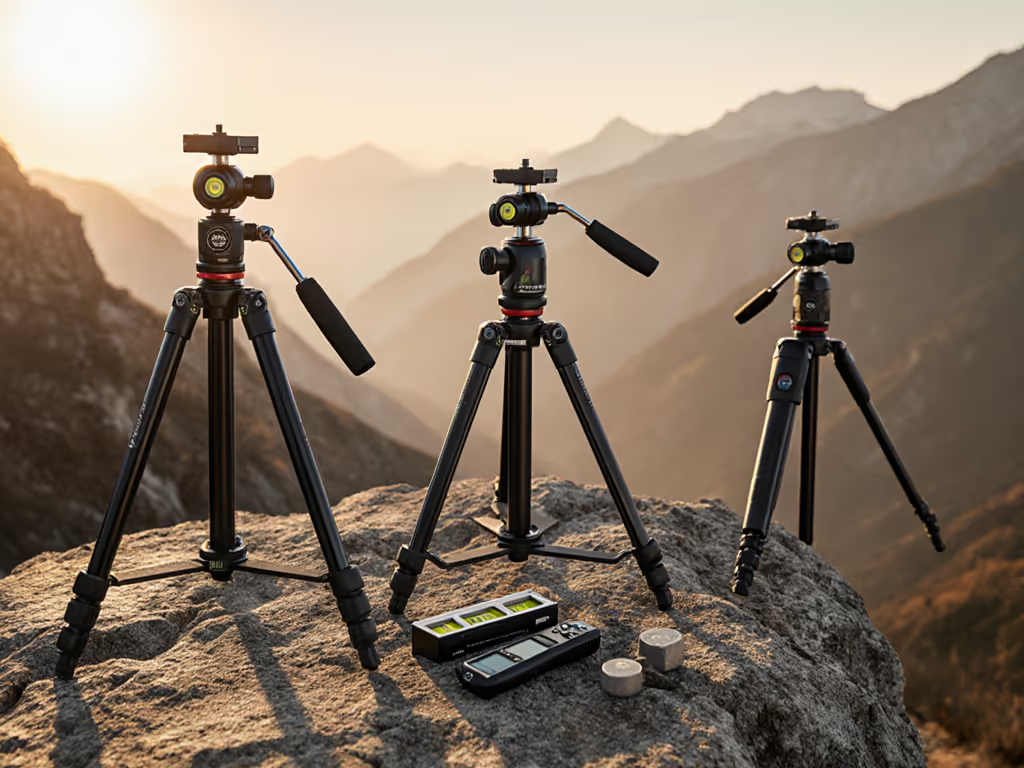
Smart motion blur work stacks layers:
- Tripod legs: Stiff enough for your body height and terrain, light enough to carry daily.
- Head: Three-way or gimbal, tuned friction, Arca-Swiss compatible.
- Mounting plate: Arca-Swiss standard, custom-fit to your camera.
- Damping aids: An optional friction bowl (75mm or 100mm) sits between head and legs, adding smoothness for pans, underrated for light trail work.
- ND filters and cable release: Often overlooked, but a wireless trigger or mechanical cable prevents touch vibration that nullifies head quality.
This stack lets you buy once, cry once. Upgrade legs without replacing the head. Swap heads for different genres without repeating mounting plate investment. Over 5-10 years, modularity cuts total spend and maximizes keeper rate.
The Comparative Verdict
For motion blur and creative tripod effects on a realistic budget:
-
Budget tier ($300-$500 total head system): A Benro three-way head (
$200-$350 used) plus an Arca-Swiss plate ($50-$100) strikes the best stability-per-dollar ratio. You'll dial friction per axis independently and enjoy proven reliability without flagship pricing. -
Mid tier ($600-$1,000): Step to a Manfrotto 327RC2 trigger-action head or used Arca-Swiss Monoball with a custom camera plate (~$250-$400 total). Bearing quality and friction smoothness improve noticeably; you're no longer compromising on damping feel.
-
Specialist (wildlife/telephoto, $1,200+): Invest in a gimbal head (Benro GH2 entry, or jump to Wimberley if budget allows). Gimbal motion unlock a specific creative vocabulary, tracking long focal lengths without vibration creep. Only choose if motion sequences are core to your practice. For a proven heavy-lens option, read our Wimberley Gimbal Pro review.
Avoid flagship ball heads purely for motion blur work. They're fast and convenient, but friction inconsistency over angle shifts micro-vibration through a multi-second exposure. Reserve them for fast-paced static shooting where repositioning speed matters more than sustained damping.
Final Framing
Motion blur accessories, whether gimbal arms, friction bowls, or Arca-Swiss plates, are tools that amplify a good foundation. No accessory overcomes a weak head or sloppy plate. The photographers achieving tack-sharp light trails and silky water motion are not using the most expensive kit; they're using the most appropriate kit, tuned methodically and tested in real wind and terrain.
When choosing your long exposure photography tools, map your actual body height, typical load, and go-to focal lengths into a head that lets you dial friction per axis independently. Pair it with Arca-Swiss modularity. Obsess less over marketing specs and more over field reviews mentioning friction smoothness and platform resonance. Over time, this methodical sourcing strategy, choosing proven mid-tier gear over flagship impulse buys, delivers both sharper motion blur and a system that adapts to your evolving practice without painful repurchases.
Value lives where stiffness, weight, and price intersect sanely. Motion blur work proves it daily.
Related Articles