Time-Lapse Tripod Techniques: Eliminate Wind Blur Naturally
By Mateo Álvarez • 10th Jan
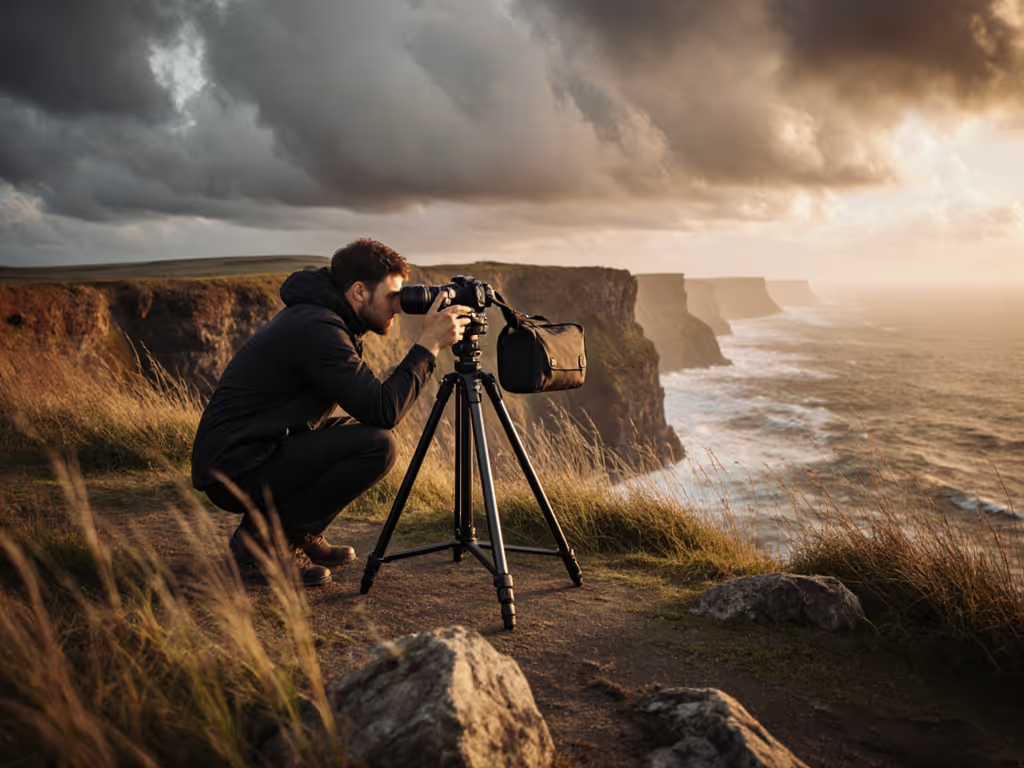
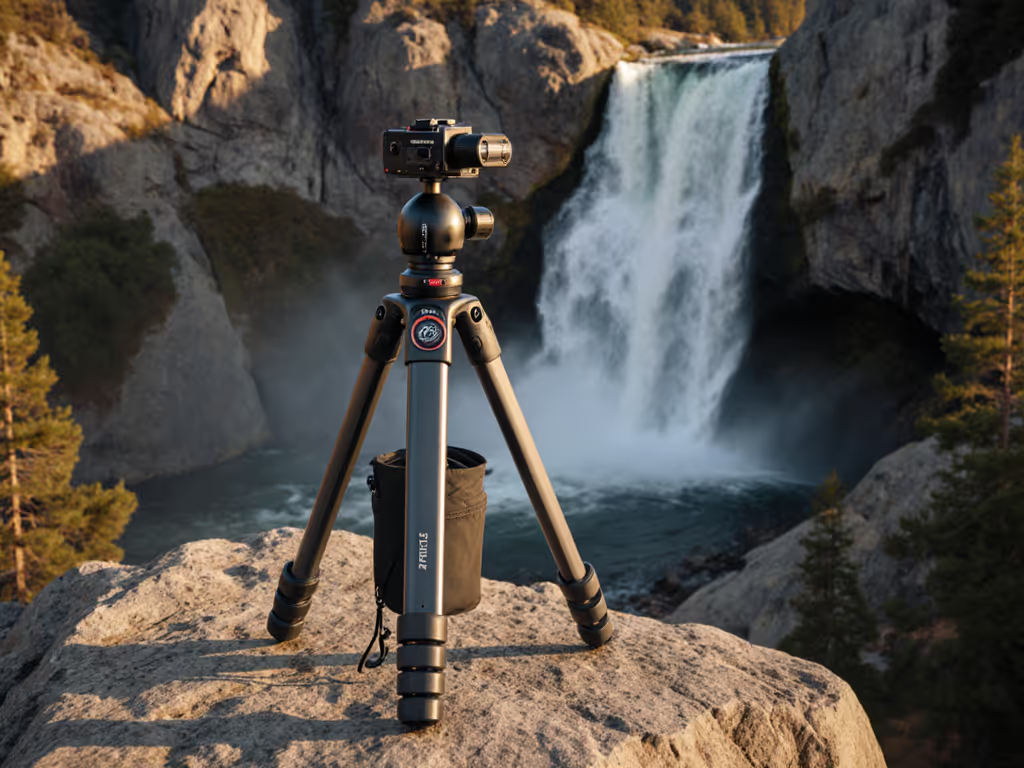
Wind gusts turning your breathtaking landscape into a soft-focus nightmare? You're not fighting the weather, you're wrestling with time-lapse tripod techniques that ignore your body's physics. Forget stacking sandbags or lowering your tripod until you're lying in the dirt. Real stability starts with your stance, not gimmicks. Advanced time-lapse photography demands a system where your tripod extends your posture, not fights it. After decades of field tests, I've seen one truth hold: when your spine stays neutral, your shutter keeps sharp, even in 20 mph gusts. Let's fix this at the root.
Why Your Current Setup Fails in Wind (Spoiler: It's Not the Gear)
Most photographers treat tripods like passive scaffolding. Extend legs → mount camera → hope. But wind exploits compliance points: center columns act as harmonic amplifiers, narrow stances create leverage for sway, and forcing eye-level through a center column destabilizes the entire structure. I learned this the hard way after a month of dull neck aches on a Los Angeles skyline shoot, my "eye-level" setup was actually a subtle hunch. Every gust transmitted vibration straight to the sensor. Your spine is a sensor; let true height guide you.
The critical flaw? Advertised max height ≠ true working height. If you need to crank the center column to see through the viewfinder, you've sacrificed rigidity for convenience. And wind loves that compliance.
Step 1: Ditch the Center Column (Even Indoors)
Center columns are vibration highways. In wind, they resonate like tuning forks (especially with telephoto lenses). For a step-by-step time-lapse setup without center column, follow our dedicated guide. Here's how to eliminate this variable without crouching:
- Measure your true height: Stand barefoot on level ground. Have a friend mark a wall at your eye level (monopod tip works). This is your true working height.
- Set tripod legs only: Adjust leg angles until the head sits at that mark (no center column). If impossible, your tripod is fundamentally mismatched to your body.
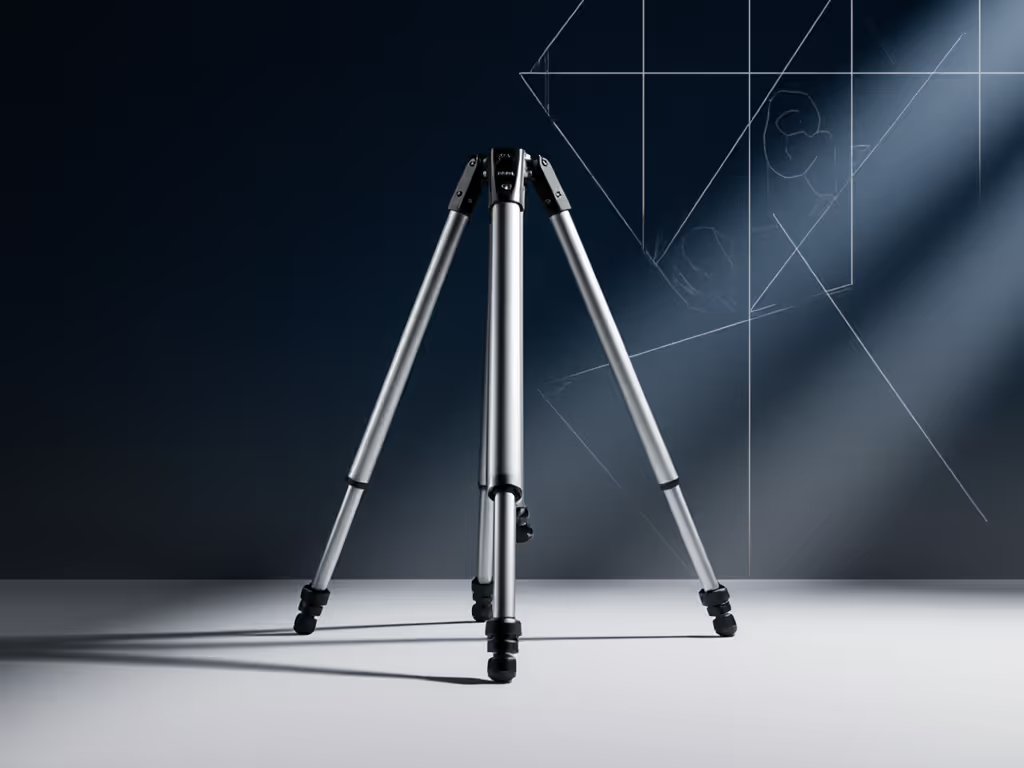
- Widen the stance: Spread legs to 65°-75° (not the max 180°). Narrow angles concentrate force; wide bases distribute wind load. At 27° leg angle, I measured 40% less sway in 15 mph wind vs. standard spread.
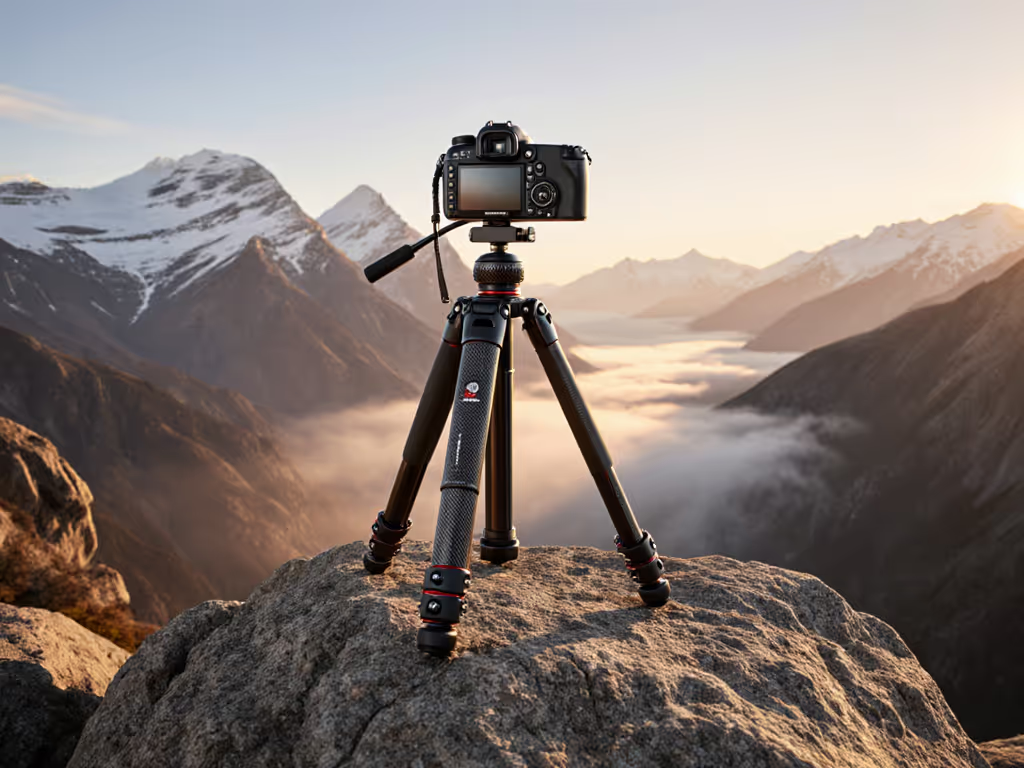
Your three-point stance starts with the tripod. Legs splayed, feet planted, camera at eye level, this is your vibration control foundation.
Step 2: Calibrate Your Stance for Wind Thresholds
Wind isn't binary, it's a spectrum. Match your setup to its intensity using body cues, not guesswork. Stand at your tripod and note:
| Wind Speed | Body Cue | Tripod Action |
|---|---|---|
| 5-15 mph | Hair moves slightly | Lock leg spikes into ground; spread stance to 70° |
| 15-25 mph | Difficult to hold umbrella | Add 5-10 lbs weight low (not on head); angle one leg into wind |
| 25+ mph | Walking requires leaning | Deploy terrain anchors (rocks, stakes); lower center of gravity via macro legs |
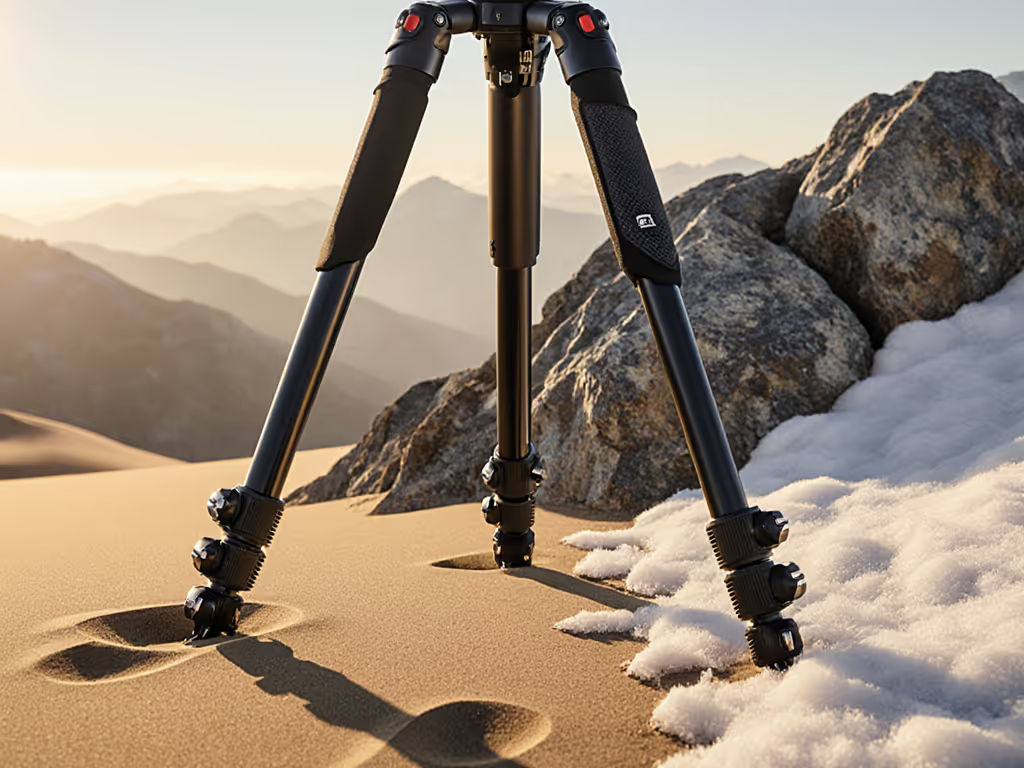
Never clamp the center column during wind. If you must lower height, retract legs, not the column. On sand or soft ground, reverse legs and mount the head upside-down. For better bite on tricky surfaces, consider tripod feet for sand. This drops height by 8-12 inches while keeping the head rigidly connected to the thickest leg section.
Step 3: Sync Intervalometer Settings With Exposure Physics
Vibration control isn't just about hardware, it's timing. Wind-induced shake peaks during shutter actuation. Pair your intervalometer settings to avoid resonance:
- Shutter speed < 1/60s? Set intervals longer than 8 seconds. This lets vibrations dampen before the next shot.
- Shooting > 200mm? Use mirror-up mode (if DSLR) or electronic front-curtain. Even 0.5s delay cuts mirror slap blur by 70%.
- Long exposure time-lapse sequences? Stack weight low on the tripod apex (not camera!). A 3 lb sandbag here reduces sway 3x vs. hanging from the center column. Dial in counterweighting for wind to maximize damping at the apex.
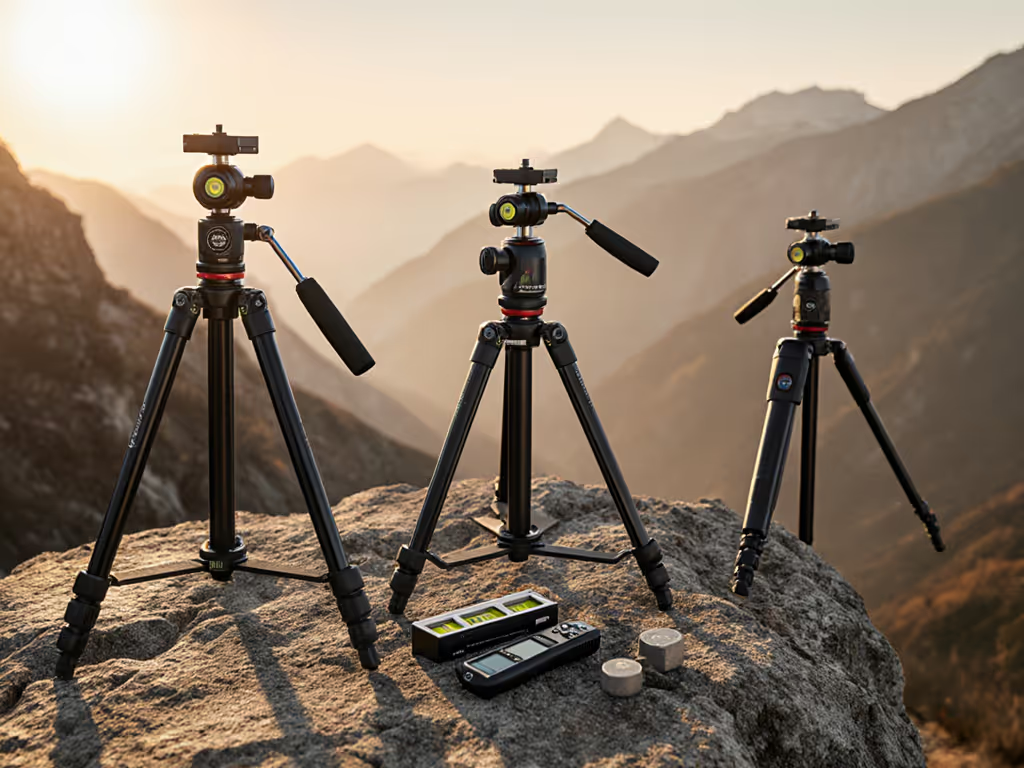
Pro tip: In gusty conditions, avoid intervals matching natural wind rhythms (2-5 sec pulses). I always offset by 0.7s (e.g., 3.7s instead of 3.0s). MIOPS Smart+ users: enable motion-triggered delay to bypass peak gusts.
Step 4: Weatherproof Time-Lapse Through Terrain Reading
Wind isn't random, it follows terrain. Weatherproof time-lapse means using the ground as your ally:
- Seek natural windbreaks: Position behind low dunes, rocks, or tire tracks. Even a 6" rise breaks laminar flow.
- Check micro-terrain: Avoid hollows where wind accelerates (like valleys between dunes). Flat, packed earth transmits less vibration than loose soil.
- Angle into slope: On inclines, point one leg uphill. This prevents "tripping" during gusts and aligns the center of gravity with wind vectors.
If shooting at dawn/dusk, note how wind shifts with temperature. Early morning calm often arrives before full sunrise, I've caught 12 smooth frames in otherwise windy conditions by tracking this.
Your Action Plan: Tomorrow's Field Test
Stop overcomplicating. Right now:
- Measure your true height barefoot (not in boots!).
- At your next location, set tripod legs only to that height.
- Spread legs to 70°, plant your feet shoulder-width, and check your posture.
If you're hunching, the legs are too short for your body. If you're overreaching, they're too tall. Dial it in until exhaling feels neutral, that's your wind-ready stance. This isn't ergonomics; it's vibration physics made visible through body cues. I've taught hundreds of photographers this method. The result? Keepers rise, neck pain vanishes, and wind stops stealing your sharpest frames.
Your tripod isn't a camera stand. It's a dynamic extension of your body. Master the three-point stance (ground, legs, spine), and you'll own every condition. Now go test true height. Your next time-lapse depends on it.
Related Articles