Ball Head vs Pan-Tilt: The Beginner's Guide
By Lars Nyström • 28th Apr
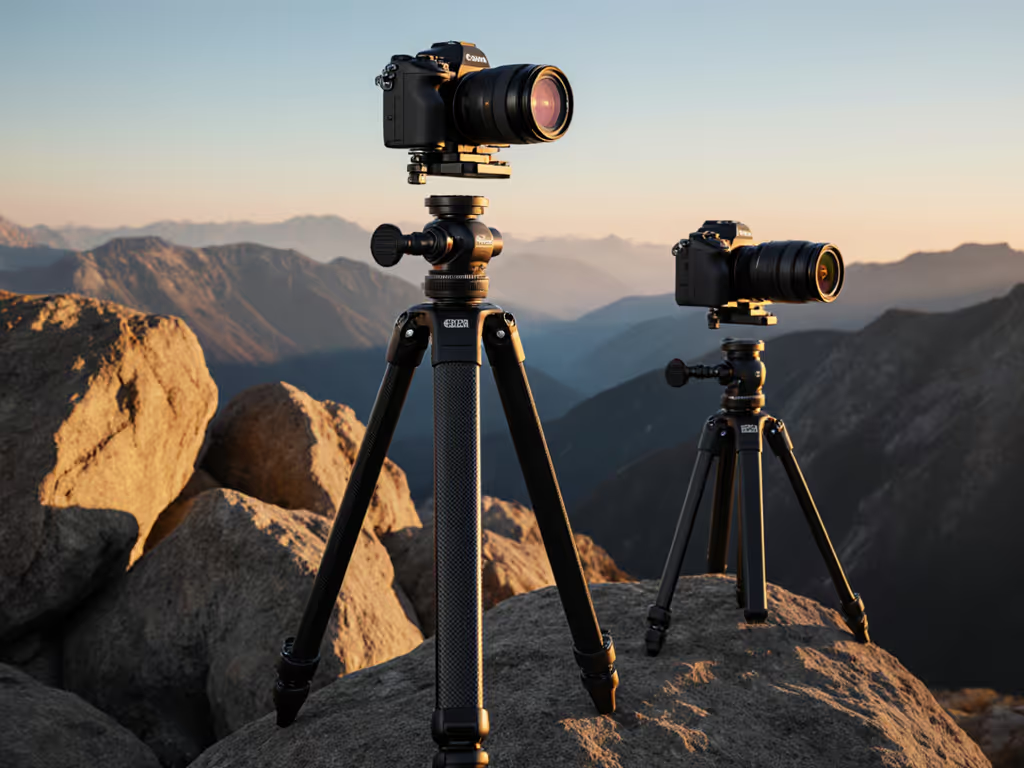
When you're assembling your first serious tripod, system match matters more than individual component specs. The best ball tripod head paired with unsuitable legs, or vice versa, promises stiffness on paper but delivers frustration in the field. Before you commit $400 to $800 to a tripod with a ball head or its pan-tilt alternative, you need to understand not just how each head moves, but how each one behaves when the weather turns and the season demands long-term durability.
This guide cuts through marketing claims and focuses on what actually differentiates these two designs, and crucially, how your choice influences serviceability and confidence over years of use. For style-based recommendations by genre, read our ball vs pan-tilt head guide.
The Mechanics: Ball Head vs Pan-Tilt
At their core, both designs achieve the same goal: holding your camera steady while allowing positional adjustment. The path to that goal is fundamentally different.
Ball Head Architecture
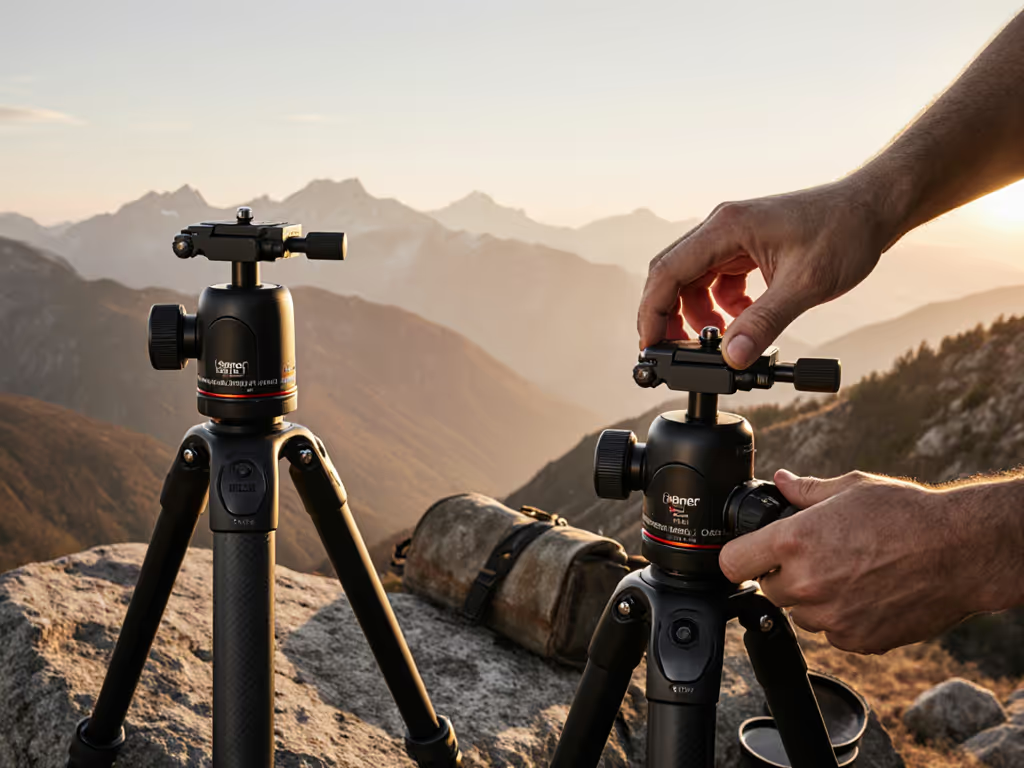
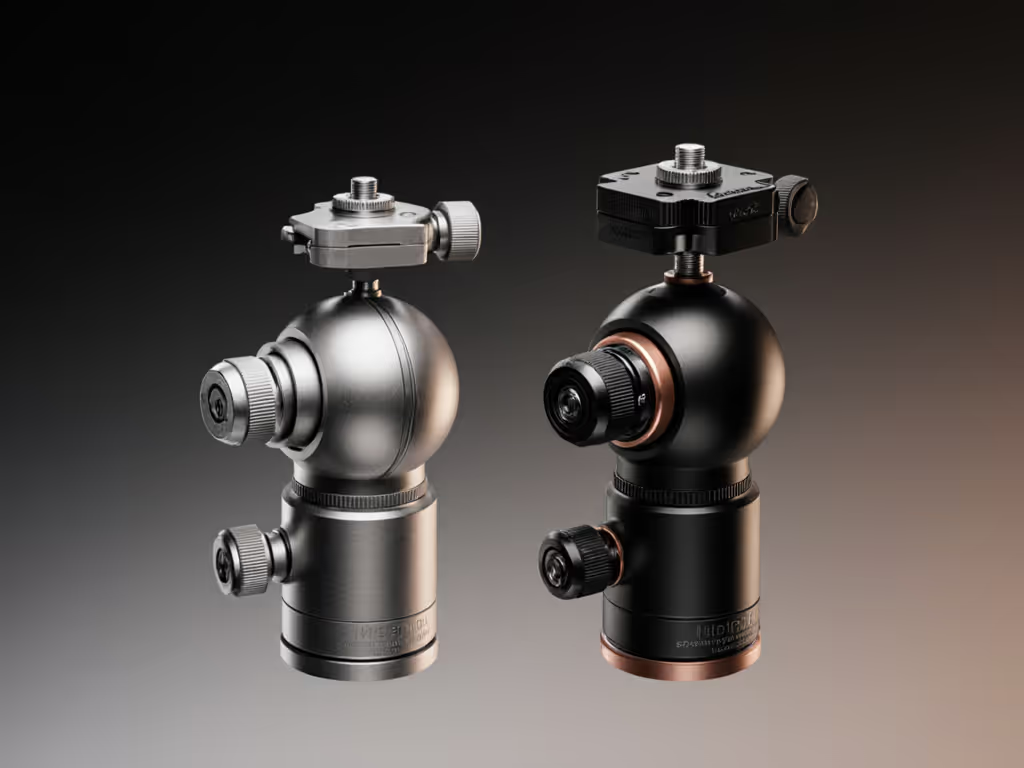
A ball head uses a single spherical joint held in place by friction or a locking knob. Imagine a ball resting in a cup; tension in the cup constrains movement in all axes simultaneously. When unlocked, you can swing your camera in any direction (tilt, pan, roll) with one fluid motion. When locked, the entire system should freeze in place.
Advantages include compact overall size (fewer moving parts to pack), intuitive handling for rapid repositioning, and minimal setup time. You unlock, adjust, lock. Done.
Drawbacks: achieving true level (especially with heavier telephoto rigs) requires fine adjustment. If the locking mechanism is too loose, gravity creep occurs; if too tight, you'll strain wrists or sacrifice fluidity. The single pressure point means wear is concentrated.
Pan-Tilt Head Design
Pan-tilt heads employ three distinct axes: a horizontal pan knob, a vertical tilt lever (or second knob), and often an independent roll control. Each axis operates independently via its own friction or lever lock.
Advantages center on precision. You adjust horizontal framing without affecting vertical angle, then dial in level independently. For landscape or architectural work, this separation of concerns eliminates overshooting and the aggravating micro-adjustments that ball heads demand. The distributed mechanical load spreads wear across multiple friction surfaces, extending the interval between service.
Drawbacks: increased size and weight, slower repositioning under dynamic conditions, and more mechanisms to master.
When Each Head Excels: A Test Protocol
The choice between ball head and pan-tilt for beginners hinges less on the head type itself and more on your intended shooting pattern and your tolerance for operational friction.
Ball Heads Suit:
- Sports and wildlife photography where subjects move unpredictably and you must track and reframe at speed. Holding a tripod during active action is rare; you're using it for brief, high-focus intervals.
- Studio work with moving models or handheld hybrid scenarios where you pivot between tripod and shoulder repeatedly.
- Travel and hiking-heavy assignments where pack volume is non-negotiable and setup speed minimizes fatigue on long days.
- Shooters who treat the tripod as a temporary stabilizer rather than a locked reference frame.
Pan-Tilt Heads Deliver:
- Landscape and architectural work, where the landscape doesn't move and precise framing is the work. Slow shutter speeds (0.5 to 4 seconds) and telephoto focal lengths demand repeatable level and minimal creep.
- Macro and product photography, where subjects are stationary and exact positioning is non-negotiable.
- Long exposures and astrophotography, where any drift during a 10- or 30-second exposure degrades the keeper rate irreversibly.
- Field conditions demanding one-handed control (when you're managing wind, documenting, or bracing yourself on uneven terrain).
The Beginner's Dilemma: Precision vs Adaptability
For beginners in photography, the instinct is to choose a ball head for its apparent simplicity. Not sure whether to start with a built-in head kit or separate legs and head? See our beginner buyer's comparison. Fewer knobs seem to mean faster mastery. This assumption breaks down on the tripod legs themselves.
A proper test protocol exposes this: mount identical cameras and lenses on a ball head and a pan-tilt head. Place both on level ground, and lock them at what you believe is level. Now, step away and view the frame through the tripod's monitor or viewer from different angles. On a ball head, especially if you applied uneven pressure during locking, the horizon may be tilted by 0.5 to 1 degree. On a pan-tilt head with independent level and pan, the result is consistent across multiple repositionings.
The deeper issue: ball tripod head locking requires feel and practice. Apply too little torque, and the head drifts under the weight of a telephoto rig. Apply too much, and you risk stripping the friction mechanism. Pan-tilt heads, by contrast, separate the locking action into discrete steps. Tilt lock. Pan lock. Roll lock. Each one is simpler to verify.
Serviceability and Long-Term Wear: The Field Reality
Here is where system longevity lives or dies, and where marketing silence is deafening. To keep either head type performing for years, follow our tripod maintenance routine.
Ball head friction surfaces can glaze or pit after 18 to 36 months of field use, especially in salt air or high-humidity climates. Once that happens, no amount of adjustment reverses the wear. Pan-tilt heads distribute load across three independent friction zones, and each sees less cumulative stress. More importantly, most quality pan-tilt designs allow you to replace individual friction cartridges or friction pads without discarding the entire head.
Consider a scenario that tests real-world durability: during a week of sleet on a coastal headland, leg locks accumulate ice. Overnight, freeze-thaw cycles lock the hardware solid. The morning demands a decision: abandon the tripod or attempt field repair. Here, the tripod head learning curve extends beyond operation into maintenance philosophy. A ball head with a sealed, all-in-one design offers no entry point. A pan-tilt head with modular friction levers often allows you to strip, warm, and re-grease the lock mechanism with only your hands or a simple probe. That capability has meant the difference between sharp one-second frames at 200mm and a failed assignment.
In the field, wind and wear write the final review. Designs that accommodate field service (replaceable friction pads, accessible grease points, modular linkages) survive decades. Sealed units fail when they fail, with no recourse.
System Match: Head-Leg Pairing Matters
One critical caveated claim: a ball head does not perform uniformly across all leg stiffness profiles.
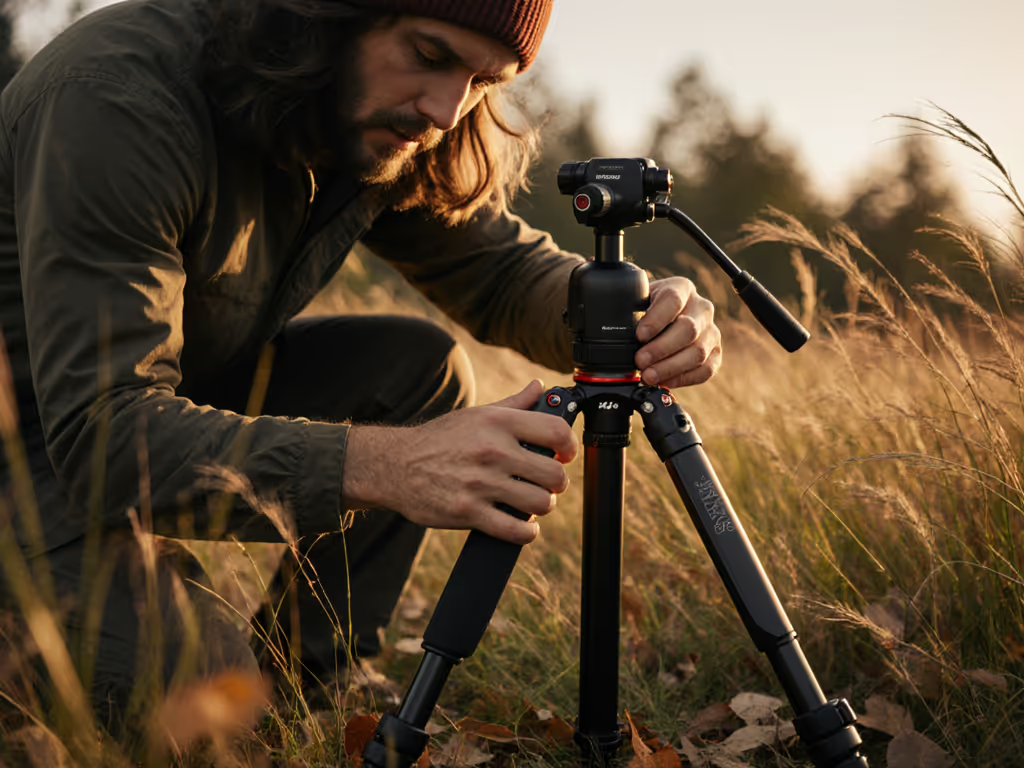
Pair a lightweight ball head with lightweight carbon legs, and you've built a compact travel kit. But if those legs have any play (a curable defect in many budget models), that play is invisible until you lock the ball head. The head itself feels solid, but micro-movements in the leg base translate to shift during exposure. A pan-tilt head, by contrast, makes leg play immediately obvious: the independent locks feel loose, and independent verification of each axis surfaces the problem faster.
For tripod with ball head configurations, test protocol demands: mount the camera, lock fully, then apply 5 pounds of side pressure with your hand. Feel for creep. Repeat with the pan-tilt alternative. Document any movement in millimeters or degrees.
Choosing Your Head: A Decision Framework
Beginners often ask, "Which is objectively better?" The answer is structural: better depends on the constraint that will break you first.
Choose a ball head if:
- Your shooting day is measured in minutes of tripod use, not hours.
- Reframing speed is more valuable than absolute precision.
- Pack weight or volume is a hard constraint (airline carry-on, hiking baseline).
- You are willing to accept ±0.5 degree horizon drift and correct it in post-processing.
- The tripod system is temporary, and serviceability is a lower concern.
Choose a pan-tilt head if:
- You plan to lock the tripod and shoot the same composition for multiple exposures or longer intervals.
- You are committed to getting tack-sharp results at focal lengths above 100mm or shutter speeds below 1 second without stabilization.
- You intend to own the tripod for 5+ years and want access to spare friction pads or serviceable components.
- Terrain will be uneven or your body height varies significantly from tripod designer assumptions (you'll need independent tilt and pan to compensate for your stance).
- You've experienced past frustration with creep or precision loss and want a mechanical design that minimizes surprise.
Long-Term Cost of Ownership
An often-overlooked metric: cost per keeper image over the tripod's lifespan.
A $400 ball head that loses precision after three years and is replaced costs ~$133 per year. A $500 pan-tilt head with replaceable cartridges used for seven years costs ~$71 per year, and the keeper rate on telephoto work is higher because drift is engineered out from the start.
For working photographers and serious hobbyists, the pan-tilt head often wins on pure economics.
A Final Protocol: Test Before Committing
If you have access to a camera store or rental house, test both head types under your actual shooting conditions. Don't shoot in the studio. Bring a telephoto lens (200mm minimum), lock each head as you would in the field, and check for level using a calibrated bubble level (not your eye). Shoot a sequence of test frames at your intended shutter speeds, then examine 100% crops for softness or creep.
Document your findings in a simple table: head model, lens, shutter speed, drift observed (yes/no), ease of level (1 to 5 scale), ease of service access. That data is your compass.
Conclusion: System Thinking Over Spec Sheets
The best tripod head learning curve accelerates when you stop asking, "Which head is better?" and start asking, "Which head matches my shooting method, terrain tolerance, and maintenance philosophy?"
Plan for the long game. A tripod system is a five-to-ten-year asset. Build it with replaceable parts, proven spares networks, and designs that reveal themselves to field repair. Whether you choose ball or pan-tilt, prioritize system match over individual component hype. In the end, your sharpest images will come not from a single component, but from a coherent system (legs, head, plate, and leveling base), all working in concert, and all serviceable when the season demands it. If you're deciding between Arca-Swiss and Manfrotto plate standards, see our quick release systems comparison.
Related Articles