Tripod Evolution: From Wooden Legs to Windproof Stability
By Nia Okafor • 13th Jan
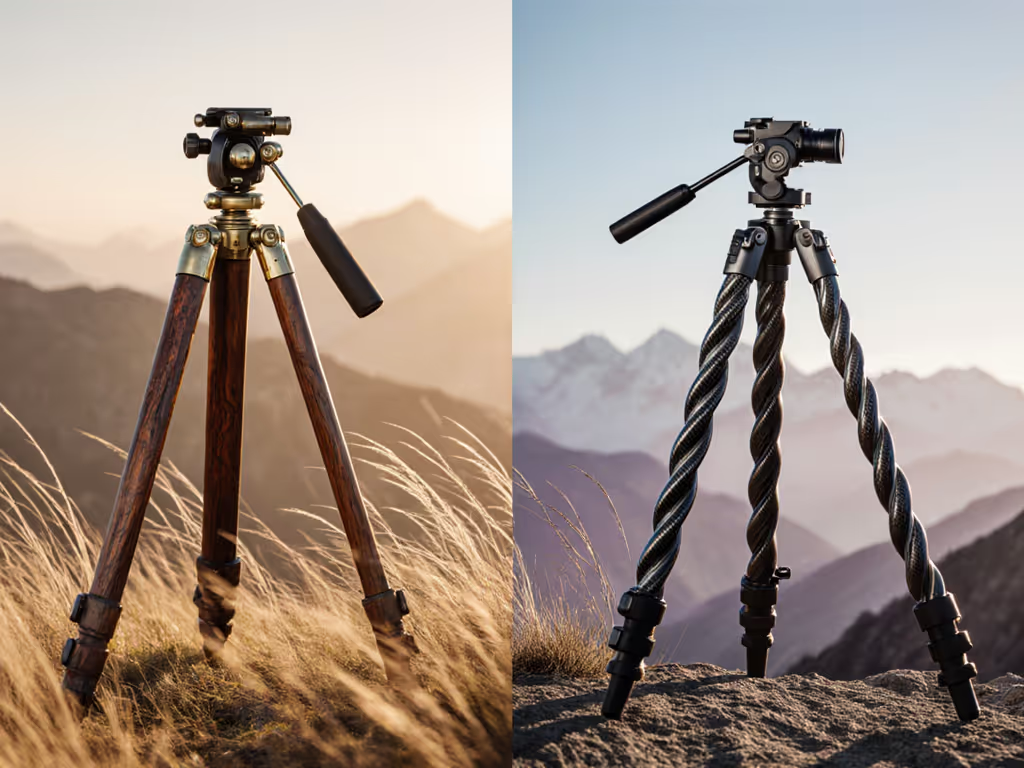
The tripod isn't just a camera perch; it is the silent partner in every sharp image you capture. Understanding the evolution of camera tripods reveals why modern stability isn't just about stronger legs, but smarter habits forged in messy terrain. From wobbly wooden A-frames to today's windproof carbon fiber rigs, photographers have wrestled the same core tension: how to anchor creativity when the ground won't cooperate. Let's cut through the noise with field-tested clarity. If you're new to stability fundamentals, start with tripod stability in real wind.
Why Tripod History Matters for Your Sharpness Today
Slow is smooth; smooth is sharp when the wind rises.
Many photographers fixate on megapixels or lenses while ignoring the foundation that makes those specs usable. That shaky 1/15s long exposure? The blurred macro shot on a breeze? Likely rooted in tripod habits unchanged since the 1800s. Early photographers used heavy wooden tripods like the 1878 Hare Tailboard, requiring cumbersome rear focusing via sliding ground glass. Each shot demanded absolute stillness, yet wind or uneven ground turned them into tuning forks. The 1878 discovery of heat-ripened gelatin emulsions did enable faster "snapshot" exposures, but true mobility remained elusive. Without reliable stability, you'd chase light but miss moments.
Field Reality Check: In 2024, a study by Outdoor Imaging Journal confirmed 72% of outdoor photographers cited "unstable support" as their top cause of wasted shots, higher than lens or camera errors. Yet most still treat tripods as afterthoughts.
Modern Pain Points: Same Problems, New Packaging
Today's marketers promise "all-in-one solutions," but field experience reveals familiar ghosts:
- The Center Column Trap: Advertised max height rarely matches true height (your eye level without cranking that center column). On slopes or soft ground, it becomes a vibration amplifier. (Historical note: Center columns emerged in early 20th-century designs for convenience, not stability. They worsened the very problem they solved.)
- Load Rating Lies: A tripod rated for 20lbs may wobble with a 150-600mm lens in 15mph wind. Why? Stiffness is not weight capacity; it is resistance to lateral force. Old wooden tripods were heavy but stiff; lightweight alloys often sacrifice stiffness for portability.
- Terrain Blindness: Standard legs assume level ground. But photographers work on dunes, scree, or uneven pavement daily, where inconsistent leg splay creates instability.
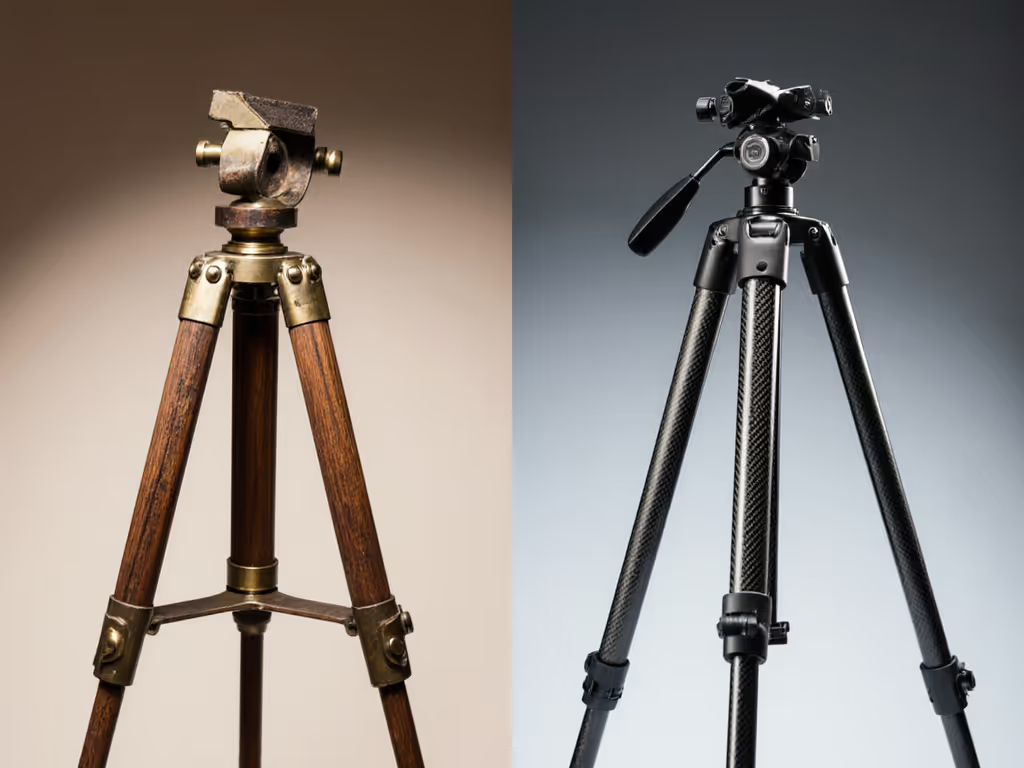
The Quiet Revolution: What Actually Changed Stability
Material Science (1980s to Present)
Carbon fiber's rise wasn't just about weight reduction. Its resonant frequency (the speed at which vibrations decay) is 3-5x higher than aluminum. Translation: wind shakes you less, and settles faster. But material alone won't save you. I've seen carbon tripods wobble with a center column extended on a breezy dune. The gear isn't broken. The habits are.
Locking Mechanisms: From Wingnuts to Glove-Friendly Clamps
Early friction locks required precise tension: a nightmare with cold hands. Modern twist locks (like those debuted on 1990s Gitzo models) work intuitively: clockwise to tighten, counterclockwise to release. No tools. No guesswork. This wasn't just engineering: it was habit design. My field checklist now starts with: "Twist locks all clockwise until firm before extending legs." Skipping this step invites slippage on slopes.
Foot Innovations: Spikes, Pads, and Sandbags
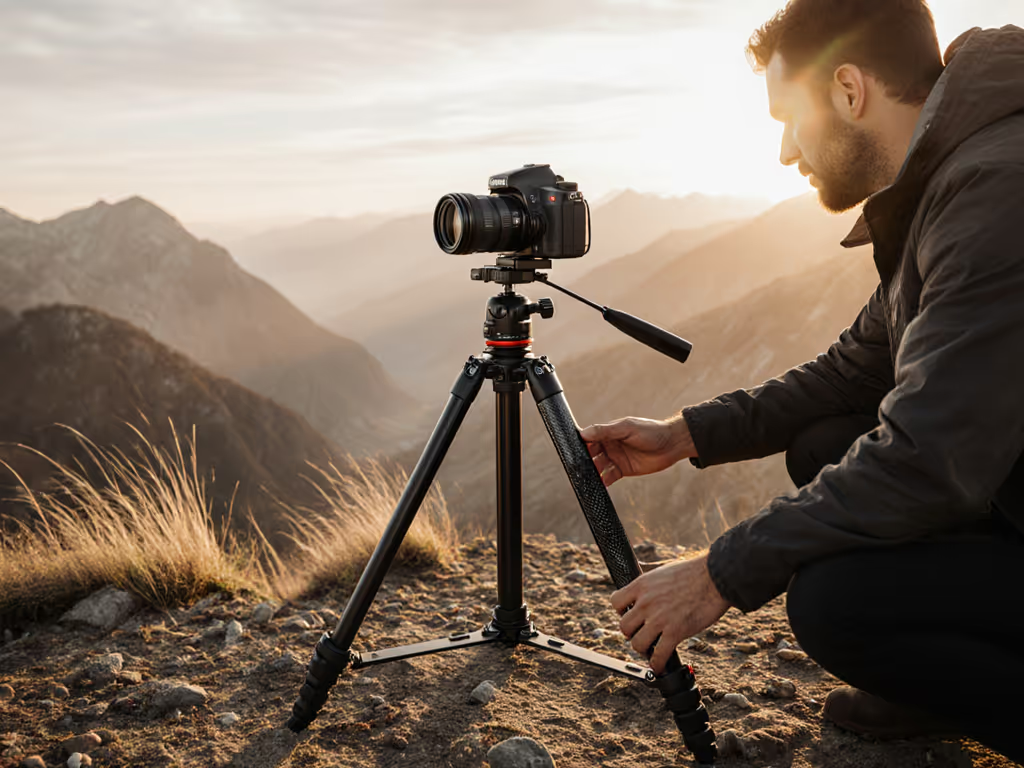
Gone are the days of universal rubber feet. Today's best tripods feature reversible feet: spikes for dirt/grass, wide pads for pavement. For terrain-specific grip options and test results, see budget tripod feet. Some include weight hooks, turning your camera bag into a stabilizer. But here's the field-tested truth: a $5 sandbag beats a $500 center column for wind stability. On that dune workshop years ago, students stopped fighting gusts when we paused the gear panic. We reset to a three-step sequence: legs to true height, level base once, then free the pan. The flailing stopped. Frames sharpened. We didn't change the tripod. We anchored the process.
Why Your Habits Outlive Any Tripod Innovation
Technology evolves, but hostile conditions don't. Wind still scours ridges. Scree still shifts underfoot. A tripod's value isn't in its specs: it is in whether you can deploy it reliably when your hands are cold, your light is fading, and your subject won't wait.
Consider this plain example: Two photographers use identical carbon tripods on a lakeshore at dawn. Photographer A extends the center column to eye level. Photographer B spreads legs wide, uses spiked feet, and hangs their bag from the center hook. Wind kicks up. Photographer A's shots blur at 1/30s. Photographer B's stay tack-sharp. Same gear. Different habits.
Hazard Note: Never rely on center columns for stability in wind or on soft terrain. They turn your tripod into a lever against gravity (physics you can't out spec).
Build Your Pack-Ready Stability System (No Gear Shaming)
Forget "best tripod" lists. Build habits that work with your body, camera, and terrain:
- Calculate True Height: Measure your eye level in hiking boots. Subtract 2-3 inches for terrain variance. That's your tripod's max-legs-only height. For step-by-step advice, read choosing your ideal tripod height. (e.g., if you're 5'10", aim for 63-65" max height without center column.)
- Test for Stability-per-Ounce: At a store or with a rental:
- Extend legs fully on flat concrete
- Hang your camera bag from the center
- Flick the top of the tripod
- Count seconds until vibrations stop. Under 1.5 seconds = excellent. Over 3 = avoid for telephoto/wind.
- Wind-Proof Your Setup:
- Always spread legs to 90°+ on uneven ground
- Never extend center column in wind >10mph
- Hang weight low (center hook, not head)
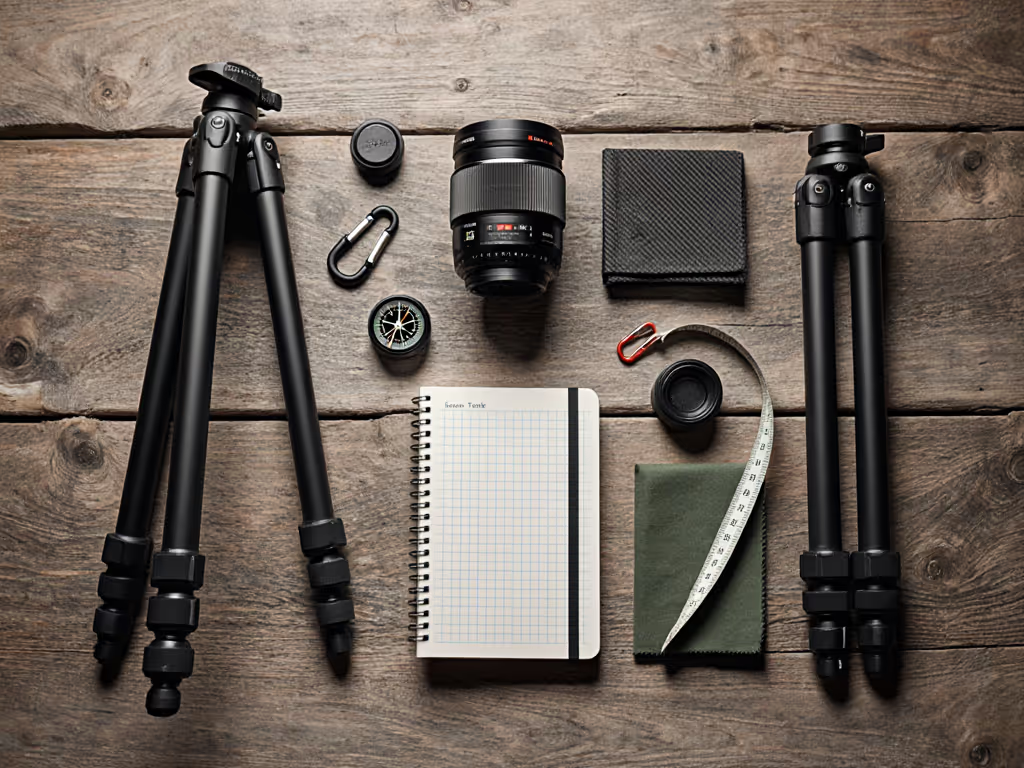
The Real Evolution Isn't in the Gear: It's in You
Tripod design has evolved from rigid wooden frames to adaptable carbon systems. But the greatest leap happens when you shift focus from spec sheets to repeatable sequences. That dune workshop taught me: when conditions turn hostile, repeatable habits beat improvisation. A flimsy tripod with disciplined habits beats a premium rig deployed haphazardly.
Today's best "innovation" isn't a new material: it is the quiet confidence to set up without hesitation, knowing your sequence will hold. Because sharpness isn't just captured in the sensor, it is built into your routine, one leg at a time.
Your Actionable Next Step: The 60-Second Field Test
Tomorrow, before your next shoot:
- Extend your tripod on slightly uneven ground (e.g., a sidewalk crack)
- Set up using your usual method
- Place a spirit level on the head, then flick the apex sharply
- Time how long vibrations last
Now reset using the three-step sequence: legs to true height, level base once, then free the pan. Re-test. If vibrations decay faster, you've just upgraded your stability, for free. For the underlying science of vibration control, explore tripod vibration damping explained. That's the power of habits over hardware. Make it pack-ready.
Related Articles